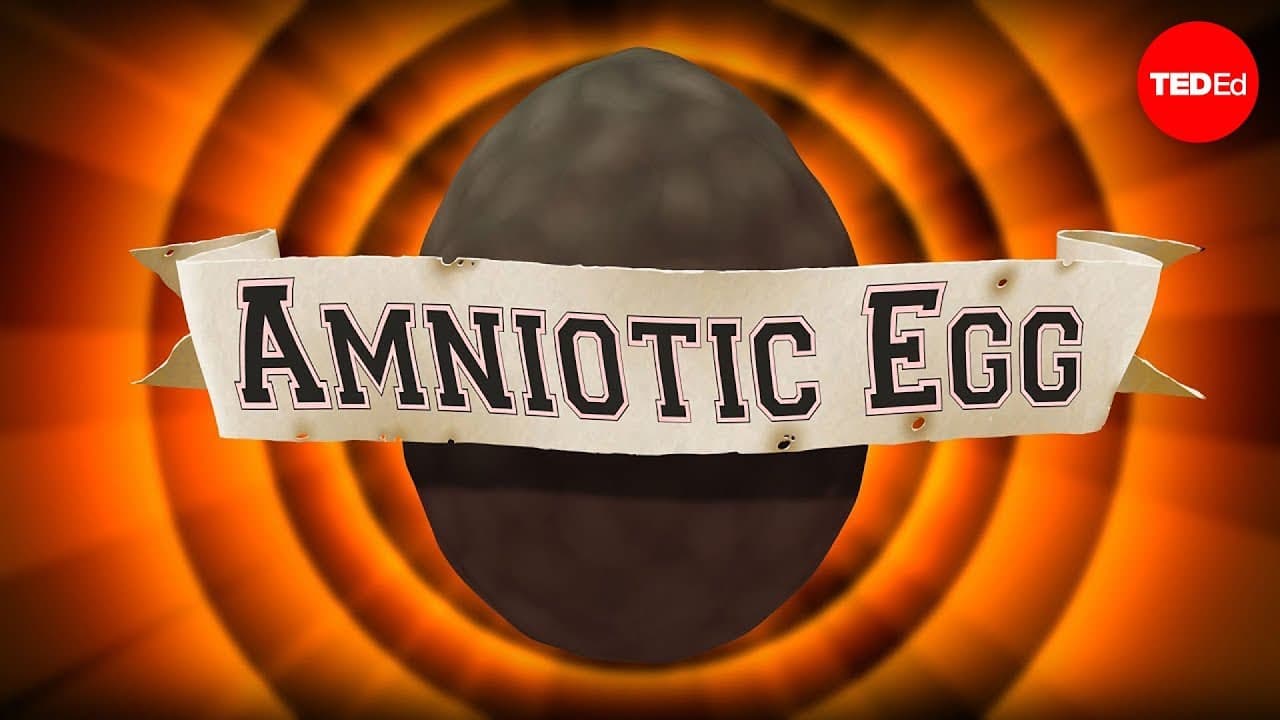
The game-changing amniotic egg - April Tucker
TL;DR
The evolution of the amniotic egg revolutionized vertebrate reproduction, enabling terrestrial life for animals like mammals and reptiles.
Transcript
Would you believe that walruses, rattlesnakes, and parakeets all once lived in the same house? Let's go back about 350 million years. Look around. Steamy swamps and rain forests of horsetails and ferns cover the region. Amphibians are the dominant land vertebrates. They range in size from newts to crocodiles. And all require water to do their egg l... Read More
Key Insights
- 🪺 Amphibians relied on water-dependent eggs before the evolution of the amniotic egg.
- 🐚 The protective shell of the amniotic egg enabled the transition to terrestrial reproduction.
- 🫢 The chorion and allantois membranes facilitated gas exchange and waste removal crucial for embryo development.
- ♻️ The amnion membrane provided a watery environment for the embryo's growth and protection.
- 🥺 The amniotic egg led to the diversification of mammals and reptiles from common ancestors.
- 👻 The amniotic egg allowed for the colonization of land by vertebrates.
- 🥺 Synapsids and sauropsids are the two groups that emerged from amniotic vertebrates, leading to mammals and reptiles.
Install to Summarize YouTube Videos and Get Transcripts
Explore YouTube Video Summarizer or Get YouTube Transcript Extractor
Questions & Answers
Q: What is the significance of the amniotic egg in vertebrate evolution?
The amniotic egg enabled animals to reproduce on land, breaking the tie to water for egg-laying and paving the way for the diversification of terrestrial vertebrates.
Q: How did the protective shell of the amniotic egg contribute to its success?
The shell protected the egg from predators, bacteria, and drying out, while still allowing oxygen to pass through, ensuring the embryo's survival.
Q: What are the functions of the chorion and allantois membranes in the amniotic egg?
The chorion acts as a protective layer for gas exchange, while the allantois orchestrates oxygen and waste management, supporting embryo development in the egg.
Q: How does the amnion membrane enhance the survival of the embryo in the amniotic egg?
The amnion holds the fluid in which the embryo floats, preventing dehydration, protecting against physical harm, and providing a buoyant environment for growth.
Summary & Key Takeaways
-
350 million years ago, amphibians dominated with water-dependent eggs.
-
The amniotic egg, with protective shell and membranes, allowed for terrestrial reproduction.
-
It led to the rise of mammals and reptiles from common ancestors.
Read in Other Languages (beta)
Share This Summary 📚
Summarize YouTube Videos and Get Video Transcripts with 1-Click
Try YouTube Summary with ChatGPT & Claude or YouTube Transcript Generator
Explore More Summaries from TED-Ed 📚





Summarize YouTube Videos and Get Video Transcripts with 1-Click
Try YouTube Summary with ChatGPT & Claude or YouTube Transcript Generator