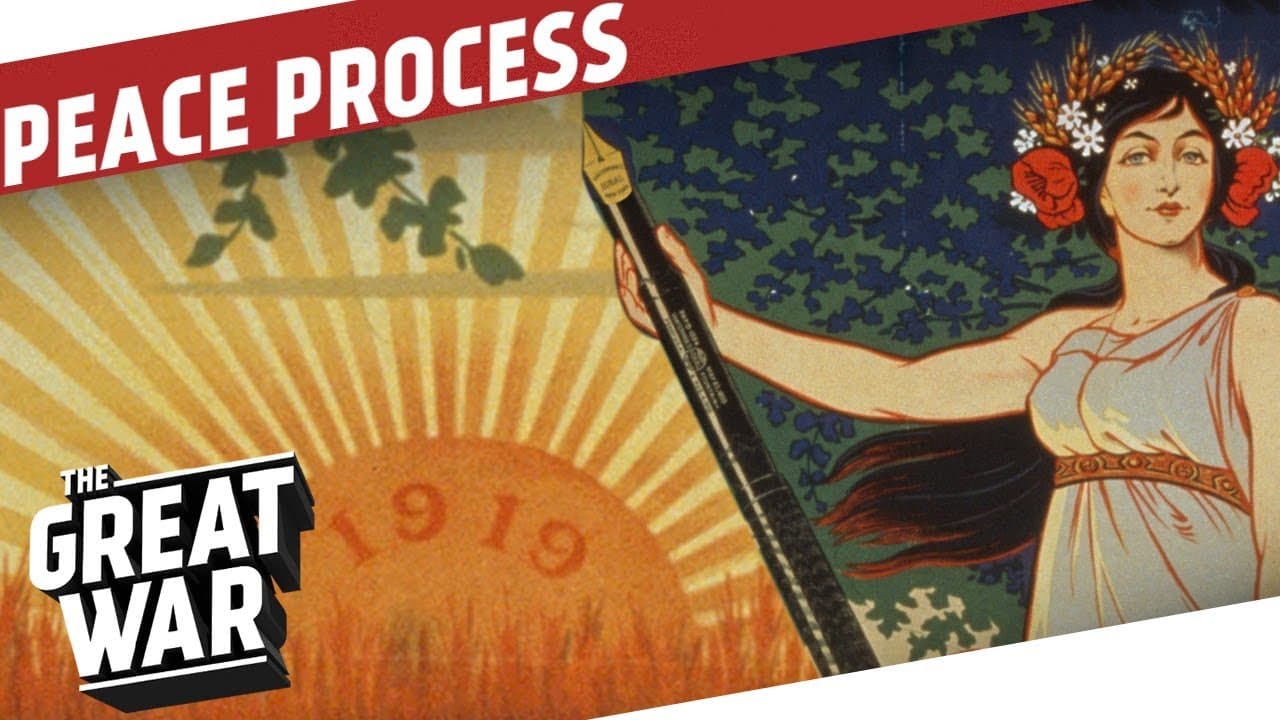
The Difficult Road To Peace 1919 I THE GREAT WAR Epilogue 2
TL;DR
The 1919 peace process faced complex challenges post-WWI.
Transcript
The war is over, and the process of writing the peace treaties begins, but this process is fraught with peril, for the war was fought on a scale never before seen in human history, and those treaties - for better or for worse
- would have effects that would not only color the world of 100 years ago, but even our world today. I’m Indy Neidell; welco... Read More
Key Insights
- The Paris Peace Conference resulted in five major treaties, including the Treaty of Versailles with Germany, which reshaped Europe’s political landscape.
- The Treaty of Versailles imposed harsh territorial and military restrictions on Germany, leading to significant economic and political repercussions.
- Reparations imposed on Germany were controversial and became a rallying point for nationalist sentiment, contributing to economic instability.
- The idea of national self-determination led to new borders, but left millions on the 'wrong' side, fueling future conflicts.
- The League of Nations, proposed by Wilson, aimed to prevent future conflicts, but was weakened by the U.S. not joining and lack of enforcement power.
- The treaties were criticized for either being too harsh or too lenient, with article 231, the 'war guilt' clause, being particularly contentious.
- The disunity among the Allies and failure to enforce treaty terms contributed to the geopolitical instability of the interwar period.
- The treaties failed to create lasting peace, as evidenced by the rise of militarism in Germany and the eventual outbreak of World War II.
Install to Summarize YouTube Videos and Get Transcripts
Explore YouTube Video Summarizer or Get YouTube Transcript Extractor
Questions & Answers
Q: What were the primary outcomes of the Paris Peace Conference?
The Paris Peace Conference resulted in five major treaties, including the Treaty of Versailles with Germany, which imposed significant territorial, military, and economic restrictions. These treaties aimed to reshape the political landscape of Europe post-WWI, but faced criticism for their harsh terms and failure to create lasting peace.
Q: How did the Treaty of Versailles impact Germany?
The Treaty of Versailles had a profound impact on Germany, stripping it of 13% of its territory and 10% of its population, and imposing severe military restrictions. The reparations demanded were seen as punitive, leading to economic hardship and political instability, which later fueled nationalist movements and contributed to World War II.
Q: What was the significance of the 'war guilt' clause in the treaties?
The 'war guilt' clause, article 231, held Germany and the Central Powers responsible for starting the war, justifying reparations. It was highly controversial, leading to resentment in Germany and becoming a focal point for nationalist rhetoric. This clause contributed to the perception of the treaties as unjust and punitive.
Q: Why was the League of Nations considered a failure?
The League of Nations was intended to prevent future conflicts by managing international disputes. However, it was weakened by the absence of the United States and its lack of enforcement power. Its inability to resolve key issues, such as ethnic tensions and territorial disputes, rendered it largely ineffective in maintaining peace.
Q: What challenges did the concept of national self-determination face?
National self-determination aimed to align national borders with ethnic groups, but was challenging in practice. The redrawn borders left millions on the 'wrong' side, creating ethnic tensions and disputes. This concept, while idealistic, often led to new conflicts rather than resolving existing ones, as seen in the Balkans.
Q: How did the Allies' disunity affect the postwar peace process?
The disunity among the Allies hindered the enforcement of the peace treaties. Differing national interests and goals led to a lack of cohesive action, weakening the treaties' effectiveness. This disunity contributed to the geopolitical instability of the interwar period and the eventual failure to prevent future conflicts.
Q: What role did economic factors play in the postwar period?
Economic factors, particularly the reparations imposed on Germany, played a significant role in the postwar period. These reparations led to economic hardship and hyperinflation in Germany, contributing to political instability and the rise of extremist movements. Economic instability was a key factor in the lead-up to World War II.
Q: How did the peace treaties influence future global conflicts?
The peace treaties, particularly the Treaty of Versailles, influenced future global conflicts by creating conditions of economic hardship, political instability, and nationalist resentment. The perceived injustices of the treaties fueled extremist ideologies and militarism, setting the stage for World War II and ongoing geopolitical tensions.
Summary & Key Takeaways
-
The 1919 peace process following World War I was a complex and unprecedented effort to reshape the political landscape of Europe. It resulted in several treaties, including the Treaty of Versailles, which imposed significant territorial and military restrictions on Germany, sparking controversy and future conflict.
-
The concept of national self-determination led to redrawn borders, but left millions displaced, creating ethnic tensions. The League of Nations was established to manage international disputes, but its effectiveness was compromised by the absence of the United States and weak enforcement mechanisms.
-
The harsh terms of the peace treaties, particularly the reparations and 'war guilt' clause, fueled nationalist sentiment in Germany and contributed to economic instability. The lack of unity among the Allies and failure to enforce the treaties' terms set the stage for future geopolitical instability and the eventual outbreak of World War II.
Read in Other Languages (beta)
Share This Summary 📚
Summarize YouTube Videos and Get Video Transcripts with 1-Click
Try YouTube Summary with ChatGPT & Claude or YouTube Transcript Generator
Explore More Summaries from The Great War 📚
Summarize YouTube Videos and Get Video Transcripts with 1-Click
Try YouTube Summary with ChatGPT & Claude or YouTube Transcript Generator