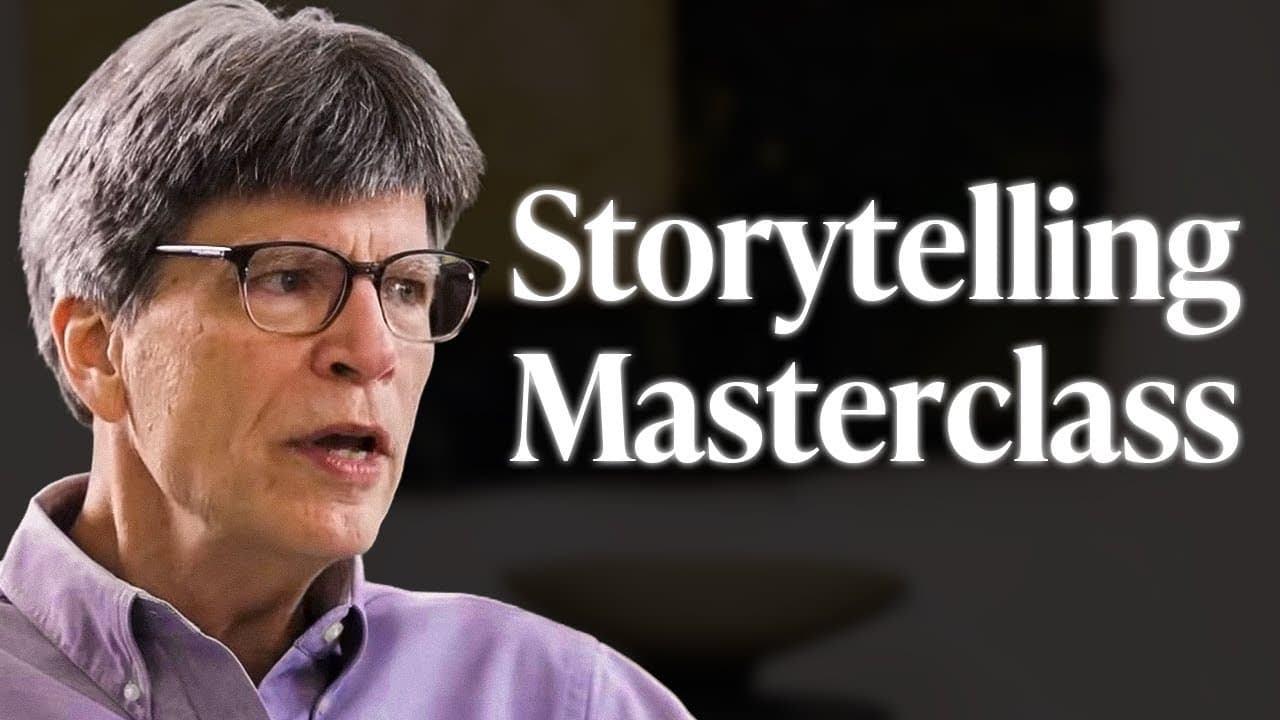
How Does Richard Powers Create Compelling Characters?
TL;DR
Richard Powers reveals that compelling characters are shaped by their internal conflicts and the drama they face. He categorizes drama into three types: interpersonal, internal, and environmental, emphasizing the role of voice and empathetic relationships in character development. Powers advocates for understanding both human and non-human perspectives to create richer narratives.
Transcript
character is complex and I I would always challenge my students I would say push them to the wall push them to the wall yeah and that's where the drama of being alive is can you live with yourself if you have to do something that you ordinarily would hate to do but the circumstance makes it necessary for you so you got person against themse... Read More
Key Insights
- Richard Powers emphasizes the complexity of characters, suggesting that drama arises from characters being pushed to their limits, revealing their true nature.
- He categorizes drama into three types: people against people, people against themselves, and people against the environment, each offering unique storytelling challenges.
- Powers discusses the importance of voice in character development, stating that voice is driven by diction and syntax, which helps in creating vivid characters.
- He believes that empathy for non-human elements, like trees, can enhance storytelling by expanding the narrative beyond human-centric views.
- Powers highlights the role of tension in storytelling, describing it as a dynamic balance of stakes that must be carefully managed to maintain reader interest.
- He talks about the iterative process of writing and rewriting, emphasizing that the craft involves continuous refinement and adaptation.
- Powers discusses the significance of solitude in writing, suggesting that alternating between isolation and engagement with the world enriches the creative process.
- He underscores the importance of beginnings in novels, noting that a strong opening can set the thematic tone and engage readers immediately.
Install to Summarize YouTube Videos and Get Transcripts
Explore YouTube Video Summarizer or Get YouTube Transcript Extractor
Questions & Answers
Q: What are the three types of drama Richard Powers discusses?
Richard Powers discusses three types of drama in storytelling: people against people, people against themselves, and people against the environment. Each type presents unique challenges and opportunities for character development and narrative tension, offering diverse avenues for exploring human experience and conflict.
Q: How does Richard Powers view the role of voice in character development?
Richard Powers views voice as a critical element in character development, driven by diction and syntax. He believes that the way characters express themselves through language reveals their personalities and inner conflicts, making voice an essential tool for creating vivid and relatable characters in storytelling.
Q: Why does Richard Powers emphasize empathy for non-human elements?
Richard Powers emphasizes empathy for non-human elements, like trees, to expand storytelling beyond human-centric narratives. By incorporating empathy for the natural world, writers can enrich their stories, providing deeper insights into the interconnectedness of life and enhancing the thematic depth of their work.
Q: What is Richard Powers' approach to managing tension in storytelling?
Richard Powers approaches tension in storytelling as a dynamic balance of stakes that must be carefully managed to maintain reader interest. He believes that tension involves escalating conflicts and resolutions, requiring writers to skillfully navigate the rise and fall of dramatic intensity to keep the narrative engaging.
Q: How does Richard Powers describe the writing process?
Richard Powers describes the writing process as iterative, involving continuous rewriting and refinement. He emphasizes that writing is never truly finished, as authors constantly evolve and adapt their work. This process allows for deeper exploration of themes and characters, ultimately enhancing the quality and impact of the narrative.
Q: What role does solitude play in Richard Powers' writing practice?
Solitude plays a significant role in Richard Powers' writing practice, allowing him to delve deeply into his imagination and creativity. However, he also stresses the importance of alternating between solitude and engagement with the world, as this balance enriches his writing by providing fresh perspectives and insights.
Q: Why are beginnings important in novels according to Richard Powers?
According to Richard Powers, beginnings are crucial in novels because they set the thematic tone and engage readers immediately. A strong opening can encapsulate the essence of the story, hinting at conflicts and character dynamics that unfold throughout the narrative, thus drawing readers into the world of the novel from the start.
Q: How does Richard Powers use different writing tools to influence his work?
Richard Powers uses different writing tools, such as dictation, typing, and handwriting, to influence his creative process. He compares this to a musician choosing instruments, where each tool offers unique affordances that can affect the style, pace, and emotional resonance of his writing, allowing him to explore various narrative possibilities.
Summary & Key Takeaways
-
Richard Powers, a Pulitzer Prize-winning author, explores the intricacies of character development and drama in storytelling. He highlights the importance of pushing characters to their limits to reveal their true nature, categorizing drama into three types: interpersonal, internal, and environmental.
-
Powers emphasizes the significance of voice in character creation, explaining that diction and syntax play crucial roles in crafting vivid and relatable characters. He also discusses the importance of empathy for non-human elements in expanding narrative perspectives.
-
The conversation delves into the role of tension in storytelling, the iterative nature of writing, and the balance of solitude and engagement in the creative process. Powers also shares insights on crafting effective beginnings to captivate readers from the start.
Read in Other Languages (beta)
Share This Summary 📚
Summarize YouTube Videos and Get Video Transcripts with 1-Click
Try YouTube Summary with ChatGPT & Claude or YouTube Transcript Generator
Explore More Summaries from David Perell 📚
Summarize YouTube Videos and Get Video Transcripts with 1-Click
Try YouTube Summary with ChatGPT & Claude or YouTube Transcript Generator