How An Extreme New Star Could Change All Cosmology
TL;DR
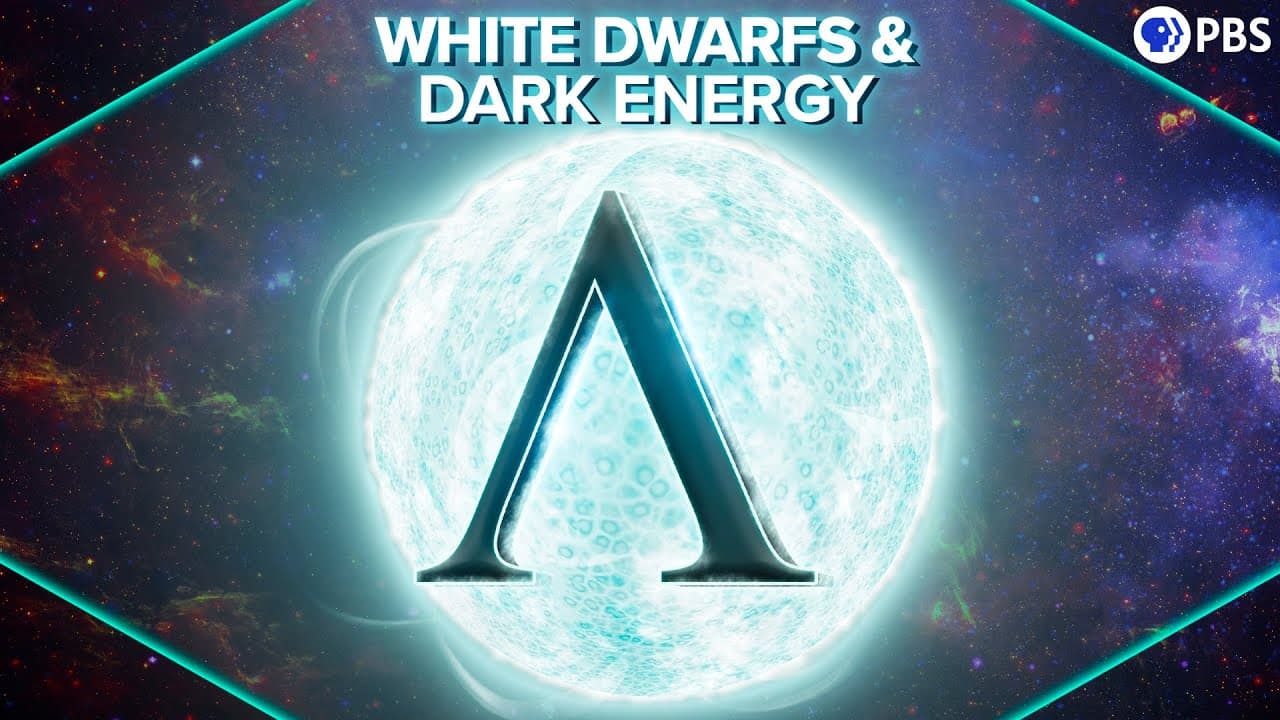
A peculiar white dwarf may alter our understanding of cosmology.
Transcript
It has been said that scientific progress is accompanied not by cries of “Eureka”, but instead by murmurs of “huh, that’s weird”. Well, we’ve just observed a faint point of light on the sky whose weirdness could change the way we think about the universe on the largest scales. This particular “huh, that’s weird” takes the form of a white dwarf star... Read More
Key Insights
- The discovery of a white dwarf, named ZTF J1901+1458 or Zee, challenges existing theories about white dwarf formation due to its extreme properties.
- Zee's rapid rotation and strong magnetic field suggest it did not form like typical white dwarfs, which rotate over hours or days.
- Spectroscopic analysis using the Keck Telescope revealed Zee's magnetic field is a billion times stronger than Earth's.
- Zee's small size, comparable to the Moon, indicates it is the most massive known white dwarf, weighing 1.32 times the Sun's mass.
- The white dwarf's characteristics imply it may have formed from a collision of two smaller white dwarfs, a process previously theorized but not observed.
- If white dwarf mergers frequently lead to supernovae, it may affect our understanding of dark energy, as Type 1a supernovae are used to measure it.
- Zee's future is uncertain; it may cool into a black dwarf or explode if electron capture processes initiate a chain reaction.
- The discovery highlights the need to reconsider cosmological models and the processes leading to supernovae and neutron star formation.
Install to Summarize YouTube Videos and Get Transcripts
Explore YouTube Video Summarizer or Get YouTube Transcript Extractor
Questions & Answers
Q: What makes ZTF J1901+1458 unique among white dwarfs?
ZTF J1901+1458, or Zee, is unique due to its rapid rotation, extreme magnetic field, and small size. These characteristics suggest it did not form like typical white dwarfs, which rotate over hours or days. Instead, Zee may have formed from a collision between two smaller white dwarfs, a process that has not been directly observed before.
Q: How was the magnetic field of Zee determined?
The magnetic field of Zee was determined using spectroscopic analysis with the Keck Telescope. By splitting the white dwarf's light into component colors, astronomers identified spectral lines that indicated the presence of a magnetic field a billion times stronger than Earth's. This analysis provided critical insights into Zee's extreme properties.
Q: What implications does Zee's discovery have for cosmology?
Zee's discovery has significant implications for cosmology, particularly in understanding white dwarf formation and the origins of supernovae. If white dwarf mergers frequently lead to supernovae, it could affect measurements of dark energy, as Type 1a supernovae are used for this purpose. This may prompt a reevaluation of existing cosmological models.
Q: What is the potential origin of Zee's extreme properties?
Zee's extreme properties, such as rapid rotation and strong magnetic field, likely result from a collision between two smaller white dwarfs. This process, theorized but not previously observed, would impart additional angular momentum and generate intense magnetic fields, explaining Zee's unique characteristics and suggesting new pathways in stellar evolution.
Q: How does Zee's size compare to other white dwarfs?
Zee is exceptionally small, with a radius barely 25% larger than the Moon, making it the smallest known white dwarf. Its small size indicates it is also the most massive, weighing 1.32 times the Sun's mass. This inverse size-mass relationship is a distinctive feature of white dwarfs, driven by quantum mechanical principles.
Q: What are the possible future outcomes for Zee?
Zee's future is uncertain; it may cool and fade into a black dwarf over trillions of years, or it could explode due to electron capture processes. The latter involves energetic electrons interacting with protons to form neutrons, potentially initiating a chain reaction that leads to a supernova, offering another path to stellar destruction.
Q: Why is Zee's discovery important for understanding supernovae?
Zee's discovery is crucial for understanding supernovae because it suggests that white dwarf mergers, rather than accretion, could frequently lead to Type 1a supernovae. This challenges current assumptions about these explosions, which are used to measure dark energy, and may necessitate a reassessment of their role in cosmological models.
Q: How does Zee challenge existing theories of white dwarf formation?
Zee challenges existing theories of white dwarf formation by exhibiting properties inconsistent with typical formation processes. Its rapid rotation and strong magnetic field suggest it formed from a collision, rather than the gradual cooling and shrinking of a stellar core. This discovery prompts a reevaluation of white dwarf formation and evolution theories.
Summary & Key Takeaways
-
ZTF J1901+1458, a newly discovered white dwarf, exhibits extreme properties that challenge current understanding of white dwarf formation. Its rapid rotation and intense magnetic field suggest a unique origin, potentially from a collision of two smaller white dwarfs.
-
Spectroscopic analysis reveals Zee's magnetic field is a billion times stronger than Earth's, and its small size indicates it is the most massive known white dwarf. This discovery may prompt a reevaluation of cosmological models, particularly regarding supernovae and dark energy.
-
Zee's future is uncertain; it may cool and fade or explode due to electron capture processes. The discovery underscores the need to explore unconventional stellar evolution pathways and their implications for cosmology.
Read in Other Languages (beta)
Share This Summary 📚
Summarize YouTube Videos and Get Video Transcripts with 1-Click
Try YouTube Summary with ChatGPT & Claude or YouTube Transcript Generator
Explore More Summaries from PBS Space Time 📚


Summarize YouTube Videos and Get Video Transcripts with 1-Click
Try YouTube Summary with ChatGPT & Claude or YouTube Transcript Generator