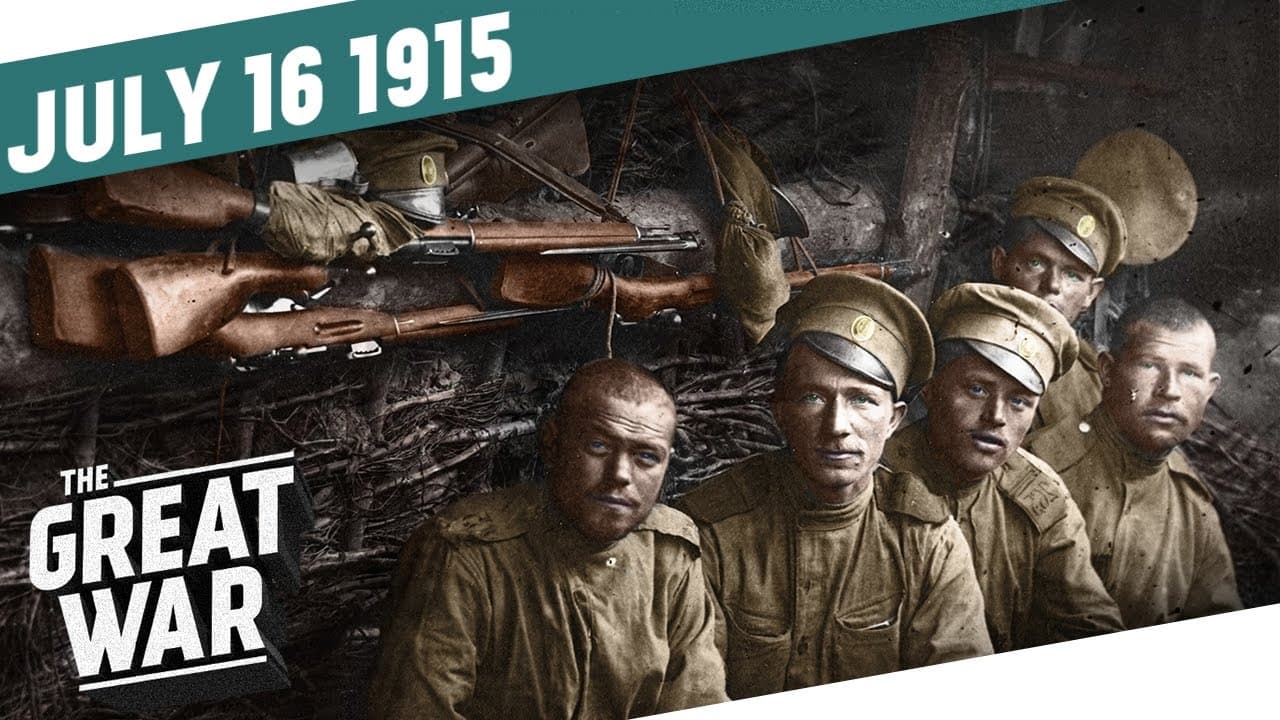
The Tumbling Giant - Russia's Army On The Verge Of Collapse I THE GREAT WAR Week 51
TL;DR
Germany's new offensive pushes Russia to the brink of collapse.
Transcript
The German offensive of the past ten weeks had erased all of the Russian gains of the war, re-invigorated the Austro-Hungarian army, and put the Russians into full retreat week after week. What more could go wrong for Russia? Well, how about this- this week Germany launches a new offensive. I’m Indy Neidell; welcome to the Great War Last week Germa... Read More
Key Insights
- The German offensive has reversed all Russian territorial gains, leading to significant Russian retreats and losses.
- In June, the Central Powers captured over 360,000 Russian prisoners, highlighting the dire situation for Russia.
- Russia's military leadership is in crisis, with massive officer losses and inadequate replacements due to illiteracy and deferments.
- The Gallipoli campaign remains a stalemate, with heavy casualties and little territorial gain for the Allies.
- British and French forces at Gallipoli faced logistical and strategic challenges, leading to significant losses and stalled offensives.
- The Western Front remains in a stalemate, with both sides suffering heavy losses without significant territorial changes.
- The German government has taken control of the coal industry, indicating economic mobilization for war efforts.
- Russian casualties have reached catastrophic levels, with millions lost and the military struggling to maintain its front lines.
Install to Summarize YouTube Videos and Get Transcripts
Explore YouTube Video Summarizer or Get YouTube Transcript Extractor
Questions & Answers
Q: What was the impact of the German offensive on the Eastern Front?
The German offensive on the Eastern Front reversed all Russian territorial gains and forced the Russian army into a full retreat. The Central Powers captured over 360,000 Russian prisoners in June alone, indicating a severe crisis for Russia. The offensive has put immense pressure on Russian military resources and leadership.
Q: How did the Gallipoli campaign progress during this time?
The Gallipoli campaign remained a costly stalemate for the Allies. Despite attempts to advance, British and French forces faced strategic and logistical challenges, leading to high casualties. The failed offensives highlighted the difficulties of the campaign, with little territorial gain achieved despite significant losses.
Q: What challenges did the Russian military face in terms of leadership?
The Russian military faced a leadership crisis due to massive officer losses, which exceeded the number of officers at the war's start. Replacing these officers was challenging, as many new recruits were illiterate, and educated individuals often received deferments. This situation severely hampered Russia's military effectiveness.
Q: What was the situation on the Western Front?
The Western Front remained in a stalemate, with both sides suffering heavy losses without significant territorial changes. The Germans attacked along the Yser canal, but failed to capture the left bank. Similarly, Crown Prince Wilhelm's forces made limited gains, capturing the French line at Vienne-le-chateau and the heights of La Fille Morte.
Q: What economic measures did Germany take during this period?
During this period, the German government took control of the coal industry. This move likely aimed to ensure a steady supply of coal for military and industrial use, reflecting Germany's broader efforts to mobilize its economy for the ongoing war.
Q: How significant were Russian casualties by early 1915?
By early 1915, Russian casualties had topped a million, with officer losses alone exceeding the pre-war total. The massive losses severely strained Russia's military capabilities, as the army struggled to replace personnel and maintain its defensive lines against the Central Powers' offensives.
Q: What were the outcomes of the British and French attacks at Gallipoli?
The British and French attacks at Gallipoli were largely unsuccessful, resulting in high casualties and minimal territorial gains. The attacks were characterized by strategic missteps and logistical challenges, leading to a stalemate that persisted despite the heavy losses incurred by the Allies.
Q: What was the broader context of the war during this period?
The broader context of the war during this period was one of intense conflict and high casualties on multiple fronts. The Central Powers' offensive on the Eastern Front severely weakened Russia, while the Western Front and Gallipoli campaigns remained stalemates. The war's scale and destruction had reached unprecedented levels, with no clear resolution in sight.
Summary & Key Takeaways
-
The German and Austro-Hungarian forces have launched a new offensive, reversing Russian gains and capturing hundreds of thousands of prisoners. Russia faces a leadership crisis as officer losses mount, and the military struggles to maintain its front lines.
-
The Gallipoli campaign remains a costly stalemate for the Allies, with failed offensives leading to high casualties and little progress. Strategic and logistical challenges continue to plague British and French efforts in the region.
-
On the Western Front, the stalemate persists with heavy losses on both sides. Meanwhile, the German government has taken control of the coal industry, indicating a shift towards economic mobilization for the war effort.
Read in Other Languages (beta)
Share This Summary 📚
Summarize YouTube Videos and Get Video Transcripts with 1-Click
Try YouTube Summary with ChatGPT & Claude or YouTube Transcript Generator
Explore More Summaries from The Great War 📚
Summarize YouTube Videos and Get Video Transcripts with 1-Click
Try YouTube Summary with ChatGPT & Claude or YouTube Transcript Generator