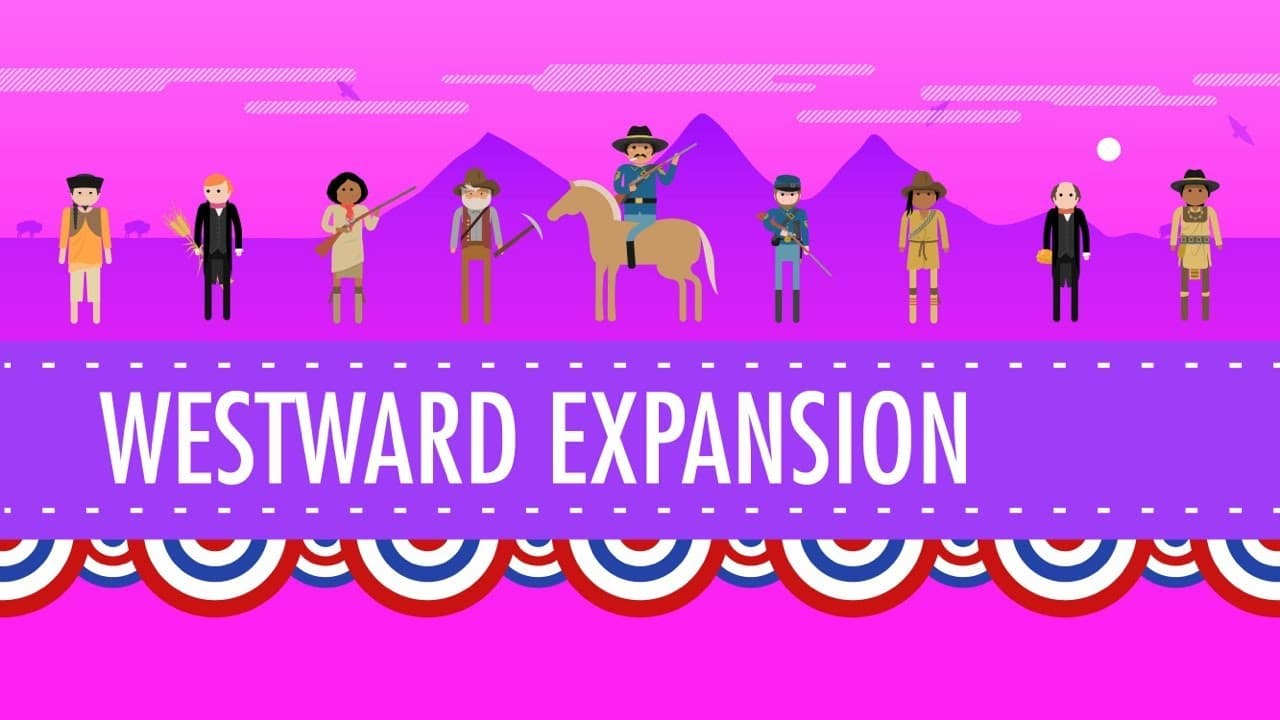
Westward Expansion: Crash Course US History #24
TL;DR
The Wild West was less wild and more industrialized than myths suggest.
Transcript
Hi, I’m John Green, this is Crash Course U.S. History and today we leave behind the world of industry and corporations to talk about the Wild Wild West. Spoiler Alert: You You have died of dysentery. And in the process, we’re going to explore how all of us, even those of us who are vegan or eat sustainably-produced food benefit from massive agrobus... Read More
Key Insights
- The Wild West is mythologized as a place of individualism and freedom, but it was heavily influenced by government actions and industrial capitalism.
- Frederick Jackson Turner's frontier thesis emphasized the West's role in shaping American culture, but it oversimplified the diverse and complex reality of western expansion.
- Railroads were crucial to western settlement, providing transportation for goods and people, and were heavily subsidized by the government.
- Native Americans were forcibly removed from their lands, leading to cultural and physical genocide, exemplified by events like the Ghost Dance movement and the Dawes Act.
- The image of the cowboy is romanticized; in reality, cowboys were part of a larger industrial system driven by railroads and meat processing.
- Western farming was not the idyllic family affair often portrayed; it involved large-scale irrigation, corporate ownership, and international competition.
- The Dawes Act of 1887 aimed to assimilate Native Americans by allotting land to individuals, resulting in the loss of tribal lands and culture.
- The legacy of westward expansion is one of industrial growth at the expense of Native American cultures and lands, reflecting a complex interplay of myth and reality.
Install to Summarize YouTube Videos and Get Transcripts
Explore YouTube Video Summarizer or Get YouTube Transcript Extractor
Questions & Answers
Q: What role did railroads play in westward expansion?
Railroads were essential to westward expansion as they enabled the transportation of goods and people across vast distances. They connected remote areas to markets, making settlement viable and profitable. The government heavily subsidized railroads, highlighting their importance in the development of the West.
Q: How did the Dawes Act affect Native Americans?
The Dawes Act of 1887 aimed to assimilate Native Americans by dividing tribal lands into individual allotments. This policy led to significant loss of tribal land and culture, as much of the land was sold to white settlers. It was a tool for cultural assimilation and economic exploitation.
Q: What is the significance of the Ghost Dance movement?
The Ghost Dance movement was a spiritual and cultural revival among Native Americans in response to the devastating impacts of westward expansion. Participants believed that through rituals, they could restore their land and way of life. It symbolized resistance to cultural and physical annihilation.
Q: Why is the cowboy image considered a myth?
The cowboy image is mythologized as a symbol of rugged individualism, but in reality, cowboys were part of an industrial system driven by railroads and meat processing. Their work was integral to the cattle industry, which relied on rail transport and market demands, rather than solitary heroism.
Q: How did western farming differ from the Jeffersonian ideal?
Western farming diverged from the Jeffersonian ideal of self-sufficient yeoman farmers. It involved large-scale irrigation and corporate ownership, with farms producing for national and international markets. This shift required significant capital investment and led to the rise of agri-businesses over family farms.
Q: What was the impact of government policies on Native American lands?
Government policies like the Indian Removal Act and the Dawes Act resulted in the displacement of Native Americans and loss of their lands. These policies aimed to assimilate Native Americans into American society, often through coercive measures, leading to cultural and physical dislocation.
Q: What economic factors drove westward expansion?
Economic factors driving westward expansion included the desire for land, resources like minerals, and agricultural opportunities. The federal government and private investors financed railroads and infrastructure, facilitating settlement and exploitation of the West's economic potential, often at the expense of Native Americans.
Q: How did industrial capitalism shape the West?
Industrial capitalism shaped the West by driving economic development and settlement patterns. Railroads and large-scale agriculture were central to this transformation, creating a market-driven economy. This period saw the rise of corporate farming and infrastructure projects, reflecting the broader industrialization of America.
Summary & Key Takeaways
-
The Wild West, often romanticized as a bastion of individualism, was significantly shaped by government intervention and industrial capitalism. Railroads played a crucial role in facilitating western expansion, connecting settlers to markets and modernity.
-
Native Americans suffered greatly during this period, losing land and cultural identity due to policies like the Dawes Act and boarding schools. The myth of the cowboy, while iconic, masks the industrial and corporate realities of the time.
-
Western agriculture evolved into large-scale, market-driven enterprises, challenging the notion of the self-sufficient family farm. This era's legacy is a complex mix of economic growth and cultural loss, highlighting the nuanced reality behind the myths.
Read in Other Languages (beta)
Share This Summary 📚
Summarize YouTube Videos and Get Video Transcripts with 1-Click
Try YouTube Summary with ChatGPT & Claude or YouTube Transcript Generator
Explore More Summaries from CrashCourse 📚



Summarize YouTube Videos and Get Video Transcripts with 1-Click
Try YouTube Summary with ChatGPT & Claude or YouTube Transcript Generator