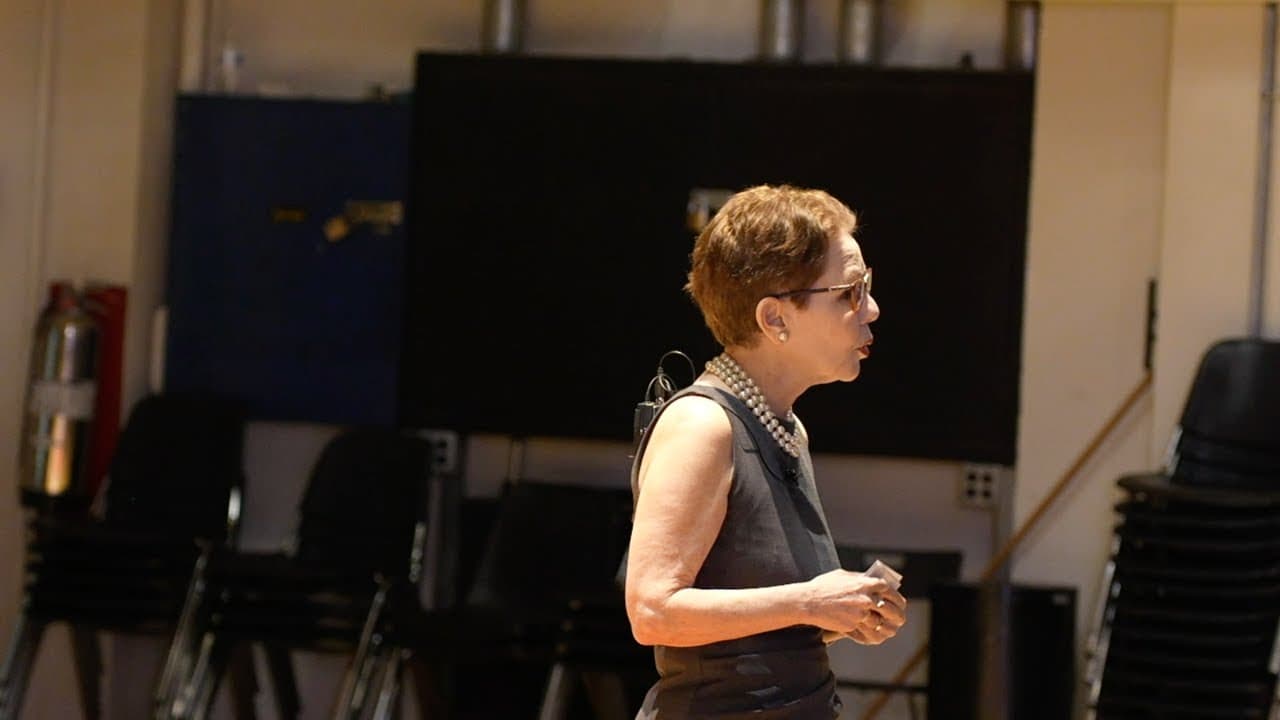
A Blueprint for the Future of Higher Education | Paula Marantz Cohen | TEDxDrexelU
TL;DR
Exploring the multifaceted crisis in higher education and outlining a blueprint for a fair, diverse, and effective reimagining.
Transcript
higher education is in a state of crisis there are many reasons for this I want to quickly run down a few of them you may come up with others first the mounting cost of tuition and the burdens of student debt and uncertain economic climate in which jobs and Vocational skills have superseded the traditional adoption of learning um an epidemic Expres... Read More
Key Insights
- 😮 The crisis in higher education stems from various factors including rising tuition costs, student debt burdens, and shifts in job market demands.
- 🛟 Universities have evolved from serving specific demographics to becoming competitive, bureaucratic institutions focused on prestige.
- 🎓 The proposed blueprint for redesigning higher education emphasizes diversity in admissions, redesigning campuses, promoting civic engagement, fostering experiential learning, and redefining classroom education.
- 🖐️ Business partnerships and experiential learning play a crucial role in preparing students for the workforce and reducing financial burdens on universities.
- 🤔 Redefining the classroom towards conceptual thinking and holistic education can produce innovative leaders and deep-thinking citizens.
- 💦 Building a canon of great works across various disciplines can enrich student learning and foster community discussions.
- 🧑🎓 Civic engagement can enhance student learning by connecting them with real-world issues and activism.
Install to Summarize YouTube Videos and Get Transcripts
Explore YouTube Video Summarizer or Get YouTube Transcript Extractor
Questions & Answers
Q: What are some of the factors contributing to the crisis in higher education?
The crisis in higher education is influenced by mounting tuition costs, student debt burdens, changes in job market demands, loss of diversity, impacts of social media, and toxic political influences.
Q: How has the landscape of higher education evolved from its origins?
Higher education began to serve white Protestant landowners, then expanded to include the middle class and women. However, increased competition, bureaucracy, and selectivity have shifted the focus towards prestige over learning.
Q: What are the proposed elements of the blueprint for redesigning higher education?
The blueprint outlines elements such as diversity and fairness in admissions, redesigning physical campus spaces, promoting civic engagement, fostering experiential learning and business partnerships, and redefining classroom education towards conceptual thinking.
Q: Why is the integration of business partnerships and experiential learning crucial in higher education?
Business partnerships and experiential learning help students gain real-world experience, clarify career goals, and reduce financial burdens on universities. This model ensures that students are prepared for the rapidly changing job market.
Summary & Key Takeaways
-
The content discusses the crisis in higher education including rising tuition costs, student debt burdens, and shifts in job market demands.
-
It highlights the evolution of universities from their origins to the present, noting increased competition, bureaucracy, and focus on prestige over learning.
-
A blueprint for redesigning higher education is proposed, focusing on diversity in admissions, campus design, civic engagement, experiential learning, and a redefined classroom experience.
Read in Other Languages (beta)
Share This Summary 📚
Summarize YouTube Videos and Get Video Transcripts with 1-Click
Try YouTube Summary with ChatGPT & Claude or YouTube Transcript Generator
Explore More Summaries from TEDx Talks 📚





Summarize YouTube Videos and Get Video Transcripts with 1-Click
Try YouTube Summary with ChatGPT & Claude or YouTube Transcript Generator