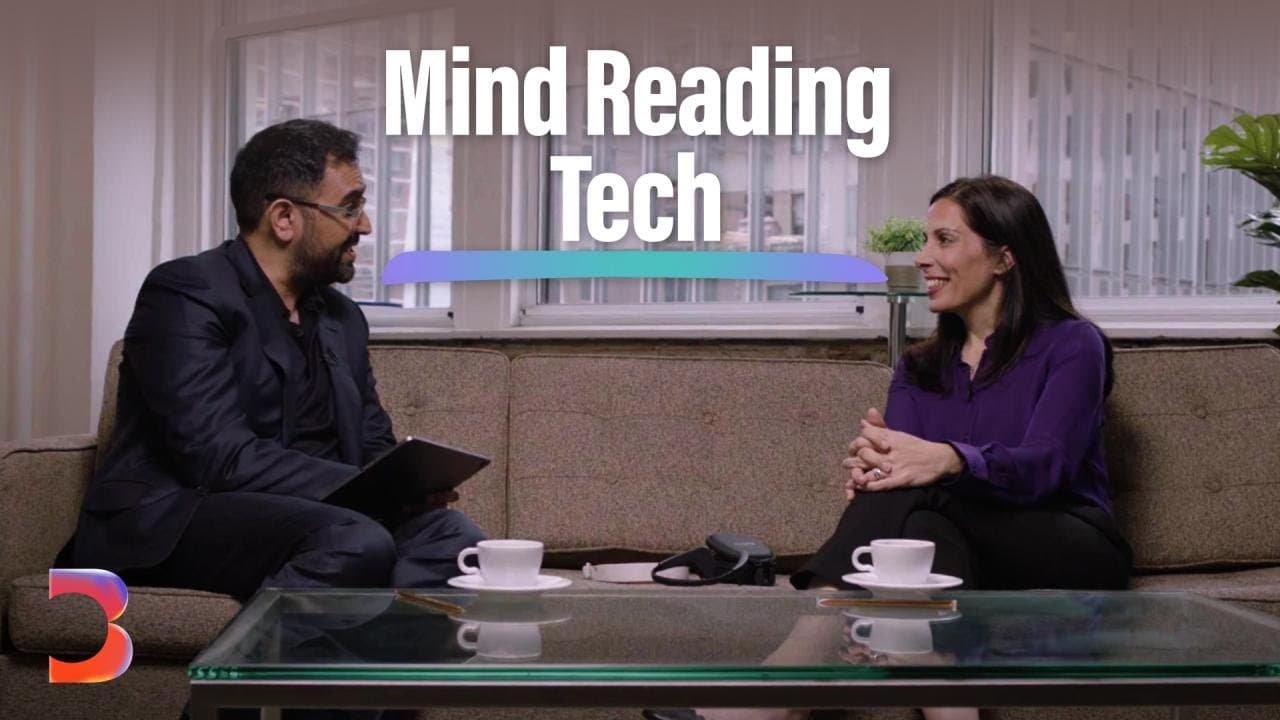
Inside Mind-Reading AI | Exponentially with Azeem Azhar
TL;DR
Brain-scanning tech raises privacy concerns and ethical questions.
Transcript
in five years we will legally own our own thoughts that is the premise of today's conversation welcome to exponentially new devices can now read or even manipulate our mental states to help us relax learn or reduce pain as they do this they harvest data and that is where we should be concerned can businesses be trusted with this very private inform... Read More
Key Insights
- Emerging technologies can read and manipulate mental states, raising significant privacy concerns as they harvest sensitive data.
- Over a billion dollars have been invested in neurotechnology, with applications ranging from therapeutic to potentially invasive uses.
- There is a growing need for cognitive rights to protect mental privacy and prevent coercive uses of brain-scanning technologies.
- Neurotechnology advancements allow for both diagnostic and therapeutic applications, but also pose risks of misuse in coercive settings like schools or workplaces.
- Brain-scanning technologies are being tested for practical applications, such as improving focus or diagnosing mental health issues.
- Concerns exist about the potential for brain transparency, where private thoughts could be accessed by businesses or governments.
- Cognitive Liberty is proposed as a human right to ensure individuals have control over their brain data and mental experiences.
- The UN is seen as a potential but slow-moving avenue to establish cognitive rights, while self-regulation by companies is also advocated.
Install to Summarize YouTube Videos and Get Transcripts
Explore YouTube Video Summarizer or Get YouTube Transcript Extractor
Questions & Answers
Q: What are the potential applications of brain-scanning technologies?
Brain-scanning technologies have a range of potential applications, from therapeutic uses such as treating depression or enhancing cognitive performance, to diagnostic purposes like identifying mental health conditions. However, they also pose risks of misuse in coercive settings, where individuals' mental states could be monitored or manipulated without consent.
Q: Why is there a need for cognitive rights?
Cognitive rights are needed to protect individuals from invasive uses of neurotechnology that could infringe on mental privacy. As these technologies advance, there is a risk of private thoughts being accessed by businesses or governments, leading to potential abuses of power and loss of personal autonomy. Recognizing cognitive rights would help safeguard mental freedom.
Q: How could neurotechnology be misused in coercive settings?
Neurotechnology could be misused in coercive settings by monitoring individuals' mental states without their consent. For example, in workplaces, employers might use these technologies to track employees' focus or emotions, potentially leading to unfair treatment. In schools, brain monitors could be used to control students' attention, infringing on their right to mental freedom.
Q: What are the ethical concerns surrounding brain transparency?
Brain transparency raises ethical concerns because it involves accessing private mental states, which are integral to personal identity and autonomy. If businesses or governments can read thoughts, it could lead to manipulation or control of individuals' mental experiences. This threatens the fundamental human right to privacy and self-determination.
Q: How does cognitive Liberty relate to existing human rights?
Cognitive Liberty relates to existing human rights by emphasizing the right to mental privacy and freedom of thought. It builds on the Universal Declaration of Human Rights, advocating for explicit recognition of individuals' rights to control their brain data and mental experiences. This framework seeks to update interpretations of current rights to address new technological challenges.
Q: What role does the UN play in establishing cognitive rights?
The UN could play a role in establishing cognitive rights by recognizing them as part of international human rights. This would set a global legal norm, encouraging countries to update their interpretations of existing rights to include mental privacy. However, the UN's slow pace raises questions about its effectiveness in addressing rapid technological advancements.
Q: What is the potential impact of self-regulation by companies developing neurotechnology?
Self-regulation by companies developing neurotechnology could have a significant impact by ensuring ethical practices and protecting users' mental privacy. Companies could voluntarily adopt standards that prioritize cognitive rights, such as not collecting or misusing brain data. This proactive approach could complement legal frameworks and help build trust with consumers.
Q: How might neurotechnology advancements affect society in the near future?
Neurotechnology advancements could significantly affect society by enhancing cognitive abilities and providing new therapeutic options. However, they also pose risks of privacy invasion and coercive use. As these technologies become more widespread, there is an urgent need for ethical guidelines and legal protections to ensure they empower rather than oppress individuals.
Summary & Key Takeaways
-
The discussion explores the rapid advancements in brain-scanning technologies and their implications for privacy and mental autonomy. These technologies can read and manipulate mental states, raising concerns about data privacy and potential misuse.
-
Professor Nita Farahany advocates for cognitive rights as a means to protect individuals from coercive uses of neurotechnology. She emphasizes the need for legal recognition of mental privacy and self-determination over one's brain data.
-
The conversation also highlights the potential for neurotechnology to be used in coercive settings, such as workplaces or schools, and the importance of establishing ethical guidelines and self-regulation by companies developing these technologies.
Read in Other Languages (beta)
Share This Summary 📚
Summarize YouTube Videos and Get Video Transcripts with 1-Click
Try YouTube Summary with ChatGPT & Claude or YouTube Transcript Generator
Explore More Summaries from Bloomberg Originals 📚




Summarize YouTube Videos and Get Video Transcripts with 1-Click
Try YouTube Summary with ChatGPT & Claude or YouTube Transcript Generator