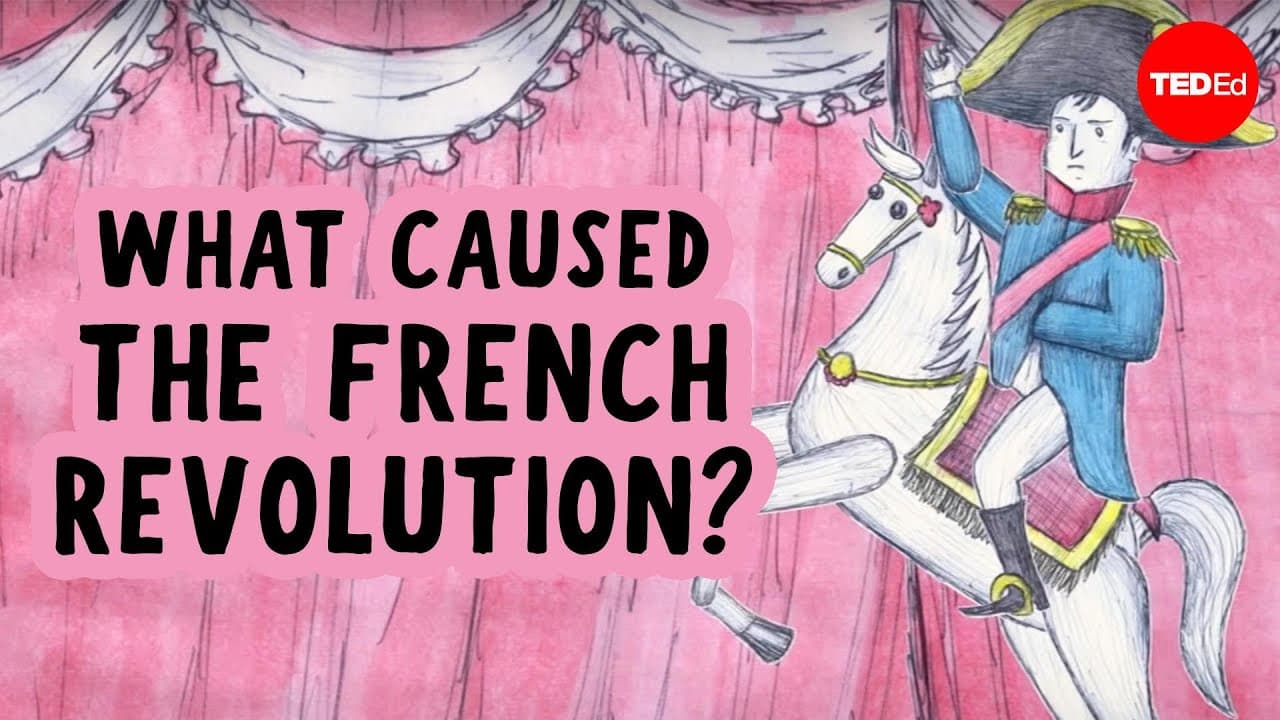
What caused the French Revolution? - Tom Mullaney
TL;DR
The French Revolution was a period of upheaval and radical change in France, marked by the fight for individual rights, the overthrow of the monarchy, and the rise of different factions.
Transcript
What rights do people have, and where do they come from? Who gets to make decisions for others and on what authority? And how can we organize society to meet people's needs? These questions challenged an entire nation during the upheaval of the French Revolution. By the end of the 18th century, Europe had undergone a profound intellectual and cultu... Read More
Key Insights
- 🇬🇫 The French Revolution was influenced by the Enlightenment and a desire for reason and freedom.
- 💖 The unfair social and political system in France, with privileges concentrated among the clergy and nobles, sparked widespread discontent.
- 🥺 The Revolution led to the establishment of the First French Republic and the execution of King Louis XVI and Queen Marie Antoinette.
Install to Summarize YouTube Videos and Get Transcripts
Explore YouTube Video Summarizer or Get YouTube Transcript Extractor
Questions & Answers
Q: What were the causes of the French Revolution?
The Enlightenment, economic hardship, and the unfair social and political system were some of the main causes of the French Revolution. The rise of a middle class and the American Revolution also played a role.
Q: How did the French Revolution impact society?
The French Revolution brought about the abolition of the feudal system and declared individual rights and freedoms as fundamental. It also led to social and religious transformations, as well as the execution of King Louis XVI and Queen Marie Antoinette.
Q: What were the different phases of the French Revolution?
The French Revolution saw three constitutions and five different governments within a span of ten years. It went through periods of monarchy, revolt, and the establishment of a republic.
Q: Who were the Jacobins and what was the Reign of Terror?
The Jacobins were a radical political group led by Maximilien Robespierre. During the Reign of Terror, they executed thousands of people accused of being enemies of the Revolution, suppressing dissent to maintain their power.
Key Insights:
- The French Revolution was influenced by the Enlightenment and a desire for reason and freedom.
- The unfair social and political system in France, with privileges concentrated among the clergy and nobles, sparked widespread discontent.
- The Revolution led to the establishment of the First French Republic and the execution of King Louis XVI and Queen Marie Antoinette.
- Different factions and leaders emerged during the Revolution, including the Jacobins and eventually Napoleon Bonaparte.
Summary & Key Takeaways
-
The Enlightenment in Europe led to a shift towards reason and human freedom, challenging the old social and political system in France.
-
The First and Second Estates (Catholic clergy and nobles) enjoyed special privileges, while the Third Estate (middle class and peasants) faced heavy taxes and little power.
-
King Louis XVI's attempts at reform were met with resistance, leading to the formation of the National Assembly and the storming of the Bastille. The Revolution saw the end of the monarchy and the establishment of the First French Republic.
Read in Other Languages (beta)
Share This Summary 📚
Summarize YouTube Videos and Get Video Transcripts with 1-Click
Try YouTube Summary with ChatGPT & Claude or YouTube Transcript Generator
Explore More Summaries from TED-Ed 📚




Summarize YouTube Videos and Get Video Transcripts with 1-Click
Try YouTube Summary with ChatGPT & Claude or YouTube Transcript Generator