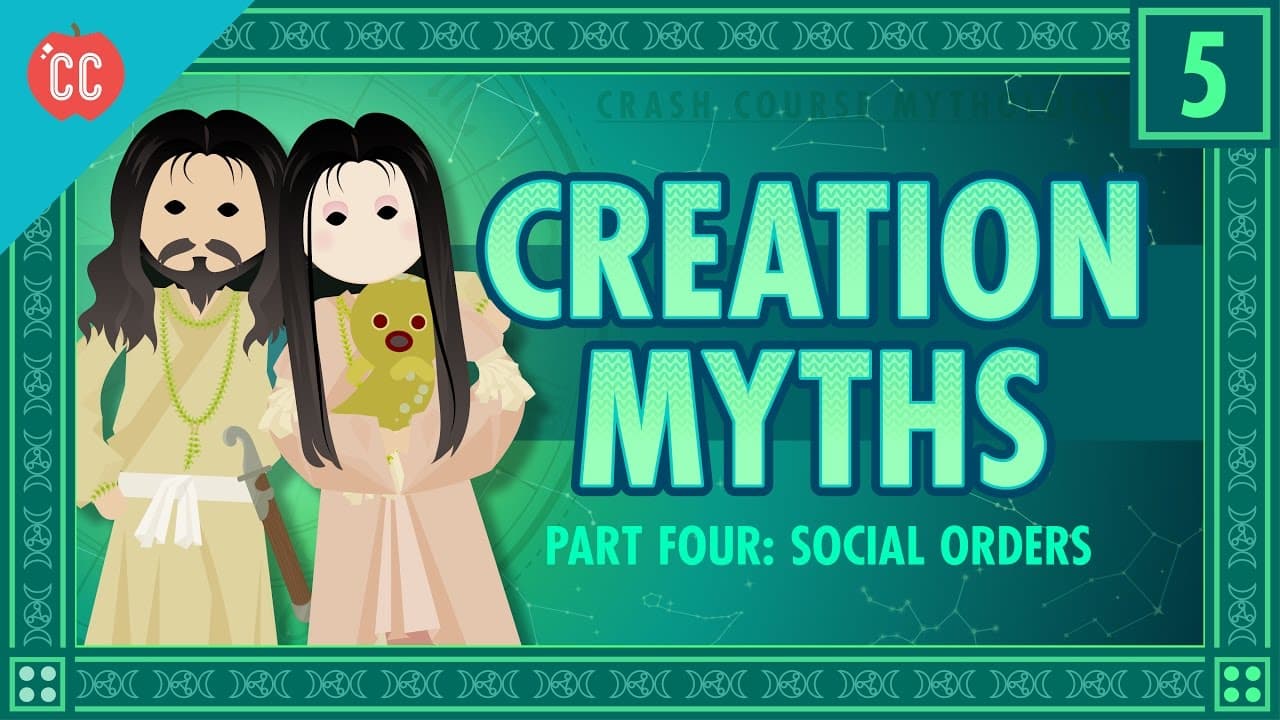
Social Orders and Creation Stories: Crash Course World Mythology #5
TL;DR
Myths often justify male dominance and female subservience.
Transcript
Hi I’m Mike Rugnetta, this is Crashcourse Mythology and today, rather than focus on how the earth and what’s around it was created, we’re going to look specifically at what’s on it, more specifically people, and even more specifically, men and women. People. Also the occasional animal. No, not you Thoth. You’re a god with an animal head, it’s diffe... Read More
Key Insights
- Many myths explain human origins and gender roles, often reinforcing male dominance and female subservience.
- Biblical creation stories establish male superiority, with men naming women and having dominion over them.
- The story of Pandora in Greek mythology portrays women as the source of human suffering.
- Japanese creation myths also reinforce male precedence, attributing early mistakes to female actions.
- Myths often justify existing social orders, providing rationalizations for gender inequality.
- Creation myths frequently blame women for introducing death and toil into the world.
- These myths have had profound effects on gender relations and societal structures throughout history.
- Despite the negative portrayal, these myths reflect cultural beliefs and societal norms of their time.
Install to Summarize YouTube Videos and Get Transcripts
Explore YouTube Video Summarizer or Get YouTube Transcript Extractor
Questions & Answers
Q: How do myths typically portray gender roles?
Myths often portray gender roles by reinforcing male dominance and female subservience. They frequently depict women as the source of human suffering, with narratives that blame female actions for introducing death, toil, and disease into the world. These stories justify existing patriarchal structures and reflect cultural beliefs of their time.
Q: What is the significance of the Genesis creation story in terms of gender roles?
The Genesis creation story is significant in terms of gender roles as it establishes male superiority by depicting Eve as created from Adam's rib and subject to his naming. It also portrays women as the cause of human suffering, with Eve's actions leading to punishment and the establishment of a patriarchal order where men rule over women.
Q: How does Greek mythology explain the origin of human suffering?
Greek mythology explains the origin of human suffering through the story of Pandora, who is depicted as the first woman created by the gods as a punishment for Prometheus's actions. Pandora opens a jar containing all the evils of the world, releasing them upon humanity. This narrative portrays women as the source of suffering and reinforces negative gender stereotypes.
Q: What role do Japanese myths play in reinforcing gender inequality?
Japanese myths reinforce gender inequality by attributing early mistakes to female actions, as seen in the story of Izanami and Izanagi. When Izanami speaks first during a ritual, their first child is born deformed. This narrative establishes male precedence and justifies a system where men are considered superior, reflecting cultural beliefs and societal norms.
Q: Why do myths often blame women for introducing death and toil into the world?
Myths often blame women for introducing death and toil into the world as a way to justify male dominance and existing social orders. By attributing human suffering to female actions, these narratives provide a rationale for patriarchal structures and reflect cultural beliefs that view women as inferior and responsible for negative outcomes.
Q: How do myths justify existing social orders?
Myths justify existing social orders by providing narratives that reinforce cultural beliefs and societal norms. They often depict gender roles that favor male dominance and female subservience, attributing human suffering to female actions. These stories rationalize patriarchal structures and perpetuate the idea of male superiority across different cultures and societies.
Q: What impact have these myths had on gender relations?
These myths have had a profound impact on gender relations by perpetuating the idea of male superiority and female inferiority. They have justified patriarchal structures and influenced societal norms, leading to long-lasting effects on how genders are perceived and treated. The narratives have reinforced stereotypes and contributed to gender inequality across different cultures.
Q: Do these myths reflect cultural beliefs and norms?
Yes, these myths reflect cultural beliefs and norms of their respective societies. They provide insights into how different cultures viewed gender roles and justified existing social orders. By attributing human suffering to female actions, these narratives reinforce patriarchal structures and perpetuate the idea of male dominance, reflecting the societal values of their time.
Summary & Key Takeaways
-
The video explores how myths from various cultures justify male dominance and female subservience. It highlights stories from the Bible, Greek, and Japanese mythology, showing how these narratives blame women for human suffering and reinforce patriarchal structures.
-
Biblical stories depict women as subordinate, with the creation of Eve from Adam's rib and the punishment for eating the forbidden fruit. Similarly, Greek mythology blames Pandora for unleashing suffering, while Japanese myths attribute early mistakes to female actions.
-
These myths serve to justify existing social orders, reflecting cultural beliefs and norms. They have had lasting impacts on gender relations, perpetuating the idea of male superiority and female inferiority across different societies.
Read in Other Languages (beta)
Share This Summary 📚
Summarize YouTube Videos and Get Video Transcripts with 1-Click
Try YouTube Summary with ChatGPT & Claude or YouTube Transcript Generator
Explore More Summaries from CrashCourse 📚




Summarize YouTube Videos and Get Video Transcripts with 1-Click
Try YouTube Summary with ChatGPT & Claude or YouTube Transcript Generator