How Do Pointers Work in Go Programming Language?
TL;DR
In Go, pointers are used to store the memory addresses of variables, allowing for direct access and modification of their values. The ampersand (&) is used to obtain a pointer to a variable, while the asterisk (*) is used to dereference a pointer to access or change the value stored at that address.
Transcript
what is going on everybody welcome to part 4 of the go tutorial series in this part what we're really talking about is pointers which is pretty much the last element that's going to be necessary for you to understand the basic kind of go web server example so also if you're like coming from something like Python this is totally foreign to you so so... Read More
Key Insights
- 👻 Pointers in Go store memory addresses of variables and allow direct access to their values.
- 🤬 The ampersand (&) symbol is used to obtain the memory address of a variable.
- 🤬 The asterisk (*) symbol is used to declare and dereference pointer variables in Go.
- 😥 Modifying the value of a pointer changes the memory address it points to.
- 👻 Dereferencing a pointer allows us to access or modify the value stored at the memory address.
- 💦 Pointers are useful for passing values by reference, avoiding copy operations, and working with large data structures efficiently.
- 🕸️ Understanding pointers is crucial to grasp more advanced concepts in Go, such as web server development.
Install to Summarize YouTube Videos and Get Transcripts
Explore YouTube Video Summarizer or Get YouTube Transcript Extractor
Questions & Answers
Q: What is the purpose of using pointers in Go?
Pointers in Go allow us to directly access and modify the value of a variable stored in memory by using its memory address. This is useful when we want to pass values by reference or avoid making a copy of a large data structure.
Q: How do you declare a pointer variable in Go?
To declare a pointer variable in Go, we use the asterisk (*) symbol before the variable name and assign it the memory address of another variable. For example, "var ptr *int = &myVariable".
Q: What happens if you assign a new value to a pointer variable in Go?
Assigning a new value to a pointer variable simply changes the memory address it points to. The value at the previous memory address remains unchanged unless modified through the new pointer.
Q: Can pointers be dereferenced in Go?
Yes, pointers can be dereferenced in Go using the asterisk (*) symbol. Dereferencing a pointer allows us to access or modify the value stored at the memory address the pointer points to.
Summary & Key Takeaways
-
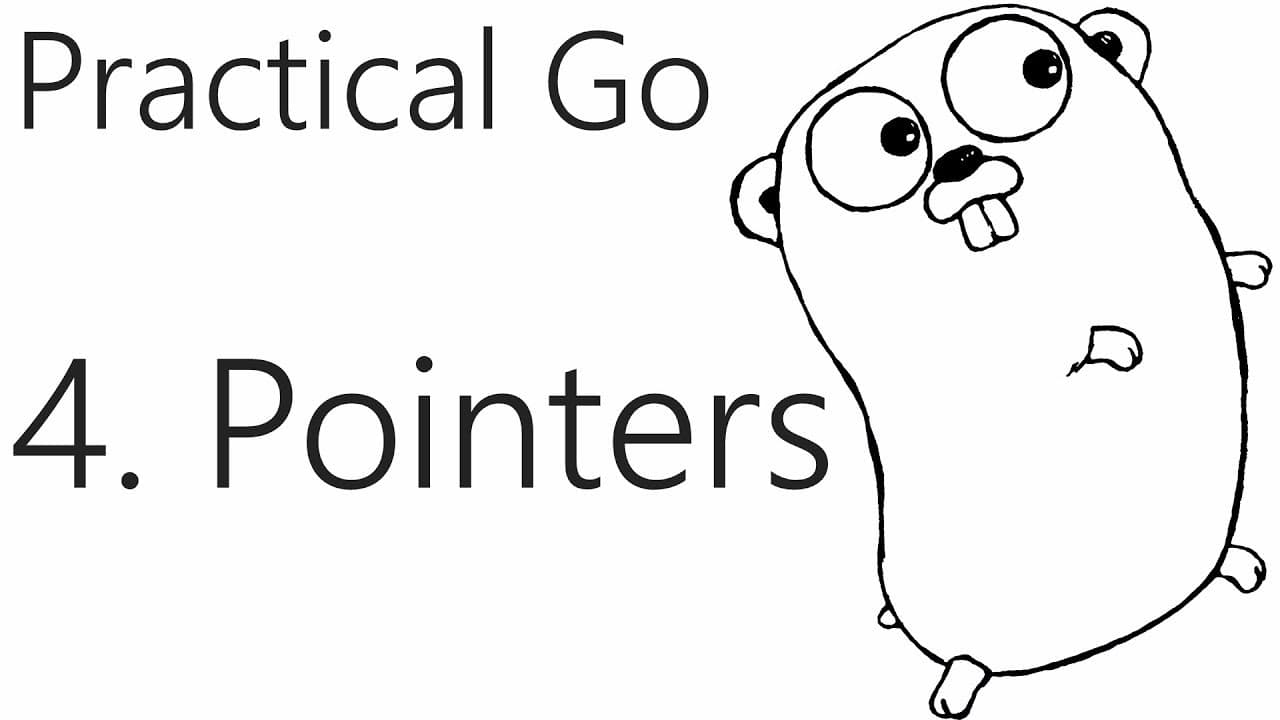
This tutorial is part 4 of a Go tutorial series and focuses on pointers, which are essential for understanding the upcoming Go web server example.
-
Pointers in Go are denoted using the ampersand (&) symbol, and they store the memory address of a variable.
-
To access or modify the value stored at a memory address, the asterisk (*) symbol is used.
Read in Other Languages (beta)
Share This Summary 📚
Summarize YouTube Videos and Get Video Transcripts with 1-Click
Try YouTube Summary with ChatGPT & Claude or YouTube Transcript Generator
Explore More Summaries from sentdex 📚





Summarize YouTube Videos and Get Video Transcripts with 1-Click
Try YouTube Summary with ChatGPT & Claude or YouTube Transcript Generator