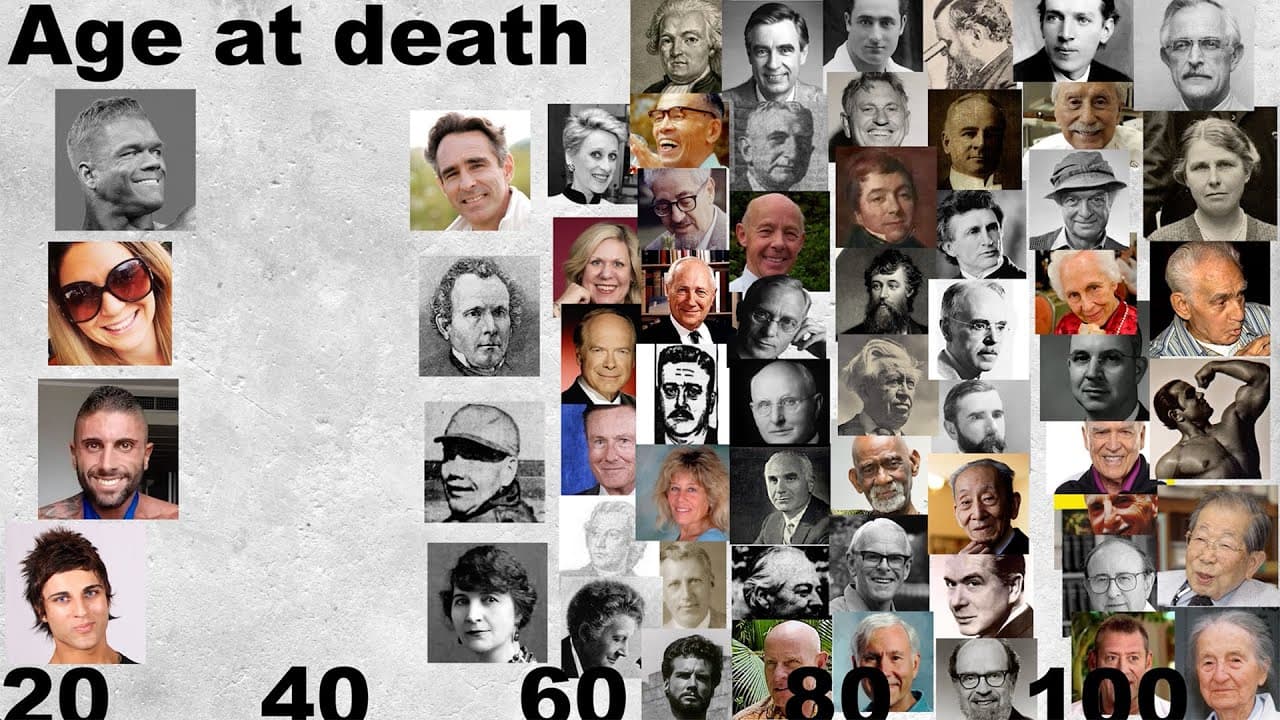
How long do health influencers live? Episode 2 of 3.
TL;DR
Examines the lifespans of various health influencers and dietary trends.
Transcript
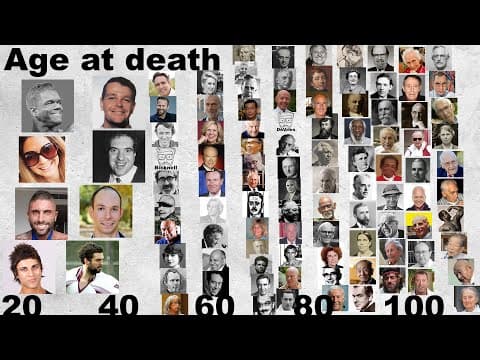
- A couple of months ago I did an episode on how long health influencers live and the reaction was amazing. But people asked, "How could you miss Charles Atlas, Dr. Sebi, Paul Bragg, the Gersons? And while you're at it, please include some social media influencers." So here we go with the sequel, (chuckles) it involves some crazies, some Nobel Priz... Read More
Key Insights
- The video explores the lifespans of health influencers, noting that many did not live particularly long despite their health-focused lifestyles.
- Influential figures like Charles Atlas and Dr. Sebi are discussed, with a focus on their dietary beliefs and how these may have impacted their longevity.
- The video highlights the potential dangers of extreme diets, with examples of young bodybuilders who died due to steroid use and high-protein diets.
- Dr. David Servan-Schreiber's anti-cancer lifestyle is presented as a positive influence, with his Mediterranean diet extending his life expectancy despite a brain cancer diagnosis.
- The video underscores the evolution of dietary trends, from early low-carb diets to modern plant-based movements, and how these have been marketed over centuries.
- Harriet Chick's contributions to nutrition science are highlighted, particularly her research on vitamins and the role of dairy in preventing diseases like scurvy.
- The narrative suggests a degradation in the quality of low-carb diets over time, contrasting historical diverse meat diets with today's industrialized meat production.
- The growing necessity of plant-based diets for environmental sustainability is touched upon, with plant-based meats becoming more palatable and potentially healthier.
Install to Summarize YouTube Videos and Get Transcripts
Explore YouTube Video Summarizer or Get YouTube Transcript Extractor
Questions & Answers
Q: What is the main focus of the video content?
The video focuses on examining the lifespans of various health influencers, analyzing their dietary habits and the impact these had on their longevity. It discusses both historical and modern figures, exploring the evolution of dietary trends and the potential dangers of extreme diets.
Q: Who are some of the key figures discussed in the video?
Key figures discussed include Charles Atlas, Dr. Sebi, Dr. David Servan-Schreiber, and Harriet Chick. Each of these individuals is highlighted for their contributions to health and nutrition, with an emphasis on how their dietary beliefs may have influenced their life expectancy.
Q: What are some potential dangers of extreme diets highlighted in the video?
The video highlights the dangers of extreme diets, particularly among young bodybuilders who died due to steroid use and high-protein diets. It underscores the risks associated with aggressive bulking cycles and the health consequences of neglecting balanced nutrition.
Q: How does the video portray Dr. David Servan-Schreiber's anti-cancer lifestyle?
Dr. David Servan-Schreiber's anti-cancer lifestyle is portrayed positively, emphasizing his adoption of the Mediterranean diet and its role in extending his life expectancy despite a brain cancer diagnosis. His approach is presented as a model for combining conventional treatments with dietary changes to improve health outcomes.
Q: What historical dietary trends are explored in the video?
The video explores historical dietary trends, including early low-carb diets and the rise of vegetarianism. It contrasts these with modern plant-based movements, highlighting how dietary advice has evolved over centuries and the marketing strategies that have accompanied these changes.
Q: What contributions did Harriet Chick make to nutrition science?
Harriet Chick made significant contributions to nutrition science, particularly in researching vitamins and their role in preventing diseases like scurvy and beriberi. Her work helped establish the importance of dairy in Northern European diets and contributed to the understanding of nutritional deficiencies.
Q: How does the video suggest low-carb diets have changed over time?
The video suggests that low-carb diets have degraded over time, with historical diets featuring a diverse range of meats and animal parts, compared to today's industrialized meat production. It implies that modern low-carb diets may lack the nutritional balance of their historical counterparts.
Q: What environmental considerations does the video touch upon regarding diet?
The video touches upon the environmental necessity of adopting plant-based diets, as advocated by figures like Bill Gates and David Attenborough. It notes that plant-based meats are becoming more palatable and potentially healthier, aligning with efforts to mitigate climate change through dietary changes.
Summary & Key Takeaways
-
The video investigates the lifespans of health influencers, noting that many, despite their health-focused lifestyles, did not necessarily live longer lives. It includes figures like Charles Atlas and Dr. Sebi, examining their dietary beliefs and their impact on longevity.
-
The video provides cautionary tales of extreme diets, particularly among young bodybuilders who died due to steroid use and high-protein intake. It also highlights positive stories, such as Dr. David Servan-Schreiber's anti-cancer lifestyle and its influence on his longevity.
-
The evolution of dietary trends is explored, from early low-carb diets to modern plant-based movements. The narrative suggests a decline in low-carb diet quality over time and emphasizes the environmental necessity of plant-based diets, with plant-based meats becoming more viable.
Read in Other Languages (beta)
Share This Summary 📚
Summarize YouTube Videos and Get Video Transcripts with 1-Click
Try YouTube Summary with ChatGPT & Claude or YouTube Transcript Generator
Explore More Summaries from Viva Longevity! 📚
Summarize YouTube Videos and Get Video Transcripts with 1-Click
Try YouTube Summary with ChatGPT & Claude or YouTube Transcript Generator