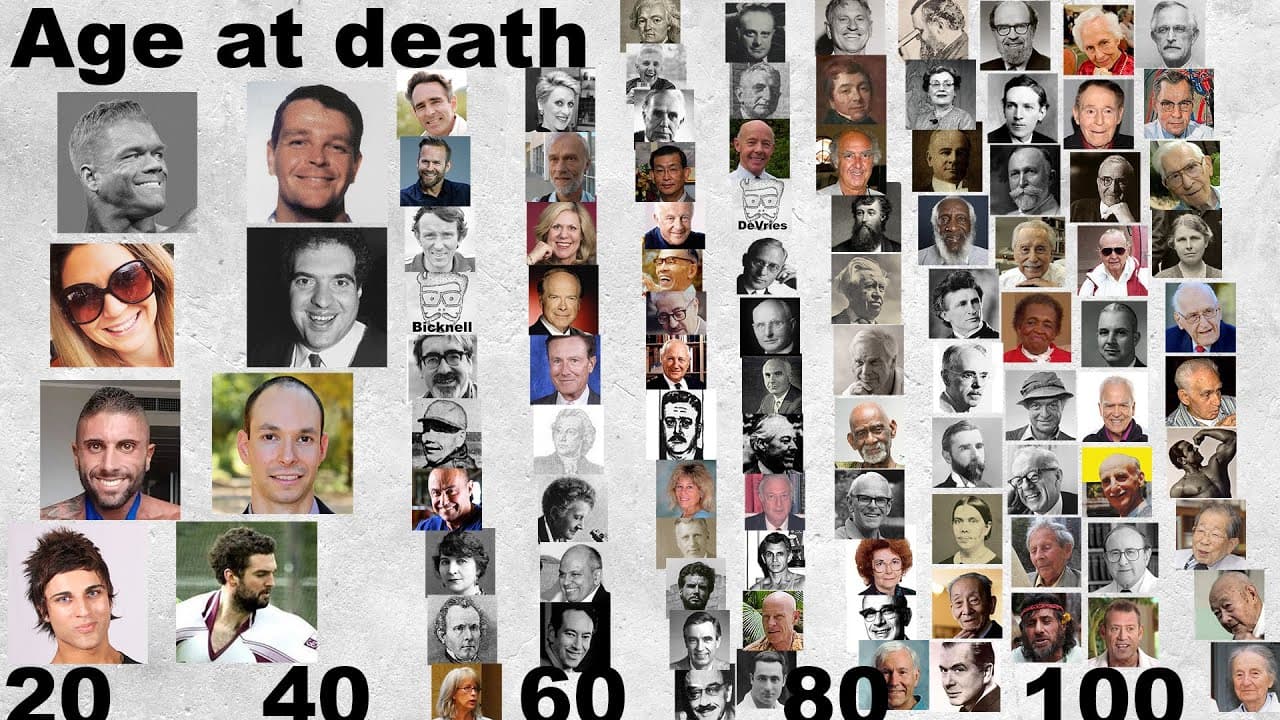
How Long Do Health Influencers Live? Episode 3.
TL;DR
Low-carb diet influencers often die younger, despite some exceptions.
Transcript
- A couple of months ago I got curious about how long health influencers live, so I made an episode about 24 health gurus. I was familiar with. One disturbing pattern that emerged was how young the low carb dieters were when they died. I thought, surely that must be a small sample size thing. So last month I did an episode with 60, more and spent a... Read More
Key Insights
- The exploration of low-carb diet influencers reveals a pattern of relatively shorter lifespans, with few exceptions living into their 90s.
- Historical low-carb diet advocates often died in their 70s or earlier, raising questions about the long-term health impacts of these diets.
- Dr. Wolfgang Lutz, a notable exception, lived to 97, suggesting some low-carb diets may incorporate balanced nutrition.
- The low-carb community often distrusts large population studies, preferring anecdotal evidence over epidemiological data.
- Epidemiologists have historically used observational studies to infer causal relationships, such as linking smoking to cancer.
- The low-carb community's dismissal of epidemiology contrasts with the broader nutrition community's reliance on such studies.
- Plant-based low-carb diets may offer a healthier alternative, potentially aligning with epidemiological findings on longevity.
- Processed food versions of low-carb diets, like keto-friendly products, may not deliver the health benefits they claim.
Install to Summarize YouTube Videos and Get Transcripts
Explore YouTube Video Summarizer or Get YouTube Transcript Extractor
Questions & Answers
Q: Why do low-carb diet influencers tend to die younger?
The episode suggests that low-carb diet influencers often die younger due to the potential health risks associated with high animal protein diets. Epidemiological studies indicate that such diets may double the risk of dying from any cause and quadruple the risk of dying from cancer. The host highlights the need for more comprehensive research to understand these patterns.
Q: Who is Dr. Wolfgang Lutz and why is he significant?
Dr. Wolfgang Lutz is a notable exception among low-carb diet influencers, living to 97. He authored 'My Life Without Bread,' advocating for a diet allowing 72 grams of carbohydrates per day. His balanced approach, incorporating fruits and vegetables, suggests that some low-carb diets may support longevity. His case challenges the general pattern of shorter lifespans among low-carb advocates.
Q: What is the low-carb community's stance on epidemiological studies?
The low-carb community often distrusts epidemiological studies, preferring anecdotal evidence and dismissing large population studies. This contrasts with the broader nutrition community, which values epidemiology for its ability to infer causal relationships, such as linking smoking to cancer. The episode critiques this stance, advocating for interdisciplinary research to understand diet impacts better.
Q: How do plant-based low-carb diets compare to traditional low-carb diets?
Plant-based low-carb diets may offer a healthier alternative to traditional low-carb diets, which often rely heavily on animal proteins. Epidemiologists have warned about the risks of high animal protein consumption. Plant-based diets, incorporating sources like avocados and nuts, may align better with longevity studies, suggesting they could mitigate some health risks associated with traditional low-carb diets.
Q: What historical figures are mentioned regarding low-carb diets?
The episode mentions historical figures like Dr. Stillman, Dr. Franklin Bicknell, and Arnold De Vries, who were early advocates of low-carb diets. Despite their popularity, many of these figures died relatively young, in their 70s or earlier. Their stories highlight concerns about the long-term health impacts of low-carb diets and the need for further research.
Q: What role do processed foods play in low-carb diets?
Processed foods marketed as low-carb or keto-friendly may not deliver the health benefits they claim. The episode critiques products with ingredients like allulose and resistant tapioca starch, questioning their nutritional value. The host suggests that these products may contribute to the health risks associated with low-carb diets, emphasizing the importance of whole, unprocessed foods.
Q: What is the significance of the China study in nutritional research?
The China study, co-authored by respected epidemiologist Sir Richard Peto, is significant for its high-quality data linking diet to health outcomes. The study supports the benefits of plant-based diets, contrasting with low-carb advocates' dismissal of epidemiological research. The episode highlights the importance of such studies in understanding diet impacts and critiques attempts to discredit their findings.
Q: How does the episode suggest improving low-carb diet research?
The episode suggests that integrating scientific disciplines like epidemiology and anthropology into low-carb diet research could provide more comprehensive data. By embracing large, multi-country, multi-decade studies, the low-carb community could better understand diet impacts on longevity. The host advocates for plant-based low-carb diets and highlights the need for interdisciplinary collaboration to advance nutritional science.
Summary & Key Takeaways
-
This episode investigates the lifespans of low-carb diet influencers, finding that many died younger than expected. The host explores historical and modern figures, noting exceptions like Dr. Wolfgang Lutz, who lived to 97. The episode critiques the low-carb community's distrust of epidemiological studies, advocating for more comprehensive research.
-
The host examines the historical popularity of low-carb diets, noting that most early advocates died relatively young. Despite extensive research, the host struggles to find many low-carb influencers living into their 90s. The episode highlights the potential health risks of high animal protein diets and advocates for plant-based alternatives.
-
The episode critiques the low-carb community's dismissal of epidemiological studies, contrasting it with the broader nutrition community's reliance on such research. The host discusses the potential benefits of plant-based low-carb diets and raises concerns about the health impacts of processed keto products. The episode concludes with a call for more interdisciplinary research.
Read in Other Languages (beta)
Share This Summary 📚
Summarize YouTube Videos and Get Video Transcripts with 1-Click
Try YouTube Summary with ChatGPT & Claude or YouTube Transcript Generator
Explore More Summaries from Viva Longevity! 📚





Summarize YouTube Videos and Get Video Transcripts with 1-Click
Try YouTube Summary with ChatGPT & Claude or YouTube Transcript Generator