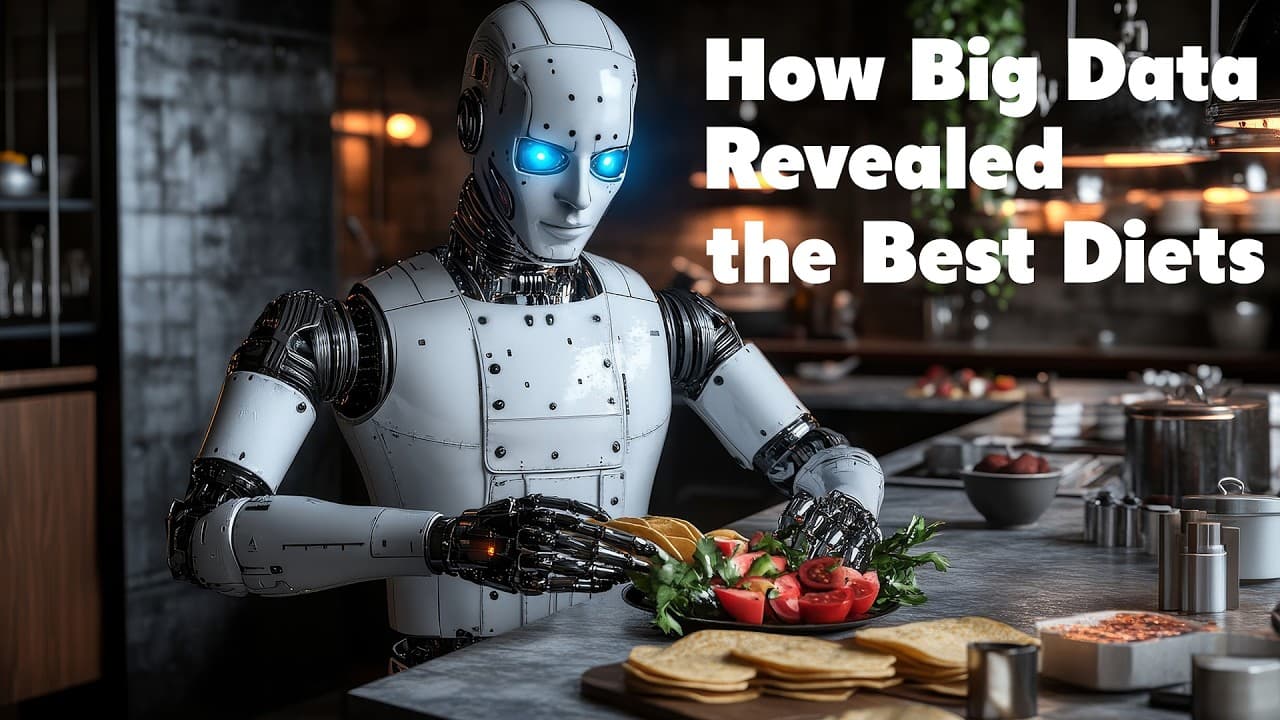
How Big Data Revealed the Best Diets
TL;DR
Big data is set to transform nutrition science and dietary guidelines.
Transcript
- I got an invitation to speak at a low carb conference where some of the biggest names in the low carb movement would be in the audience, gulp. I may have published some skeptical episodes about a few of them on this channel, awkward. But here's the thing: I have enormous respect for Dave Feldman, the organizer of the Collaborative Science Confere... Read More
Key Insights
- The speaker was invited to a low-carb conference to discuss the sustainability of animal agriculture, highlighting the importance of respectful dialogue between differing perspectives.
- Dave Feldman's film on low-carb diets showcased personal stories but lacked population data, suggesting the potential for similar films on other diets like vegetarian and vegan.
- The speaker emphasized the potential of big data to revolutionize nutrition, drawing parallels with its transformative impact on industries like retail and finance.
- Historical perspectives on diet, from Jack LaLanne's Mediterranean influence to the low-carb movement, illustrate the cyclical nature of dietary trends and public health implications.
- Environmental epidemiology has faced significant industry pushback, similar to the current challenges in nutrition science, underscoring the need for credible, data-driven research.
- The Seven Countries Study demonstrated the correlation between saturated fat and heart disease, challenging claims that there is no evidence against saturated fat.
- International dietary guidelines are remarkably similar, with epidemiologists playing a crucial role in shaping them, contrasting with the often sensationalized views of social media influencers.
- The speaker advocates for a vegan diet primarily due to environmental concerns, aligning with the views of prominent earth scientists, despite the absence of vegan recommendations in global dietary guidelines.
Install to Summarize YouTube Videos and Get Transcripts
Explore YouTube Video Summarizer or Get YouTube Transcript Extractor
Questions & Answers
Q: What was the main focus of the speaker's talk at the low-carb conference?
The main focus of the speaker's talk was on how big data will revolutionize nutrition science. They emphasized the potential of big data to transform dietary guidelines and public health recommendations, similar to its impact on industries like retail and finance. The speaker also discussed the sustainability of animal agriculture and the importance of using data to drive nutrition science forward.
Q: How did the speaker approach the topic of low-carb diets at the conference?
The speaker approached the topic of low-carb diets by acknowledging the personal success stories showcased in Dave Feldman's film, but they critiqued the lack of population data in these narratives. They argued that while low-carb diets can be effective for certain conditions, high meat diets are associated with rapid aging and shorter lifespans in the general population. The speaker advocated for a data-driven approach to nutrition science, highlighting the potential for similar films on vegetarian and vegan diets.
Q: What historical dietary trends did the speaker discuss?
The speaker discussed historical dietary trends, highlighting figures like Jack LaLanne, who promoted Mediterranean-style diets, and contrasting them with low-carb advocates like Carlton Fredericks. They noted the cyclical nature of dietary trends, with low-carb diets gaining popularity every two generations. The speaker emphasized the long-term health implications of these trends, noting that populations adopting Mediterranean, Asian, and vegetarian diets tend to have longer life expectancies.
Q: How does the speaker view the role of environmental epidemiology in nutrition science?
The speaker views environmental epidemiology as a field that has faced significant industry pushback, similar to the challenges faced in nutrition science. They highlighted the historical efforts of scientists like Herb Needleman in combating industry misinformation and emphasized the importance of credible, data-driven research in both fields. The speaker argued that big data and modern epidemiology have the potential to advance nutrition science, despite the skepticism faced by epidemiologists.
Q: What was the speaker's critique of social media influencers in nutrition?
The speaker critiqued social media influencers for sensationalizing anti-science and promoting misinformation about nutrition. They noted that many influencers lack a background in conducting credible scientific studies and tend to focus on what consumers want to hear, such as miracle diets and magic pills. The speaker emphasized the importance of credible, data-driven research and highlighted the role of international dietary guidelines, shaped by epidemiologists, in providing sound nutritional advice.
Q: Why does the speaker advocate for a vegan diet?
The speaker advocates for a vegan diet primarily due to environmental concerns, aligning with the views of prominent earth scientists. They highlighted issues such as land use, water use, pollution, pandemic risk, and greenhouse gases associated with animal agriculture. Despite the absence of vegan recommendations in global dietary guidelines, the speaker emphasized the environmental benefits of a vegan diet and the alignment with the views of scientists like James Hansen and Johan Rockstrom.
Q: What role does big data play in modern nutrition science according to the speaker?
According to the speaker, big data plays a crucial role in modern nutrition science by providing large datasets and advanced computational methods to analyze dietary patterns and health outcomes. They highlighted the improvements in causal reasoning and the potential for big data to revolutionize nutrition, similar to its impact on other industries. The speaker emphasized that big data allows for more accurate and comprehensive analysis of population health, informing dietary guidelines and public health recommendations.
Q: How does the speaker view the international dietary guidelines?
The speaker views international dietary guidelines as remarkably similar across countries, shaped by independent scientists and epidemiologists who understand big data. They emphasized that these guidelines provide sound nutritional advice, contrasting with the often sensationalized views of social media influencers. The speaker highlighted the importance of credible, data-driven research in shaping these guidelines and the role of epidemiologists in advancing nutrition science globally.
Summary & Key Takeaways
-
The speaker discussed the role of big data in transforming nutrition science at a low-carb conference, emphasizing the importance of respectful dialogue despite differing perspectives. They highlighted the potential of big data to revolutionize nutrition, drawing parallels with its impact on other industries.
-
Historical dietary trends, from Jack LaLanne's Mediterranean influence to the low-carb movement, illustrate the cyclical nature of public health advice. The speaker critiqued the sensationalism of social media influencers, advocating for data-driven research and international dietary guidelines.
-
Environmental concerns drive the speaker's advocacy for a vegan diet, aligning with prominent earth scientists. They highlighted the challenges faced by environmental epidemiology, drawing parallels with nutrition science, and stressed the need for credible, data-driven research to counter misinformation.
Read in Other Languages (beta)
Share This Summary 📚
Summarize YouTube Videos and Get Video Transcripts with 1-Click
Try YouTube Summary with ChatGPT & Claude or YouTube Transcript Generator
Explore More Summaries from Viva Longevity! 📚
Summarize YouTube Videos and Get Video Transcripts with 1-Click
Try YouTube Summary with ChatGPT & Claude or YouTube Transcript Generator