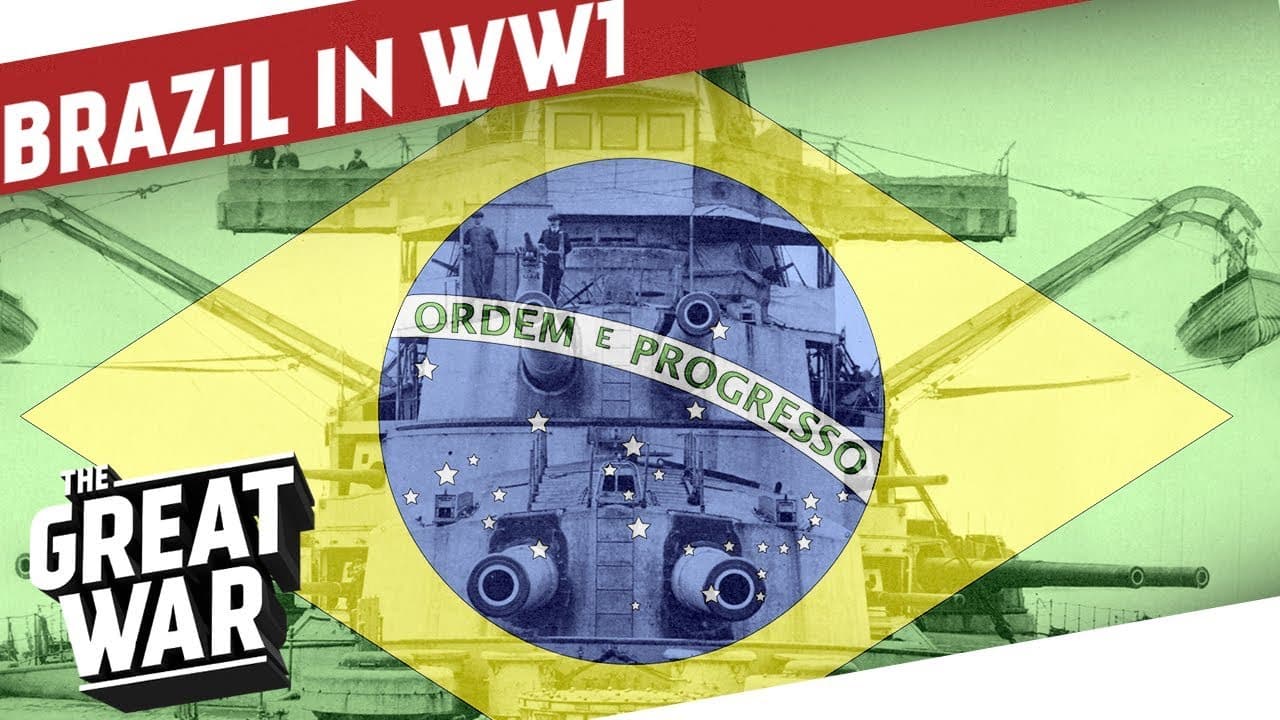
Brazil in World War 1 - The South American Ally I THE GREAT WAR Special
TL;DR
Brazil joined WWI late, contributing mainly through naval efforts.
Transcript
We’ve done a series of specials about various countries during the First World War and this is another one of them. Although today it features a country that joined late in the war and was quite far from most of the action, Brazil. I’m Indy Neidell; welcome to a Great War special episode about Brazil during the First World War. Brazil declared its ... Read More
Key Insights
- Brazil initially declared neutrality in World War I but later joined the Allies due to German submarine warfare affecting Brazilian ships and citizens.
- Anti-German sentiment grew in Brazil after German submarines sank several Brazilian ships, prompting Brazil to break off diplomatic relations with Germany.
- Brazil declared war on Germany in October 1917, marking its entry into World War I as the only South American nation to do so.
- The Brazilian navy played a key role in patrolling the South Atlantic, and Brazil opened its ports to Allied shipping.
- Brazil sent a medical mission to Europe to assist with the Spanish Flu pandemic, showcasing its humanitarian contribution to the war effort.
- Brazil's involvement in the war led to industrial growth, reducing its reliance on coffee exports and imports, and quadrupling industrial output.
- Despite its naval strength, Brazil's army was underprepared for large-scale conflict due to its last major engagement being the Paraguay War in the 1870s.
- Brazil's participation in the war earned it a place at the Paris Peace Conference and as a founding member of the League of Nations.
Install to Summarize YouTube Videos and Get Transcripts
Explore YouTube Video Summarizer or Get YouTube Transcript Extractor
Questions & Answers
Q: Why did Brazil initially declare neutrality in World War I?
Brazil declared neutrality at the outset of World War I in August 1914 due to its geographical distance from the main theaters of war and the lack of immediate threat to its national interests. This stance was politically viable for the first few years, allowing Brazil to avoid entanglement in the conflict.
Q: What prompted Brazil to break off diplomatic relations with Germany?
Brazil broke off diplomatic relations with Germany in April 1917 after German submarines sank Brazilian ships, such as the steamship Parana, resulting in Brazilian casualties. These events sparked public outrage and anti-German sentiment, leading to the severing of diplomatic ties.
Q: How did Brazil contribute to the Allied war effort after declaring war on Germany?
After declaring war on Germany in October 1917, Brazil contributed to the Allied war effort primarily through its navy, which patrolled the South Atlantic. Additionally, Brazil sent a medical mission to Europe to assist with the Spanish Flu pandemic, demonstrating its commitment to the Allied cause.
Q: What was the significance of Brazil's seat at the Paris Peace Conference?
Brazil's seat at the Paris Peace Conference was significant as it recognized Brazil's contributions to the Allied victory and marked its emergence as a mid-power nation on the global stage. This participation also led to Brazil becoming a founding member of the League of Nations, enhancing its diplomatic influence.
Q: How did World War I impact Brazil's economy?
World War I had a transformative impact on Brazil's economy, as the country shifted from a reliance on coffee exports to a more diversified industrial base. Industrial output quadrupled, reducing dependence on imports and fostering economic growth, which was crucial for Brazil's post-war development.
Q: What challenges did Brazil face in mobilizing its military for World War I?
Brazil faced challenges in mobilizing its military due to its army's lack of recent combat experience, with the last major conflict being the Paraguay War in the 1870s. Efforts to strengthen the army, such as conscription, had failed, leaving Brazil to rely on its relatively stronger naval capabilities.
Q: Why was Brazil's navy considered a real power in Latin America during World War I?
Brazil's navy was considered a real power in Latin America during World War I due to its possession of two latest-generation Dreadnoughts purchased from the United States. This naval strength enabled Brazil to actively participate in the war, particularly in patrolling the South Atlantic and supporting Allied naval operations.
Q: What role did Brazil play in the Spanish Flu pandemic during World War I?
During World War I, Brazil played a humanitarian role in the Spanish Flu pandemic by sending a medical mission to Europe. This mission, which included civilian and military surgeons, provided critical support to combat hospitals, helping the French manage the pandemic's impact on the Western Front.
Summary & Key Takeaways
-
Brazil initially maintained neutrality during World War I but was compelled to join the conflict due to German attacks on Brazilian ships, which fueled anti-German sentiment. Brazil declared war on Germany in October 1917, contributing primarily through naval operations.
-
Brazil's navy patrolled the South Atlantic, and the country opened its ports to Allied shipping. A Brazilian medical mission was also sent to Europe to aid in combating the Spanish Flu, highlighting Brazil's humanitarian efforts during the war.
-
Brazil's involvement in World War I led to significant industrial growth, reducing its dependence on coffee exports and imports. This economic shift, along with its naval contributions, positioned Brazil as a mid-power nation post-war, earning it a seat at the Paris Peace Conference.
Read in Other Languages (beta)
Share This Summary 📚
Summarize YouTube Videos and Get Video Transcripts with 1-Click
Try YouTube Summary with ChatGPT & Claude or YouTube Transcript Generator
Explore More Summaries from The Great War 📚
Summarize YouTube Videos and Get Video Transcripts with 1-Click
Try YouTube Summary with ChatGPT & Claude or YouTube Transcript Generator