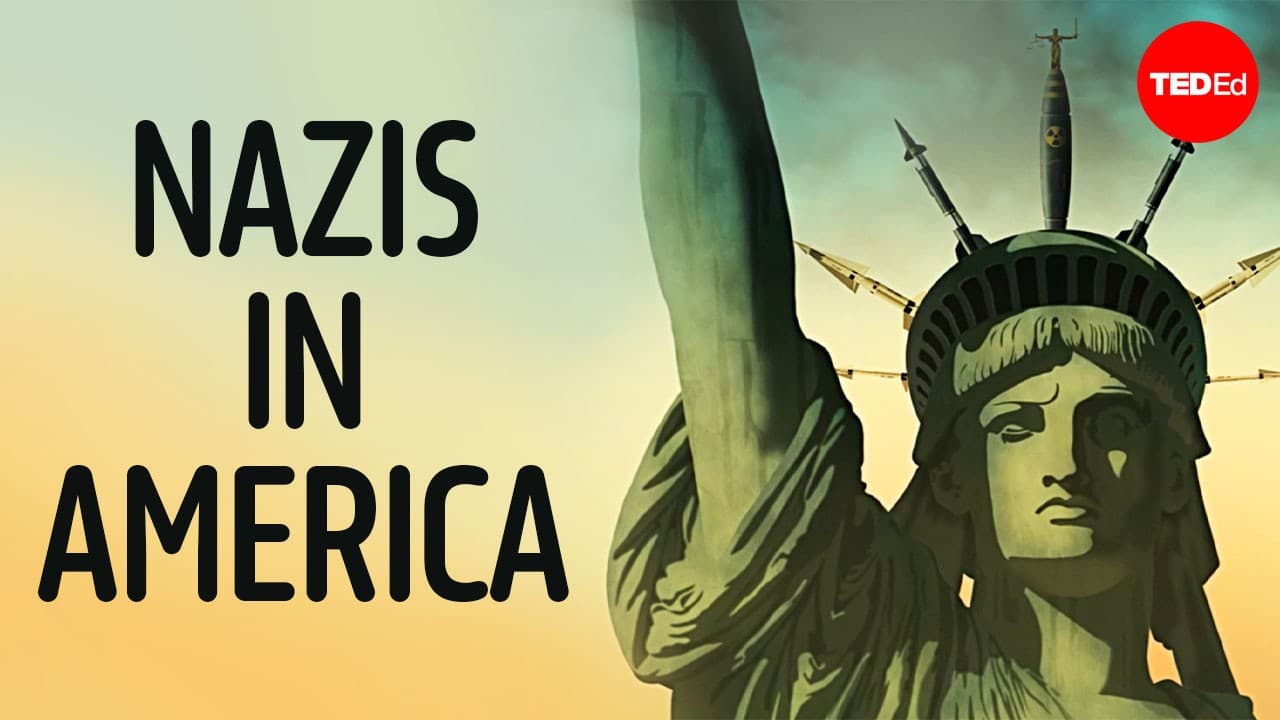
The Nazis recruited to win the Cold War - Brian Crim
TL;DR
Operation Paperclip was a clandestine campaign by the US to recruit over 1,500 German scientists, including former Nazis, between 1945 and 1962 to gain scientific and technological advantage in the emerging Cold War.
Transcript
In May of 1945, the Third Reich was in chaos. Adolf Hitler was dead, German surrender was imminent, and Allied troops had already begun divvying up German territory. But high-ranking Nazi engineer Wernher von Braun wasn’t worried. In fact, he approached the US government directly— informing them of his location and waiting calmly for their arrival.... Read More
Key Insights
- 😨 Operation Paperclip was a response to the emerging Cold War and the fear of the Soviets acquiring German scientific expertise.
- 🧑🔬 The US competed with other nations like the Soviet Union, France, and the UK to recruit German scientists, using different methods, including bribery and kidnapping.
- 🧑🏭 The promise of relocation and citizenship for entire German families was one of the compelling factors that attracted scientists to participate in Operation Paperclip.
- 🤨 The program raised ethical questions regarding the responsibility of scientists for their creations and the justification of overlooking war crimes for political and military gains.
- 🧑🔬 While some Paperclip recruits made significant contributions, others were average scientists, and their impact is debatable.
- ❓ The success of Operation Paperclip in advancing US technological capabilities is difficult to ascertain, as it is unclear if similar advancements could have been achieved without the recruitment of former Nazis.
- ❓ Operation Paperclip's secrecy and controversial nature drew criticism from prominent figures, including Albert Einstein and Eleanor Roosevelt.
Install to Summarize YouTube Videos and Get Transcripts
Explore YouTube Video Summarizer or Get YouTube Transcript Extractor
Questions & Answers
Q: What was Operation Paperclip?
Operation Paperclip was a covert operation by the US to recruit German scientists, including former Nazis, to utilize their scientific expertise and prevent the Soviets from acquiring their knowledge.
Q: How did the US recruit these scientists?
The US used various methods to identify and locate German scientists, including relying on captured Nazi lists, bribing and forcing scientists to relocate, and offering relocation, citizenship, and anonymity to entire German families.
Q: What role did Wernher von Braun play in Operation Paperclip?
Wernher von Braun, the Nazi engineer behind the V-2 rocket, was one of the key scientists recruited through Operation Paperclip. He played a crucial role in the US space program, including the development of Saturn V, which brought Americans to the moon.
Q: Was Operation Paperclip successful?
The success of Operation Paperclip is debatable. While it contributed to advancements in various fields, such as rocketry and pharmaceuticals, some argue that the US could have achieved similar advancements without relying on former Nazis. Furthermore, ethical concerns and human rights violations were raised due to the recruitment of individuals linked to war crimes.
Summary & Key Takeaways
-
Operation Paperclip was initiated by the US to recruit German scientists, including former Nazis, to prevent their expertise from falling into Soviet hands.
-
The program brought over 1,500 German scientists to the US, offering them relocation, citizenship, and anonymity for any Nazi affiliations or war crimes.
-
While the program contributed to advancements in rocketry, chemical weapons, pharmaceuticals, and aviation, its success and ethical implications continue to be questioned.
Read in Other Languages (beta)
Share This Summary 📚
Summarize YouTube Videos and Get Video Transcripts with 1-Click
Try YouTube Summary with ChatGPT & Claude or YouTube Transcript Generator
Explore More Summaries from TED-Ed 📚



Summarize YouTube Videos and Get Video Transcripts with 1-Click
Try YouTube Summary with ChatGPT & Claude or YouTube Transcript Generator