How Diversity Became a Dirty Word in Corporate America
TL;DR
Diversity initiatives face growing backlash amid legal and political challenges.
Transcript
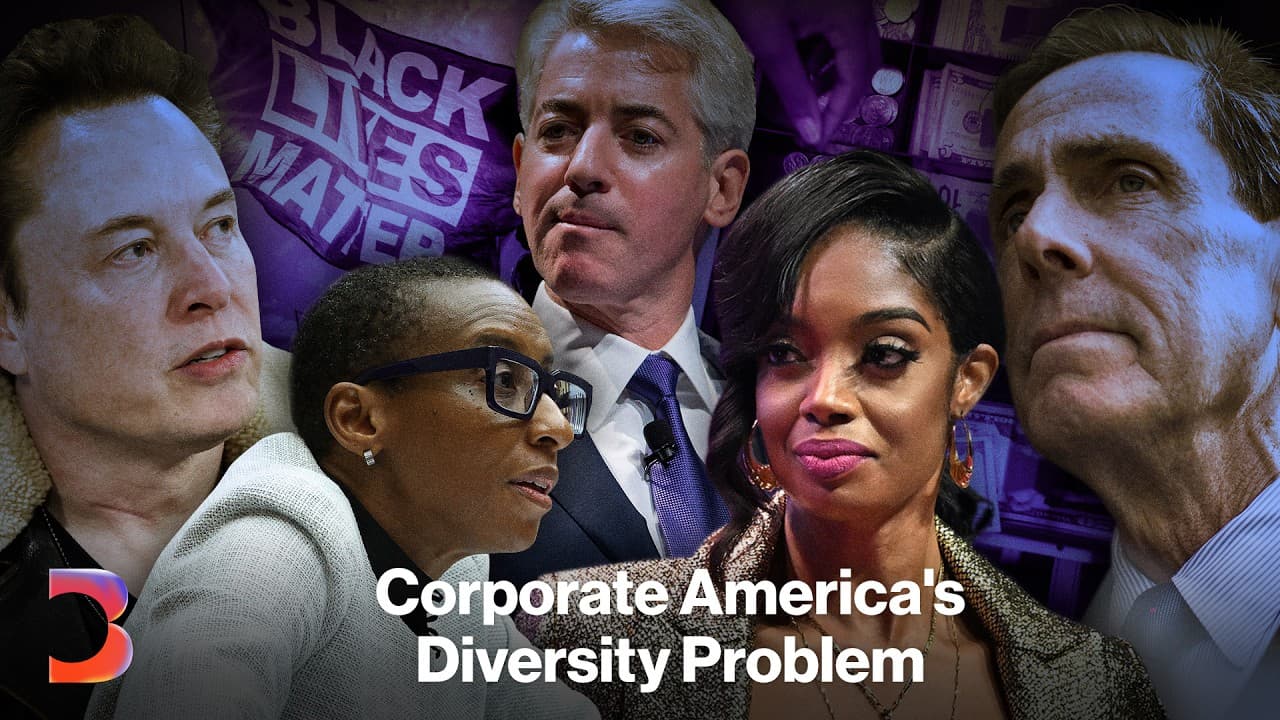
black lives matter the black lives matter movement really had a Resurgence after the murder of George Floyd we saw a really big impact on Corporate America companies like JP Morgan said that they would increase the number of black and Latino home buyers by 40,000 City Group pledged a billion dollars to help close the racial Equity Gap Target and Wa... Read More
Key Insights
- The murder of George Floyd sparked a resurgence in diversity initiatives, with companies pledging significant investments to close racial equity gaps and diversify their workforce.
- Despite initial gains, mentions of diversity, equity, and inclusion (DEI) in corporate settings have decreased, especially after the US Supreme Court ruling limiting race-based admissions.
- The Supreme Court's decision against affirmative action in universities has fueled attacks on corporate DEI policies, raising questions about their future legality.
- Conservative figures have positioned DEI as a negative force, using litigation and political campaigns to challenge diversity-focused programs in both academia and business.
- The Fearless Fund, a venture capital firm supporting women of color, is facing legal challenges as part of a broader strategy to dismantle diversity initiatives.
- Critics argue DEI undermines meritocracy, yet data shows that people of color remain underrepresented in top corporate roles, highlighting ongoing systemic issues.
- Despite backlash, a majority of Americans view DEI positively, with many employees willing to leave jobs if companies ignore diversity principles.
- Companies face a dilemma: balancing the risk of legal challenges against the need to adapt to a diversifying population and workforce.
Install to Summarize YouTube Videos and Get Transcripts
Explore YouTube Video Summarizer or Get YouTube Transcript Extractor
Questions & Answers
Q: What impact did George Floyd's murder have on corporate diversity initiatives?
George Floyd's murder led to a resurgence in diversity initiatives within corporate America. Companies made significant pledges to increase diversity, such as hiring more people of color and investing in closing racial equity gaps. This period saw increased commitments from major corporations to address systemic inequalities and promote diversity in their workforce.
Q: How has the US Supreme Court ruling affected corporate diversity policies?
The US Supreme Court ruling that limited the use of race in university admissions has had a ripple effect on corporate diversity policies. It has fueled attacks against DEI initiatives, raising concerns about their legality and future implementation. This decision has emboldened conservative activists to challenge diversity-focused programs in businesses, leading to increased scrutiny and legal challenges.
Q: What legal challenges are diversity initiatives currently facing?
Diversity initiatives are facing legal challenges, particularly from conservative activists who argue these programs undermine meritocracy. The Fearless Fund, a venture capital firm supporting women of color, is one such target. Legal actions are being taken to dismantle diversity-focused programs, using litigation as a tool to question their legality and impact, especially following the Supreme Court's ruling.
Q: How do critics view diversity, equity, and inclusion programs?
Critics of DEI programs argue that they undermine meritocracy and are often seen as cosmetic measures rather than substantive changes. These critics claim that DEI initiatives prioritize diversity over qualifications, ignoring systemic issues that hinder true merit-based success. However, data shows that people of color remain underrepresented in leadership roles, indicating ongoing systemic challenges.
Q: What is the public perception of diversity initiatives in America?
Public perception of diversity initiatives in America is generally positive. A majority of Americans support DEI efforts, with many employees expressing willingness to leave jobs if companies disregard diversity principles. However, perceptions vary along partisan lines, with more conservative individuals expressing skepticism and opposition to DEI initiatives, viewing them as unnecessary or detrimental.
Q: What role have political figures played in the diversity backlash?
Political figures, particularly from the conservative spectrum, have played a significant role in the diversity backlash. They have positioned DEI as part of a broader 'anti-woke' agenda, using it as a rallying point in political campaigns. Figures like Elon Musk and Stephen Miller have been vocal in their criticism, framing DEI as a threat to traditional values and meritocracy.
Q: How do companies balance diversity initiatives with legal and political challenges?
Companies face a complex balancing act in maintaining diversity initiatives while navigating legal and political challenges. They must weigh the risk of potential lawsuits and political backlash against the benefits of a diverse workforce. Many companies continue their DEI efforts but are increasingly cautious in their public discussions, seeking to adapt to a changing demographic landscape while minimizing legal exposure.
Q: What are the future prospects for diversity initiatives in corporate America?
The future of diversity initiatives in corporate America is uncertain, as companies grapple with legal, political, and societal pressures. While there is broad support for DEI, the legal landscape poses challenges, particularly after the Supreme Court's ruling. Companies will need to innovate and adapt their approaches to diversity, ensuring compliance with evolving laws while addressing the needs of a diversifying population.
Summary & Key Takeaways
-
Following George Floyd's murder, corporate America saw a surge in diversity initiatives, with major companies pledging to hire and promote more people of color. However, recent legal and political developments have led to a decline in DEI discussions and increased scrutiny of these programs.
-
The US Supreme Court's decision to limit race-based admissions has emboldened conservative activists to challenge DEI policies in businesses. This has resulted in legal actions against firms like The Fearless Fund, which supports women of color, highlighting the growing backlash against diversity efforts.
-
Despite criticisms that DEI undermines meritocracy, data shows significant underrepresentation of people of color in leadership roles. While most Americans support DEI, companies are cautious about promoting these initiatives due to potential legal challenges and political opposition.
Read in Other Languages (beta)
Share This Summary 📚
Summarize YouTube Videos and Get Video Transcripts with 1-Click
Try YouTube Summary with ChatGPT & Claude or YouTube Transcript Generator
Explore More Summaries from Bloomberg Originals 📚





Summarize YouTube Videos and Get Video Transcripts with 1-Click
Try YouTube Summary with ChatGPT & Claude or YouTube Transcript Generator