Chicago's Original Black Taxidermist: Carl Cotton
TL;DR
Discover the incredible legacy of Carl Cotton, an African-American taxidermist and artist who influenced exhibits at the Field Museum for over two decades.
Transcript
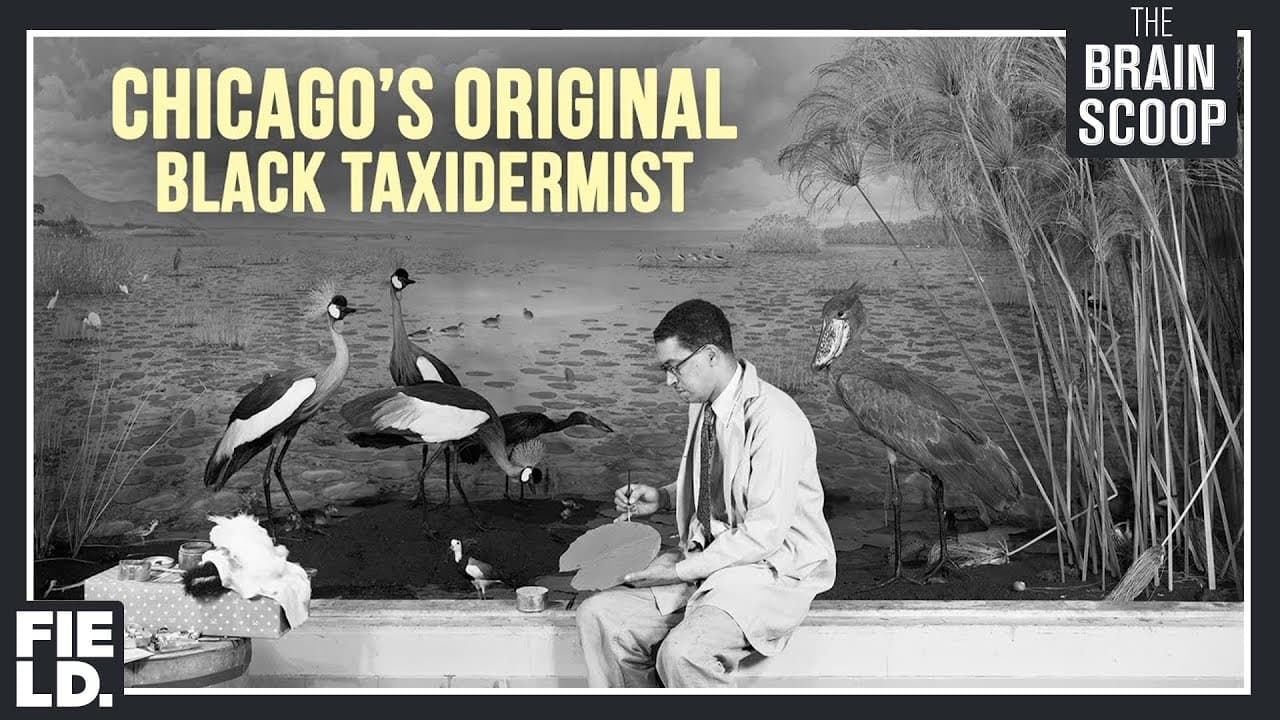
[MUSIC PLAYING] EMILY GRASLIE: This is Carl Cotton. It's 1953, a time when it's surprising to see an African-American man working on exhibits in a museum. I'd always been intrigued by him. And so was Reda Brooks, who works in exhibitions today. She saw this photo when searching for inspiration for Black History Month and put a call out to other sta... Read More
Key Insights
- 👻 Carl Cotton's talent and dedication allowed him to break barriers as an African-American working in a museum during the 1950s.
- ❓ His taxidermy and artistic skills influenced many exhibits at the Field Museum and beyond.
- 🫒 Carl's legacy lives on through the continued discovery of his contributions by museum staff.
- ❓ His attention to detail and ability to create realistic and engaging displays made him highly sought after by other institutions.
- 🐦 The Colorful Birds sculpture, dismantled in 1990, and his bird taxidermy can still be admired at the Field Museum.
- 😫 Carl's diverse skill set extended beyond taxidermy to include insect display cases and intricate dioramas.
- 🫵 His masterful illusion of nature in the Marsh Birds diorama showcases his ability to transport viewers to another world.
Install to Summarize YouTube Videos and Get Transcripts
Explore YouTube Video Summarizer or Get YouTube Transcript Extractor
Questions & Answers
Q: How did Carl Cotton first join the Field Museum?
After being initially turned down, Carl persisted and secured a volunteer position after serving in World War II. He quickly proved himself and was hired full-time in the Division of Anatomy.
Q: What were some of Carl Cotton's notable contributions to the Field Museum's exhibits?
Carl taxidermied numerous birds, including those displayed in the Colorful Birds sculpture. He also mastered the Walter's method, creating hyper-realistic sculptures of animals such as an alligator snapping turtle.
Q: What unique technique did Carl Cotton use to create an illusion in the Willow Ptarmigan Diorama?
Carl collaborated with artist Madie Weavy to create matching pairs of dioramas—one visible straight on and another on the ceiling. The illusion of changing seasons was achieved using a two-way mirror and different lighting setups.
Q: Besides taxidermy, what other artistic endeavors did Carl Cotton pursue?
Carl also created insect display cases and completed intricate dioramas. His diorama of Marsh Birds of the Upper Nile River showcased his mold-making, sculpting, and painting skills.
Summary & Key Takeaways
-
Carl Cotton, an African-American taxidermist, worked at the Field Museum from 1947 until his death in 1971, leaving a lasting impact on its exhibits.
-
Known for his attention to detail, he perfected a taxidermy technique called the Walter's method, training others in the field.
-
Carl's artistry can be seen in various displays, including a sculpture of colorful birds and a stunning diorama of marsh birds.
Read in Other Languages (beta)
Share This Summary 📚
Summarize YouTube Videos and Get Video Transcripts with 1-Click
Try YouTube Summary with ChatGPT & Claude or YouTube Transcript Generator
Explore More Summaries from thebrainscoop 📚

Summarize YouTube Videos and Get Video Transcripts with 1-Click
Try YouTube Summary with ChatGPT & Claude or YouTube Transcript Generator