The Surprising Map of Plants
TL;DR
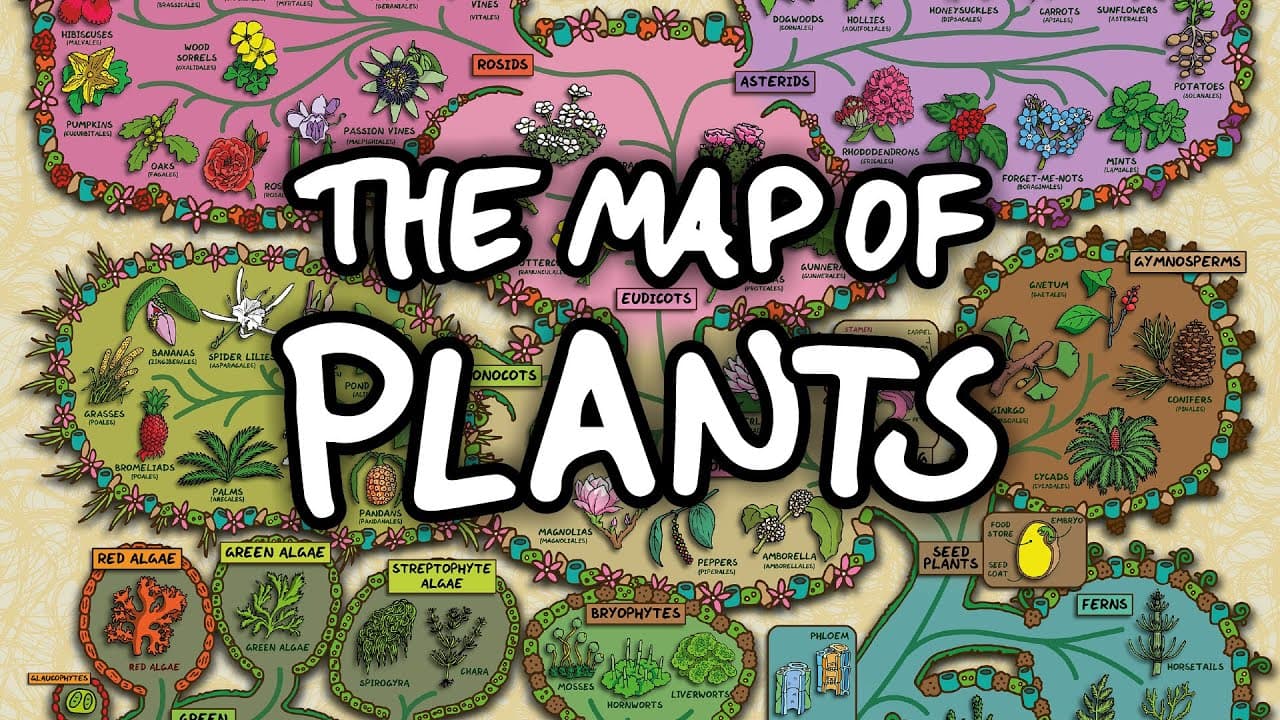
Explore the evolution of plant life from algae to modern angiosperms, including key botanical groups and their adaptations.
Transcript
this video is sponsored by brilliant did you know an oak tree is way more closely related to a pumpkin than they are to pine trees look here are the Oaks next to the pumpkins and here are the pine trees all the way over here before I made this map I thought that all of the trees evolve from each other but it turns out the concept of a tree has evol... Read More
Key Insights
- 🛟 Algae serve as the ancient predecessors of modern plant life, contributing significantly to our planet's oxygen content.
- 💦 Nonvascular plants like mosses exhibit primitive traits, such as water absorption through cells, reflecting their early adaptation to land.
- 💋 The evolution of vascular plants like ferns marked a transition to specialized tissues for water and nutrient transport, enabling taller growth and structural complexity.
- 🌱 Gymnosperms, with naked seed cones, and angiosperms, with enclosed seeds in fruits, showcase diverse reproductive strategies and plant adaptations.
- 🌱 Monocots and eudicots represent major groups of flowering plants with distinct characteristics, aiding in plant classification and evolutionary studies.
- 🌱 The relationship between fungi and plants, as seen in mycorrhizal networks, highlights the importance of symbiotic interactions in plant nutrition and ecosystem health.
- 🌱 The diversification of plant groups like rosids and asterids showcases the vast array of edible and toxic plants, emphasizing the role of plants in human nutrition and survival.
Install to Summarize YouTube Videos and Get Transcripts
Explore YouTube Video Summarizer or Get YouTube Transcript Extractor
Questions & Answers
Q: What is the significance of algae in plant evolution?
Algae represent the most ancient group of plants and have played a crucial role in the evolution of plant life, contributing to the oxygen in the atmosphere and serving as a precursor to more complex plant groups.
Q: How do nonvascular plants like mosses differ from vascular plants like ferns?
Nonvascular plants like mosses lack specialized tissues for water and nutrient transport, limiting their size and growth, while vascular plants like ferns have xylem and phloem for efficient nutrient distribution and structural support.
Q: What distinguishes gymnosperms from angiosperms in plant evolution?
Gymnosperms reproduce through naked seeds in cones, adapting to varied environments, while angiosperms, or flowering plants, have enclosed seeds in fruits, enabling diverse methods of dispersal and plant reproduction.
Q: Why are monocots and eudicots significant in the classification of flowering plants?
Monocots and eudicots are major groups of flowering plants distinguished by their seedling leaf number and specific characteristics like pollen structure, aiding in the understanding of plant diversity and evolutionary relationships.
Summary & Key Takeaways
-
Plants have evolved multiple times throughout history, with algae being the most ancient.
-
From nonvascular plants like mosses to vascular plants like ferns and gymnosperms, the evolutionary journey of plants is diverse.
-
The classification of plants into groups like monocots and eudicots is based on their characteristics, DNA, and evolutionary history.
Read in Other Languages (beta)
Share This Summary 📚
Summarize YouTube Videos and Get Video Transcripts with 1-Click
Try YouTube Summary with ChatGPT & Claude or YouTube Transcript Generator
Explore More Summaries from Domain of Science 📚


Summarize YouTube Videos and Get Video Transcripts with 1-Click
Try YouTube Summary with ChatGPT & Claude or YouTube Transcript Generator