The Comprehensive Map of Medicine
TL;DR
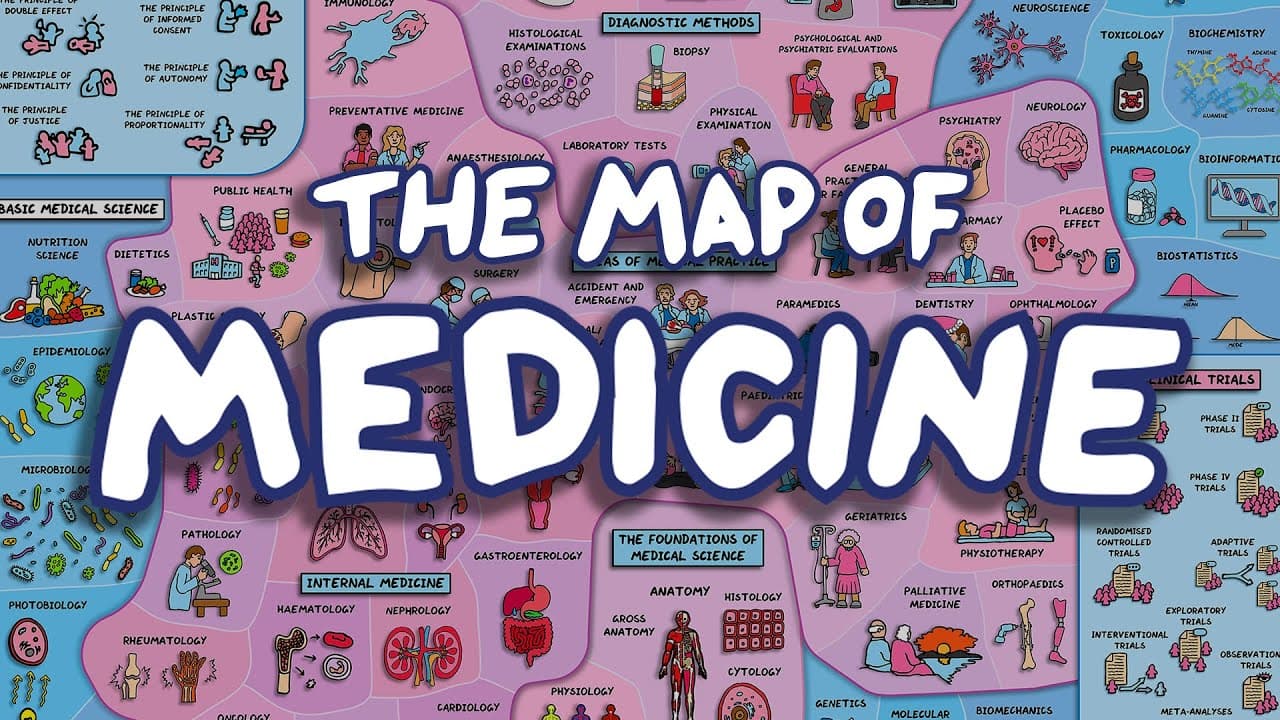
This comprehensive analysis of the Map of Medicine explores various areas of medical practice, including principles of medicine, medical interventions, diagnostic methods, specialties, basic sciences, and clinical trials.
Transcript
hi I'm Dominic and this is the map of medicine it was a real challenge to get my head around this subject because it's a huge area of human knowledge but this is what I've come up with we'll look at the areas of medical practice and then also all of the surrounding supporting sciences and like all my maps if you want to get your hands on a physical... Read More
Key Insights
- 🥳 Medicine follows principles such as non-malfeasance, risk-benefit ratio, double effects, informed consent, autonomy, confidentiality, justice, and proportionality.
- 😨 Paramedics provide emergency care, while accident and emergency departments and critical care units offer immediate medical care.
- 😥 General practitioners serve as the first point of contact for routine healthcare, and pharmacology studies drugs and their effects.
- 😷 Surgery and anesthesia play crucial roles in medical interventions.
- 🦻 Diagnostic methods, including physical examinations, laboratory tests, imaging techniques, and biopsies, aid in disease diagnosis.
- 😷 Medical specialties cover various areas of healthcare, including psychiatry, neurology, dentistry, ophthalmology, ENT, and public health.
- 😷 Basic sciences such as bioinformatics, biostatistics, genetics, molecular biology, anatomy, physiology, and biomechanics contribute to medical advancements.
- 🎮 Clinical trials, including phase 1-4 trials, randomized control trials, adaptive trials, interventional trials, and observational trials, evaluate treatment effectiveness.
Install to Summarize YouTube Videos and Get Transcripts
Explore YouTube Video Summarizer or Get YouTube Transcript Extractor
Questions & Answers
Q: What are the principles of medicine?
The principles of medicine include non-malfeasance (do no harm), risk-benefit ratio, double effects, informed consent, autonomy, confidentiality, justice, and proportionality.
Q: How do paramedics provide emergency care?
Paramedics respond to emergencies, such as accidents or life-threatening conditions, and provide medical interventions such as cardiac and respiratory support, medication administration, and airway management.
Q: What is the role of a general practitioner?
General practitioners offer routine checkups, screenings, and treatment for acute and chronic illnesses. They also provide referrals to specialists and prescribe medications.
Q: What is the role of pharmacology in medicine?
Pharmacology studies the effects of drugs on living organisms, including their properties, actions, uses, and side effects. It plays a critical role in drug development and treatment of various diseases and conditions.
Q: How do surgeons treat medical conditions?
Surgeons use invasive procedures to treat conditions and diseases, such as organ transplants, open heart surgery, and minor procedures. Anesthesiologists administer anesthesia to ensure patient comfort and safety during surgeries.
Q: What is the role of a pharmacist?
Pharmacists dispense medications, provide expertise on their safe use, and offer advice on the best way to achieve optimal outcomes. They work closely with healthcare professionals to ensure proper medication management.
Q: How do diagnostic methods help in healthcare?
Diagnostic methods, such as physical examinations, laboratory tests, imaging techniques, biopsies, and psychological evaluations, help healthcare professionals determine the presence and nature of diseases or conditions.
Q: What are the various medical specialties?
Medical specialties include psychiatry, neurology, dentistry, ophthalmology, ENT (ear, nose, throat), public health, immunology, epidemiology, infectious diseases, pathology, dermatology, and more.
Summary & Key Takeaways
-
The principles of medicine guide medical practitioners in making difficult treatment decisions, including the principles of non-malfeasance, risk-benefit ratio, double effects, informed consent, autonomy, confidentiality, justice, and proportionality.
-
Medical interventions begin with paramedics providing emergency care, followed by treatment in accident and emergency departments or critical care units. Surgery may be required for various conditions, and anesthesiologists ensure patient comfort and safety during procedures.
-
General practitioners are the first point of contact for routine healthcare, providing checkups, screenings, and treatment for acute and chronic illnesses. Pharmacology supports medicine by studying drugs and their effects, while toxicology focuses on the harmful effects of substances on the body.
Read in Other Languages (beta)
Share This Summary 📚
Summarize YouTube Videos and Get Video Transcripts with 1-Click
Try YouTube Summary with ChatGPT & Claude or YouTube Transcript Generator
Explore More Summaries from Domain of Science 📚

Summarize YouTube Videos and Get Video Transcripts with 1-Click
Try YouTube Summary with ChatGPT & Claude or YouTube Transcript Generator