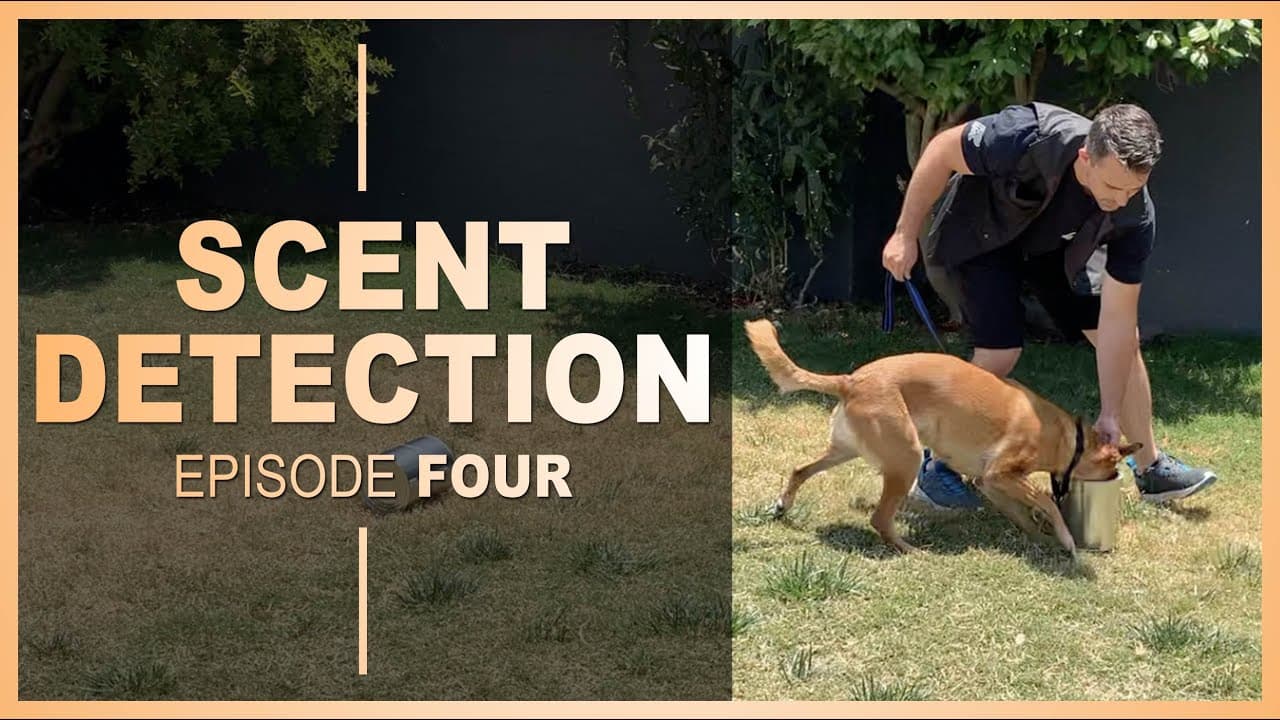
How to Teach Your Dog Scent Detection. Ep 4
TL;DR
Learn scent detection training step-by-step with simple exercises.
Transcript
hey everybody welcome back to another training video today's episode is going to be the next step in my scent detection dog training series just like everything we do in dog training we always want to keep in mind the concept of predictability we're going to be using that while we're training our dog in this step in the scent detection process befo... Read More
Key Insights
- Scent detection training emphasizes predictability, helping dogs understand when they find the odor, they receive a reward.
- Marker training is crucial for scent detection, ensuring dogs recognize cues and rewards effectively.
- Using different container formations like straight lines, circles, and elevated positions helps dogs generalize training.
- Continual reinforcement is used, rewarding the dog every time they locate the odor, building confidence and understanding.
- Food is preferred over toys for rewarding during training to prevent dogs from getting overly excited and tired.
- Physical cues guide dogs during training, supporting them to find the odor without verbal commands for each container.
- Rotating the odor's position among containers ensures dogs don't develop patterns and learn to search effectively.
- Training with various items like buckets and boxes helps dogs adapt to different scenarios, enhancing real-life application.
Install to Summarize YouTube Videos and Get Transcripts
Explore YouTube Video Summarizer or Get YouTube Transcript Extractor
Questions & Answers
Q: Why is predictability important in scent detection training?
Predictability is crucial in scent detection training because it helps the dog understand that finding the odor consistently leads to a reward. This understanding builds the dog's confidence and reinforces the behavior, making the training more effective and ensuring the dog knows what to expect during each session.
Q: What role does marker training play in scent detection?
Marker training plays a significant role in scent detection as it helps the dog recognize cues and understand when they have successfully located an odor. By using markers, the trainer can effectively communicate with the dog, ensuring that the correct behaviors are reinforced and rewarded, which is essential for successful scent detection training.
Q: Why does the trainer prefer using food over toys for rewards?
The trainer prefers using food over toys for rewards because toys can make the dog overly excited, leading to quicker exhaustion. This excitement can reduce the number of repetitions possible in a training session, whereas food rewards keep the dog engaged and focused without causing excessive excitement or fatigue.
Q: How are physical cues used in the training process?
Physical cues are used in the training process to guide the dog towards the container with the odor without relying on repeated verbal commands. The trainer points to the containers, helping the dog focus on the task and locate the odor more effectively. This method supports the dog's learning and reinforces the desired behavior.
Q: What is the purpose of rotating the odor's position?
Rotating the odor's position among containers prevents the dog from developing patterns and ensures they learn to search effectively. By changing the location of the odor, the dog remains engaged and must rely on their scent detection skills rather than memory or routine, which enhances their training and adaptability.
Q: Why is it important to use various items like buckets and boxes?
Using various items like buckets and boxes in training helps dogs generalize their skills and adapt to different scenarios. This diversity prepares them for real-life applications, where they may encounter various objects and environments, ensuring they can effectively apply their scent detection training in any situation.
Q: How does continual reinforcement benefit the training?
Continual reinforcement benefits the training by consistently rewarding the dog every time they locate the odor. This approach builds the dog's confidence and understanding of the task, reinforcing the desired behavior and making the training more effective. It ensures the dog remains motivated and engaged throughout the process.
Q: What is the significance of using different container formations?
Using different container formations, such as straight lines, circles, and elevated positions, helps dogs generalize their training. It challenges them to adapt to various setups, enhancing their problem-solving skills and ensuring they can apply their scent detection abilities in diverse real-life situations, making the training more comprehensive.
Summary & Key Takeaways
-
The video focuses on the fourth step of scent detection training, emphasizing predictability and continual reinforcement. Dogs are trained to find odors in containers arranged in different formations, and rewarded every time they succeed, building their confidence and understanding of the task.
-
Marker training is essential for this process, allowing dogs to recognize when they have successfully located an odor. The trainer uses food as a reward to prevent the dog from becoming overly excited and tired, which could limit the number of repetitions in a session.
-
Physical cues guide the dog rather than repeated verbal commands, helping them focus on finding the odor. The odor's position is rotated among containers to prevent pattern learning, and various items are used to help the dog generalize training for real-life scenarios.
Read in Other Languages (beta)
Share This Summary 📚
Summarize YouTube Videos and Get Video Transcripts with 1-Click
Try YouTube Summary with ChatGPT & Claude or YouTube Transcript Generator
Explore More Summaries from Nate Schoemer 📚


Summarize YouTube Videos and Get Video Transcripts with 1-Click
Try YouTube Summary with ChatGPT & Claude or YouTube Transcript Generator