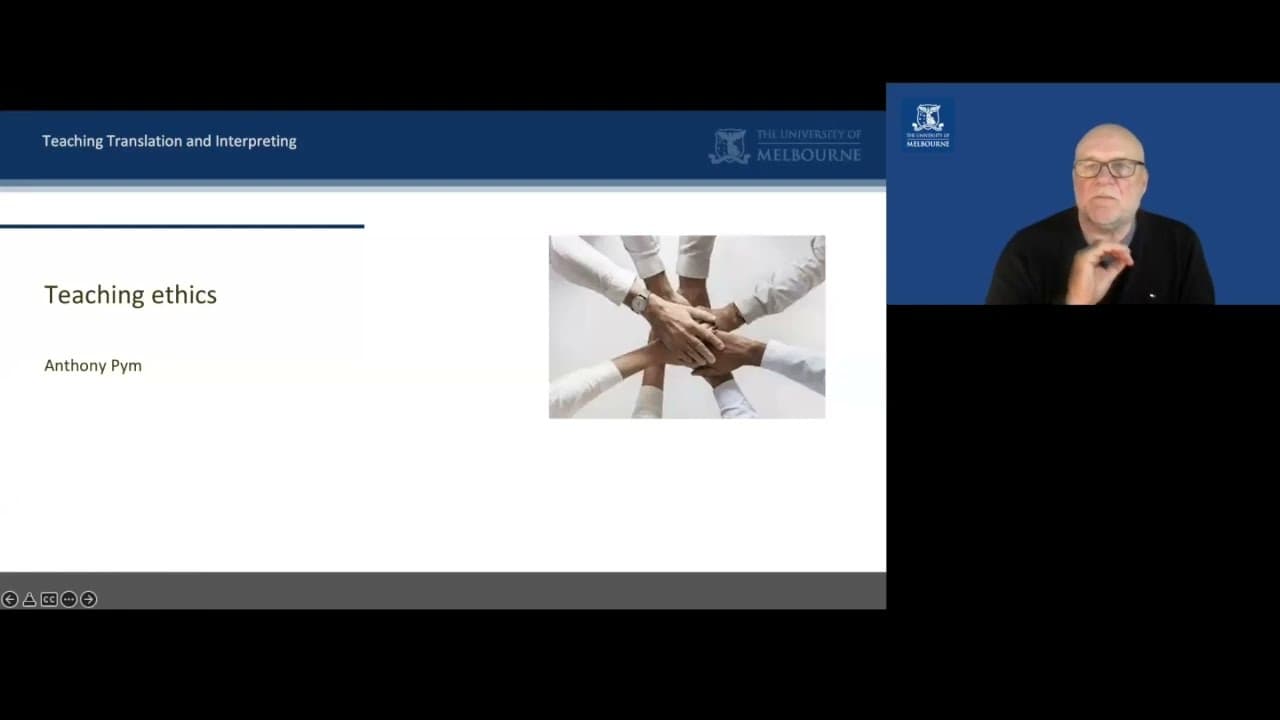
Teaching translator ethics
TL;DR
Teaching ethics requires understanding learning outcomes and cultural differences to navigate complex scenarios and principles.
Transcript
good we're turning to another section of this subject all right we've we've been through the sequencing of of uh how you set up the teaching process we've done all of these things and so you should know how they all fit together uh now we're entering a part of the subject the final part where we look at specific topics and this is where the the nat... Read More
Key Insights
- 🤔 Learning outcomes guide the teaching approach for ethics, including exam-specific knowledge and critical thinking skills.
- 👨💻 Different codes of ethics may vary in their principles and priorities, reflecting cultural and professional differences.
- 😀 Ethical decision-making can become more complex when faced with scenarios where principles clash or are not clearly outlined.
- 🪡 Cultural differences can significantly impact ethical choices, highlighting the need for sensitivity and understanding in diverse contexts.
- 🤔 Teaching ethics involves creating engaging activities, such as scenario discussions, to promote critical thinking and problem-solving skills.
- 🧑🏫 Teaching ethics should prioritize avoiding animosity and offense, particularly when exploring deep cultural differences.
- 👨💻 Codes of ethics should be regularly reviewed and updated to respond to evolving cultural norms and ethical challenges.
Install to Summarize YouTube Videos and Get Transcripts
Explore YouTube Video Summarizer or Get YouTube Transcript Extractor
Questions & Answers
Q: How do learning outcomes impact the teaching of ethics?
Learning outcomes play a key role in determining what content and strategies should be used to teach ethics. The specific outcomes guide the approach and activities used to achieve them.
Q: What are some differences between the NGATI and AUZIT codes of ethics?
The NGATI code emphasizes accuracy to the text and fidelity to the client, while the AUZIT code focuses on impartiality, accuracy, and maintaining professional relationships.
Q: How can cultural differences impact ethical decision-making?
Cultural differences can influence how ethical principles are interpreted and applied. For example, the Chinese culture values collective support and may prioritize avoiding criticism of China in translations.
Q: Is it acceptable for translators to modify the meaning of a text for cultural or personal reasons?
Translators should prioritize conveying the intended meaning of the source text accurately. Modifying the meaning for personal or cultural reasons may compromise the integrity of the translation and lead to miscommunication.
Summary & Key Takeaways
-
The teaching process for ethics varies based on the specific content and learning outcomes.
-
Codes of ethics, such as the NGATI and AUZIT codes, provide guidelines for ethical practice in translation and interpreting.
-
Training should encompass both exam-specific knowledge and critical thinking skills to handle ethical problems that may arise outside of traditional codes.
Read in Other Languages (beta)
Share This Summary 📚
Summarize YouTube Videos and Get Video Transcripts with 1-Click
Try YouTube Summary with ChatGPT & Claude or YouTube Transcript Generator
Explore More Summaries from Anthony Pym 📚





Summarize YouTube Videos and Get Video Transcripts with 1-Click
Try YouTube Summary with ChatGPT & Claude or YouTube Transcript Generator