Why Was the Classified Documents Case Dismissed?
TL;DR
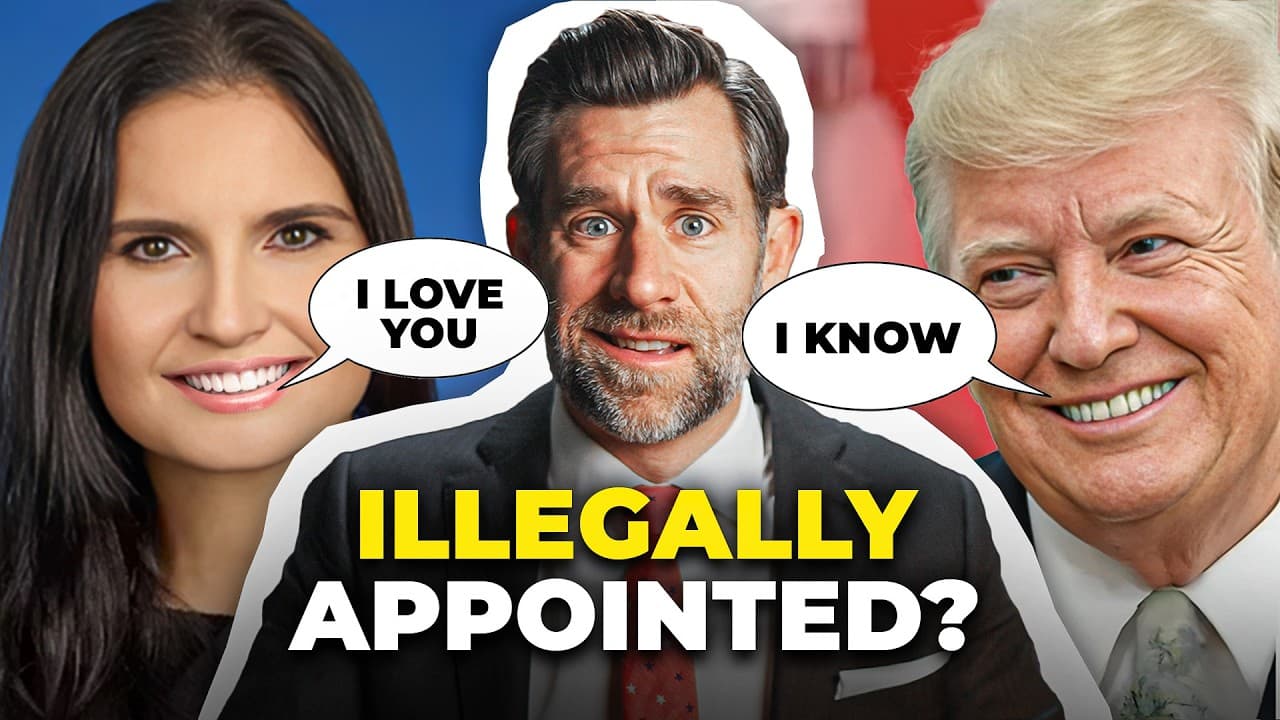
Judge Cannon dismissed the Florida documents case, claiming Jack Smith's appointment as Special Counsel was illegal. This decision contradicts established legal precedents and statutes. The case involves the authority of the Attorney General to appoint Special Counsels, which has been a common practice for decades. The decision is expected to be appealed and potentially overturned.
Transcript
- Breaking the US legal system, Judge Cannon has dismissed the Florida documents case because she claims Jack Smith was illegally appointed as a Special Counsel. This is a completely bonkers, made up decision that flies in the face of the Constitution, federal statutes, Supreme Court authority, directly on point, and Federal Appeals court decisions... Read More
Key Insights
- Judge Cannon dismissed the Florida documents case due to alleged illegal appointment of Jack Smith as Special Counsel.
- The decision contradicts the Constitution, federal statutes, and Supreme Court authority.
- Special Counsels have been appointed by Attorneys General since the 19th century.
- The Appointments Clause allows the President and Congress to appoint officers with Senate consent.
- Special Counsels are generally considered inferior officers, appointed by department heads.
- Judge Cannon's decision disregards precedent from the Supreme Court and appellate courts.
- The Attorney General has statutory authority to appoint Special Counsels under various U.S.C sections.
- The decision is likely to be appealed and may eventually reach the Supreme Court.
Install to Summarize YouTube Videos and Get Transcripts
Explore YouTube Video Summarizer or Get YouTube Transcript Extractor
Questions & Answers
Q: Why was the Florida documents case dismissed?
The Florida documents case was dismissed by Judge Cannon because she claimed that Jack Smith's appointment as Special Counsel was illegal. She argued that there was no statutory authority for his appointment, despite longstanding legal precedents and statutes that support such appointments by the Attorney General. This decision is expected to be appealed.
Q: What is the role of a Special Counsel?
A Special Counsel is appointed to investigate and prosecute cases independently from the executive branch. They are typically appointed by the Attorney General and are considered inferior officers, meaning they do not require Senate confirmation. Special Counsels have been used for over a century to ensure impartial investigations into matters involving government officials.
Q: What statutes authorize the appointment of Special Counsels?
The appointment of Special Counsels is authorized by several statutes, including 28 U.S.C. 533, which allows the Attorney General to appoint officials to detect and prosecute crimes against the United States. These statutes have been interpreted by the Supreme Court and appellate courts to permit the Attorney General to appoint Special Counsels without additional Senate confirmation.
Q: How does the Appointments Clause relate to this case?
The Appointments Clause in the Constitution grants the President the power to appoint officers with Senate consent and allows Congress to vest the appointment of inferior officers in department heads. In this case, the clause is relevant because it outlines the framework under which the Attorney General can appoint a Special Counsel, a practice that has been supported by legal precedents.
Q: What precedent did Judge Cannon disregard in her decision?
Judge Cannon disregarded the precedent set by the Supreme Court in United States v. Nixon, which upheld the Attorney General's authority to appoint Special Counsels. She also ignored appellate court decisions that have consistently found the statutory basis for such appointments. Her decision relied on a dissenting opinion rather than binding precedent.
Q: What are the implications of Judge Cannon's decision?
Judge Cannon's decision to dismiss the case challenges established legal norms regarding the appointment of Special Counsels. If upheld, it could undermine the ability of the Attorney General to appoint independent investigators, potentially affecting future cases. The decision is expected to be appealed, and its implications will depend on the outcomes of higher court reviews.
Q: What is the likelihood of the decision being overturned on appeal?
The likelihood of Judge Cannon's decision being overturned on appeal is considered high due to the strong legal precedents supporting the Attorney General's authority to appoint Special Counsels. The decision contradicts Supreme Court rulings and appellate court findings, making it vulnerable to reversal by the 11th Circuit or potentially the Supreme Court.
Q: What would happen if the case is refiled with a U.S. Attorney?
If the case is refiled with a U.S. Attorney, it might bypass the issues raised about the Special Counsel's appointment. However, this could reset the investigation and prosecution timeline, potentially delaying proceedings to 2022 levels. This approach would also mean the case is handled under more direct supervision by the Attorney General, contrary to the intent of appointing a Special Counsel for political insulation.
Summary & Key Takeaways
-
Judge Cannon dismissed the Florida documents case, arguing that Jack Smith's appointment as Special Counsel was illegal. This decision runs counter to established legal precedents, including the Supreme Court's stance on the Attorney General's authority to appoint Special Counsels. The dismissal is expected to be challenged in higher courts.
-
The case revolves around whether the Attorney General has the statutory authority to appoint Special Counsels, a practice that has been in place for over a century. Judge Cannon's ruling is seen as partisan and unlikely to be upheld on appeal, given the weight of legal precedent against it.
-
The Appointments Clause of the Constitution and various statutes provide the framework for appointing Special Counsels. Despite this, Judge Cannon dismissed these legal foundations, citing a dissenting opinion as justification. The decision will likely be appealed, with potential implications for future Special Counsel appointments.
Read in Other Languages (beta)
Share This Summary 📚
Summarize YouTube Videos and Get Video Transcripts with 1-Click
Try YouTube Summary with ChatGPT & Claude or YouTube Transcript Generator
Explore More Summaries from LegalEagle 📚





Summarize YouTube Videos and Get Video Transcripts with 1-Click
Try YouTube Summary with ChatGPT & Claude or YouTube Transcript Generator