Why So Many US Companies Are Going Bankrupt
TL;DR
US companies face bankruptcy due to rising interest rates and debt.
Transcript
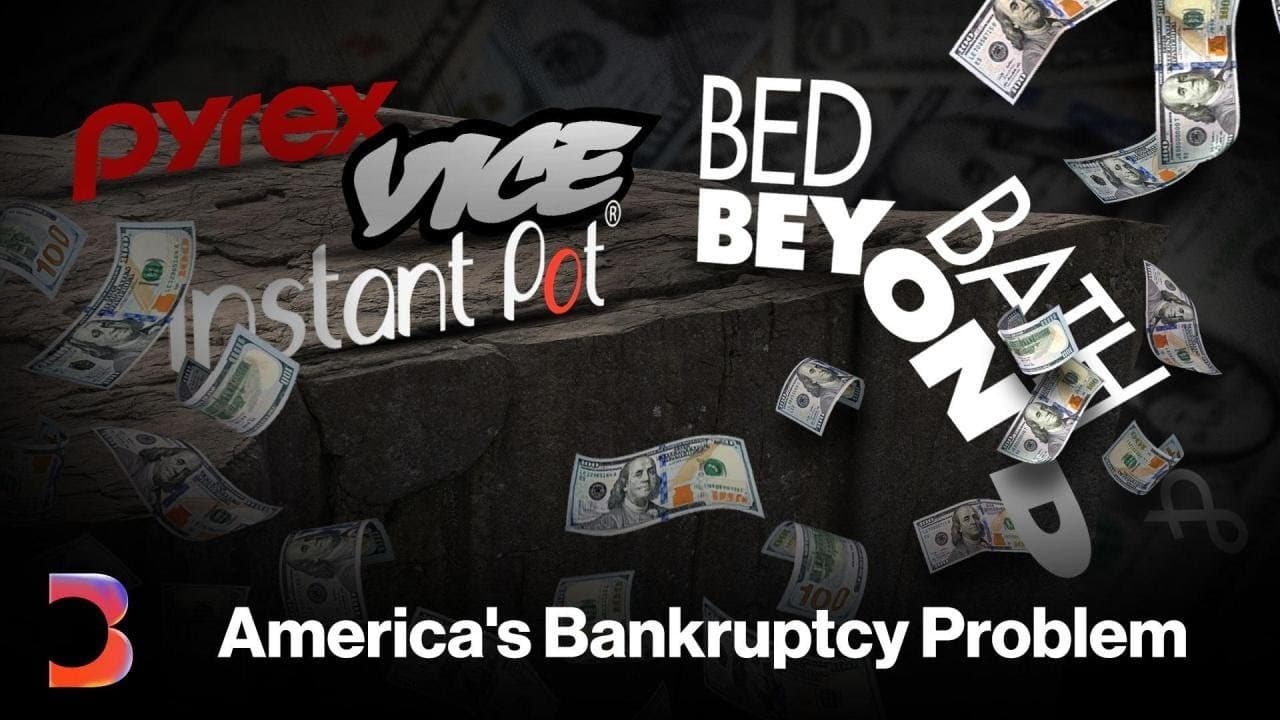
Bankruptcy, a stunning fall, major restructuring. Debt is piling up. Companies are filing for bankruptcy now at the fastest rate since 2020. Bed, Bath & Beyond filed this year. Party City filed, Vice media, Instant Pot, and Pyrex. The list really goes on. And by all accounts, there's more to come. The stakes are high. Jobs are on the line. Debt gro... Read More
Key Insights
- The surge in US company bankruptcies is primarily driven by rising interest rates and increased borrowing costs, following the Federal Reserve's rate hikes to combat inflation.
- Since 2020, the rate of company bankruptcies has accelerated, with notable names like Bed Bath & Beyond and Party City filing for bankruptcy in 2023.
- A significant amount of distressed debt is accumulating, with over $200 billion in distressed debt in the US, impacting various industries including retail and healthcare.
- Retailers are particularly vulnerable due to inflationary pressures and declining consumer spending, leading to a high number of bankruptcy filings in the consumer industry.
- The commercial real estate sector faces challenges due to remote work and online shopping, with $1.5 trillion in debt due before 2025, increasing vacancy rates in city centers.
- Private equity ownership in healthcare has led to prioritizing profits over community needs, with 30% of for-profit hospitals owned by private equity as of 2023.
- The tech industry struggles with reduced capital availability and increased investor demand for immediate profits, leading to job cuts and funding challenges.
- The collapse of local lenders has reduced credit availability, impacting the ability of companies to raise funds and increasing the risk of further bankruptcies.
Install to Summarize YouTube Videos and Get Transcripts
Explore YouTube Video Summarizer or Get YouTube Transcript Extractor
Questions & Answers
Q: Why are US companies filing for bankruptcy at a high rate?
US companies are filing for bankruptcy at a high rate primarily due to the Federal Reserve's interest rate hikes aimed at curbing inflation. These rate increases have made borrowing more expensive, leading to higher debt costs for companies. Many firms that previously relied on cheap debt are now struggling to manage their financial obligations, resulting in a surge in bankruptcy filings.
Q: What industries are most affected by the current financial crisis?
The retail, healthcare, and tech industries are among the most affected by the current financial crisis. Retailers face high inflation and declining consumer spending, leading to numerous bankruptcy filings. Healthcare is under pressure due to private equity ownership prioritizing profits. The tech industry struggles with reduced capital availability and increased demands for profitability, leading to job cuts and funding challenges.
Q: How has the commercial real estate sector been impacted?
The commercial real estate sector has been significantly impacted by remote work and the rise of online shopping, leading to increased vacancy rates in city centers. With almost $1.5 trillion in commercial real estate debt due before 2025, many real estate firms are defaulting on their loans, exacerbating the financial strain on the sector and affecting urban business districts.
Q: What role does private equity play in the healthcare industry's financial challenges?
Private equity plays a significant role in the healthcare industry's financial challenges by owning 30% of the country's for-profit hospitals. These firms prioritize achieving sustainable profits, often at the expense of community needs and public health. The focus on profitability can lead to financial strain, as hospitals must generate enough profit to cover debt obligations and provide returns to investors.
Q: Why is the tech industry facing funding difficulties?
The tech industry is facing funding difficulties due to a decline in the appetite for risk and reduced capital availability. Higher interest rates have made financing more expensive, and investors now demand immediate proof of profitability. This environment makes it challenging for startups and growing tech companies to secure the necessary funding, leading to job cuts and increased financial pressure.
Q: How does the collapse of local lenders affect the economy?
The collapse of local lenders, such as Silicon Valley Bank and First Republic, affects the economy by reducing credit availability. These banks were significant sources of funding for many businesses, and their demise limits access to capital, making it difficult for companies to raise funds. This reduction in available credit increases the risk of further bankruptcies and financial instability.
Q: What is the impact of distressed debt on the US economy?
The impact of distressed debt on the US economy is substantial, with over $200 billion in distressed debt affecting various industries. This debt accumulation increases financial strain on companies, particularly those with lower creditworthiness, leading to more bankruptcy filings. The ripple effect can result in job losses, reduced consumer spending, and broader economic challenges as companies struggle to manage their financial obligations.
Q: How do interest rate fluctuations affect corporate borrowing?
Interest rate fluctuations significantly affect corporate borrowing by altering the cost of debt. When rates rise, as they have with the Federal Reserve's recent hikes, borrowing becomes more expensive. Companies that previously relied on cheap debt face higher costs, reducing their cash flow and increasing financial pressure. This environment can lead to increased defaults, bankruptcies, and financial instability across various sectors.
Summary & Key Takeaways
-
US companies are experiencing a wave of bankruptcies due to rising interest rates and the growing cost of debt. The Federal Reserve's efforts to curb inflation by increasing rates have made borrowing more expensive, affecting industries like retail, healthcare, and tech, which are now facing financial challenges.
-
The retail sector is particularly hard hit, with inflation keeping costs high and consumer spending slowing. Many retailers are using bankruptcy as a strategy to exit leases and reduce expenses, but this leads to store closures and job losses, impacting local communities significantly.
-
The commercial real estate and healthcare sectors are also under pressure. Increased vacancies in city centers and the prioritization of profits in healthcare due to private equity ownership are creating additional financial strain, while the tech industry faces funding difficulties and job cuts.
Read in Other Languages (beta)
Share This Summary 📚
Summarize YouTube Videos and Get Video Transcripts with 1-Click
Try YouTube Summary with ChatGPT & Claude or YouTube Transcript Generator
Explore More Summaries from Bloomberg Originals 📚






Summarize YouTube Videos and Get Video Transcripts with 1-Click
Try YouTube Summary with ChatGPT & Claude or YouTube Transcript Generator