New Trees Won’t Solve Global Warming
TL;DR
Planting trees isn't a simple climate solution.
Transcript
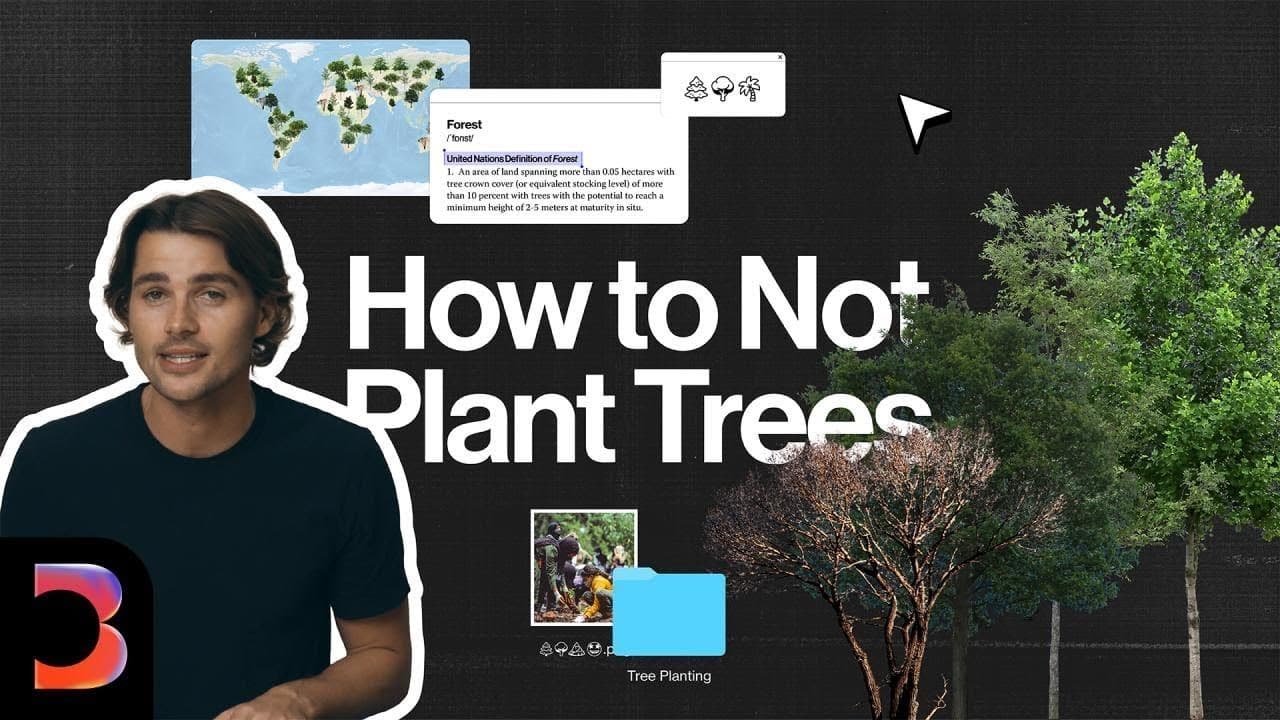
People deal with anxiety in different ways. Some people stress clean, some people stress shop. And when it comes to our climate anxiety, well, we've been stress planting. Officials in Ethiopia say a new record has been set with more than 200 million trees planted in just one day. Today we will be planting 20 million trees. Who's against the trees? ... Read More
Key Insights
- Tree planting has become a popular solution to climate change but is not as effective as often believed.
- Many tree planting programs fail due to poor planning, such as planting at the wrong time or place.
- Monoculture plantations from tree planting initiatives can harm biodiversity and disrupt ecosystems.
- Large-scale tree planting can lead to deforestation, as existing trees are sometimes cut down to plant new ones.
- Natural forests are more effective at carbon sequestration than tree plantations, storing up to 40 times more carbon.
- Successful tree planting involves planting native species and consulting local and indigenous communities.
- The simplicity of planting trees is appealing, but it distracts from addressing core climate issues like fossil fuel use.
- Protecting existing forests and allowing them to regrow naturally can be more beneficial than new planting.
Install to Summarize YouTube Videos and Get Transcripts
Explore YouTube Video Summarizer or Get YouTube Transcript Extractor
Questions & Answers
Q: Why has tree planting become a popular climate solution?
Tree planting has gained popularity as a climate solution due to its perceived simplicity and cost-effectiveness. It offers a tangible way for individuals and companies to feel like they are taking action against climate change. The idea that trees absorb carbon dioxide and help mitigate global warming is straightforward and appealing, making it a favored initiative worldwide.
Q: What are the main issues with current tree planting programs?
Current tree planting programs often face issues such as poor planning and execution. Trees are sometimes planted at the wrong time or in unsuitable locations, leading to high mortality rates. Additionally, many programs focus on monoculture plantations, which can disrupt ecosystems and decrease biodiversity. These factors contribute to the ineffectiveness of tree planting as a standalone climate solution.
Q: How do monoculture plantations affect biodiversity?
Monoculture plantations, which involve planting only one or two types of trees, can significantly harm biodiversity. These plantations often consist of non-native, fast-growing species that do not support the local ecosystem. This disrupts natural habitats and reduces the diversity of plant and animal life, ultimately weakening the ecosystem's resilience and functionality.
Q: What is a more effective alternative to tree planting for carbon sequestration?
Protecting and allowing natural forests to regrow is a more effective alternative to tree planting for carbon sequestration. Natural forests can store up to 40 times more carbon than monoculture plantations. By preserving existing forests and promoting biodiversity, we can enhance the ecosystem's ability to absorb and store carbon, providing a more sustainable solution to climate change.
Q: Why is it important to involve local and indigenous communities in tree planting initiatives?
Involving local and indigenous communities in tree planting initiatives is crucial for their success. These communities have valuable knowledge about the local ecosystem and can guide the selection of appropriate native species that will thrive in the area. Their involvement ensures that the planted trees contribute positively to the environment and support the community's needs, leading to more sustainable and effective outcomes.
Q: What are the risks of relying solely on tree planting to address climate change?
Relying solely on tree planting to address climate change poses several risks. It can create a false sense of accomplishment, leading to complacency in tackling more complex issues like reducing fossil fuel consumption. Tree planting can also divert resources and attention away from other necessary climate actions, such as transitioning to renewable energy and implementing sustainable agricultural practices.
Q: How can tree planting distract from addressing core climate issues?
Tree planting can distract from core climate issues by oversimplifying the solution to climate change. While planting trees is a visible and straightforward action, it can lead to complacency and a false sense of progress. This distraction can prevent individuals, companies, and governments from focusing on more challenging but essential actions, such as reducing greenhouse gas emissions and transitioning to sustainable energy sources.
Q: What is the role of natural forests in combating climate change?
Natural forests play a crucial role in combating climate change by acting as significant carbon sinks. They absorb and store large amounts of carbon dioxide, helping to mitigate global warming. Natural forests also support diverse ecosystems, enhancing biodiversity and ecosystem resilience. Protecting and restoring these forests is vital for maintaining their carbon sequestration capacity and ensuring the health of the planet's ecosystems.
Summary & Key Takeaways
-
Tree planting is widely recognized as a climate solution, but its effectiveness is often overestimated. Many programs fail due to poor execution, such as planting at inappropriate times or locations, leading to high sapling mortality rates. Additionally, monoculture plantations can harm biodiversity and disrupt ecosystems, making this approach less beneficial than anticipated.
-
The appeal of tree planting lies in its simplicity and low cost, making it popular among consumers and companies. However, this oversimplification can distract from addressing more complex climate issues, such as reducing fossil fuel use. Protecting and allowing natural forests to regrow is often more effective for carbon sequestration.
-
Successful tree planting initiatives focus on planting native species and involve local and indigenous communities, ensuring that the trees contribute positively to the ecosystem. Natural forests have a higher capacity for carbon storage compared to plantations, emphasizing the importance of protecting existing forest areas over creating new plantations.
Read in Other Languages (beta)
Share This Summary 📚
Summarize YouTube Videos and Get Video Transcripts with 1-Click
Try YouTube Summary with ChatGPT & Claude or YouTube Transcript Generator
Explore More Summaries from Bloomberg Originals 📚






Summarize YouTube Videos and Get Video Transcripts with 1-Click
Try YouTube Summary with ChatGPT & Claude or YouTube Transcript Generator