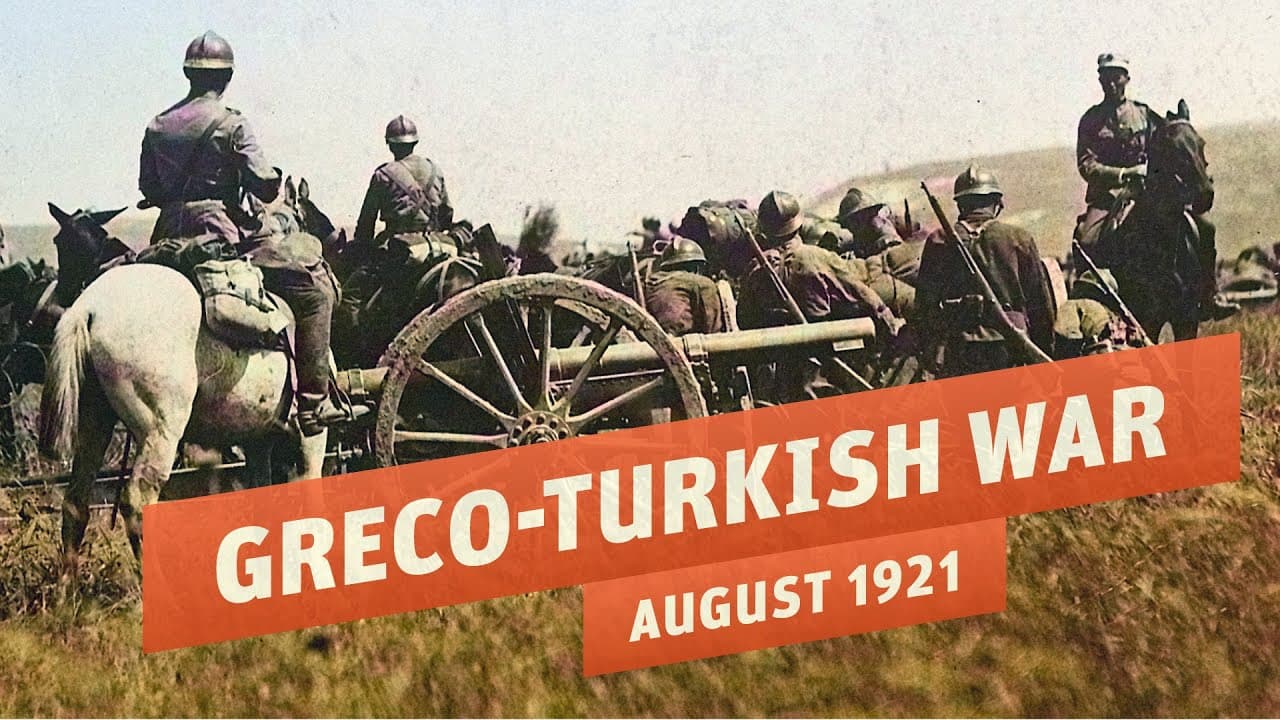
Turning Point in the Greco-Turkish War - Battles of Sakarya and İnönü I THE GREAT WAR 1921
TL;DR
The Turkish army turned the tide against Greece in 1921.
Transcript
By the end of 1920 the end of the Greco-Turkish War, also known as the Turkish War of Liberation, was nowhere in sight. The Greeks had moved into large parts of Anatolia and Thrace since the war began in 1919, but Turkish nationalist forces continued to resist and Allied support for Greece was weakening. The powerless Ottoman government in Constant... Read More
Key Insights
- The Greco-Turkish War was marked by territorial disputes and ethnic violence, with both sides committing atrocities, exacerbating tensions.
- The Treaty of Sèvres was rejected by the Turkish nationalist government, as it ceded significant territories to Greece and Armenia.
- The death of King Alexander of Greece led to political upheaval, affecting Greece's ability to sustain the war effort.
- Greece's military strategy relied heavily on Allied support, which dwindled as the war progressed, leaving Greece in a precarious position.
- The Turkish Nationalists, led by Mustafa Kemal, regrouped and reorganized, gaining momentum and support from Bolshevik Russia.
- The First and Second Battles of İnönü were strategic victories for the Turks, boosting morale and showcasing their military capabilities.
- The Battle of Sakarya was a decisive Turkish victory, marking a turning point and weakening Greek offensive capabilities significantly.
- The Greek army's retreat from Sakarya marked the end of their hopes to impose a settlement by force, shifting focus to diplomatic solutions.
Install to Summarize YouTube Videos and Get Transcripts
Explore YouTube Video Summarizer or Get YouTube Transcript Extractor
Questions & Answers
Q: What was the significance of the Treaty of Sèvres in the Greco-Turkish War?
The Treaty of Sèvres, signed in August 1920, was significant because it aimed to dismantle the Ottoman Empire by ceding large territories to Greece and Armenia. However, the Turkish nationalist government in Ankara rejected the treaty, viewing it as unjust and a threat to Turkish sovereignty. This rejection fueled the ongoing conflict with Greece, as the treaty's terms were a major point of contention.
Q: How did King Alexander's death impact the Greco-Turkish War?
King Alexander's death in October 1920 had a profound impact on the Greco-Turkish War. His death led to political instability in Greece, reviving old schisms between supporters of the exiled King Constantine and Prime Minister Eleftherios Venizelos. This internal turmoil weakened Greece's ability to effectively manage the war effort, leading to strategic missteps and a loss of focus, ultimately affecting their military capabilities.
Q: What role did Allied support play in the Greco-Turkish War?
Allied support played a crucial role in the Greco-Turkish War, particularly for Greece. Initially, Greece had backing from Britain, but as the war dragged on and political dynamics shifted, this support waned. Italy and France began to align with the Turkish nationalists, seeking reparations and countering Bolshevik Russia. The loss of Allied support left Greece isolated and financially strained, contributing to their eventual military setbacks.
Q: How did the Turkish Nationalists regain momentum in the war?
The Turkish Nationalists, led by Mustafa Kemal, regained momentum by reorganizing and strengthening their military forces. They formed strategic alliances, notably with Bolshevik Russia, which provided weapons and support. Successful engagements at the Battles of İnönü boosted morale and demonstrated their capability to stand against the Greek army. This resurgence culminated in the decisive victory at the Battle of Sakarya, marking a turning point in the war.
Q: What was the outcome of the Battle of Sakarya?
The Battle of Sakarya, fought in August-September 1921, ended in a decisive victory for the Turkish Nationalists. Despite initial Greek advances, the Turkish forces, under Mustafa Kemal's command, successfully defended their positions and launched counterattacks. The battle significantly weakened Greek offensive capabilities, forcing them to retreat and marking a turning point in the war. It bolstered Turkish morale and positioned them for future successes.
Q: How did the First and Second Battles of İnönü impact the war?
The First and Second Battles of İnönü, fought in early 1921, were strategic victories for the Turkish Nationalists. These battles demonstrated their ability to effectively counter Greek advances and boosted Turkish morale. The victories at İnönü showcased the growing strength and organization of the Turkish forces under Ismet Pasha, later known as Inönü. These successes helped shift the momentum of the war in favor of the Turkish Nationalists.
Q: What challenges did Greece face during the summer offensive of 1921?
During the summer offensive of 1921, Greece faced numerous challenges, including stretched supply lines, dwindling resources, and internal political conflicts. Despite having a numerical advantage, Greek forces struggled with coordination issues and infighting between political and military leaders. The offensive culminated in the Battle of Sakarya, where the Greeks were unable to destroy the Turkish army, ultimately leading to their retreat and marking the end of their offensive capabilities.
Q: What was the long-term impact of the Greco-Turkish War on the region?
The Greco-Turkish War had a profound long-term impact on the region, leading to significant territorial changes and population exchanges between Greece and Turkey. The conflict set the stage for the eventual establishment of the Republic of Turkey under Mustafa Kemal Atatürk and the abandonment of the Treaty of Sèvres in favor of the Treaty of Lausanne in 1923. The war also deepened ethnic tensions and shaped the geopolitical landscape of the Eastern Mediterranean for decades to come.
Summary & Key Takeaways
-
The Greco-Turkish War saw Greece initially occupying large parts of Anatolia and Thrace, but Turkish nationalist resistance remained strong. The Treaty of Sèvres, which favored Greece, was rejected by Turkish nationalists, leading to continued conflict.
-
Political turmoil in Greece, exacerbated by the death of King Alexander, weakened Greek resolve and capability. Allied support dwindled, and Greece's financial and military resources were stretched thin, leading to strategic missteps.
-
The Turkish nationalist forces, under Mustafa Kemal, regrouped and launched successful counterattacks at the Battles of İnönü and Sakarya, turning the tide of the war. The Greeks, unable to sustain their offensive, retreated, marking a turning point in the conflict.
Read in Other Languages (beta)
Share This Summary 📚
Summarize YouTube Videos and Get Video Transcripts with 1-Click
Try YouTube Summary with ChatGPT & Claude or YouTube Transcript Generator
Explore More Summaries from The Great War 📚
Summarize YouTube Videos and Get Video Transcripts with 1-Click
Try YouTube Summary with ChatGPT & Claude or YouTube Transcript Generator