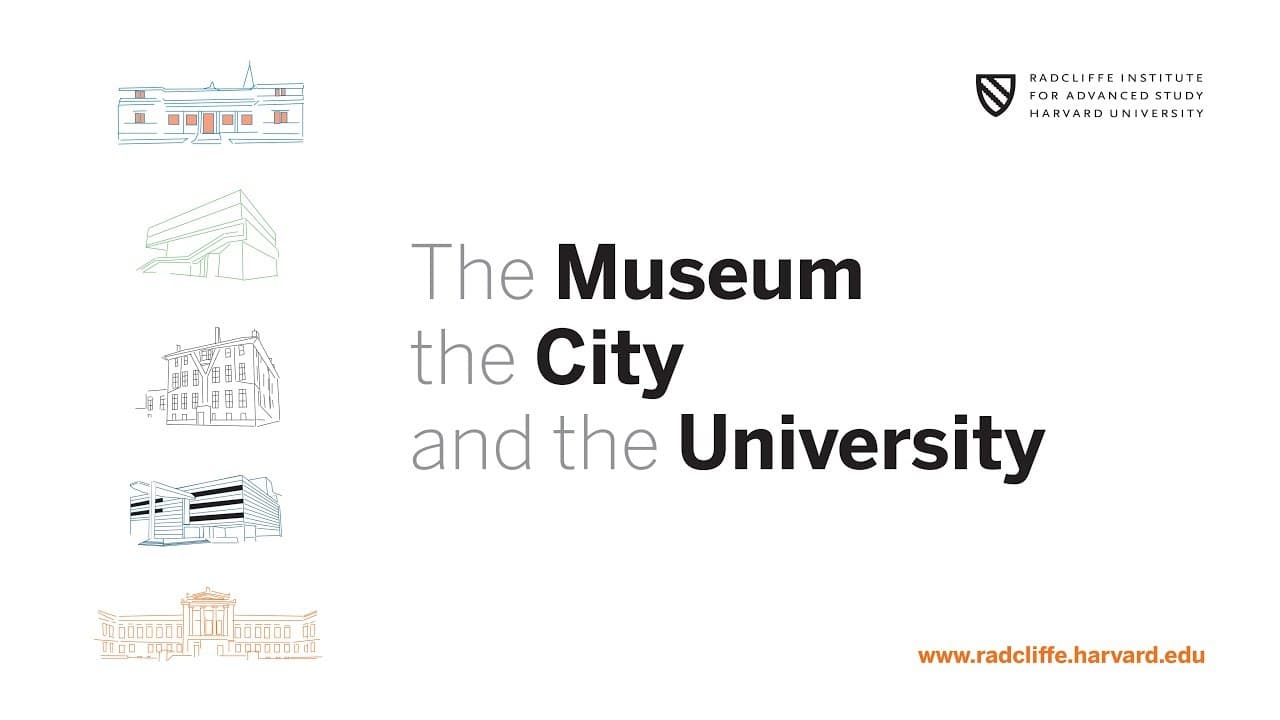
The Museum, the City, and the University || Radcliffe Institute
TL;DR
Museum directors play a crucial role in fostering civic engagement, promoting cultural knowledge, and adapting to the changing needs of their institutions and communities.
Transcript
[MUSIC PLAYING] - Good afternoon, everyone. I'm delighted to see you. I'm Liz Cohen. I'm Dean of the Radcliffe Institute. We have a very full house here today. Thank you all for joining us. I'm very much looking forward to our discussion, "The Museum, the City, and the University." Our program today reflects Radcliffe's dual mission to support scho... Read More
Key Insights
- ❓ Museums have a crucial role in fostering civic engagement and promoting cultural understanding.
- 🛟 The relationship between museums and universities has a long history, with both institutions sharing a commitment to preserving and advancing cultural knowledge.
- 😀 Museums face challenges in engaging diverse audiences and balancing their roles as cultural institutions and engines of growth and development in their communities.
Install to Summarize YouTube Videos and Get Transcripts
Explore YouTube Video Summarizer or Get YouTube Transcript Extractor
Questions & Answers
Q: How do museums and universities contribute to the preservation and advancement of cultural knowledge?
Both institutions are committed to preserving cultural knowledge in abstract and material form and advancing new research and ideas. They fulfill their missions by engaging in research, preserving and exhibiting artifacts and artworks, and promoting learning and understanding.
Q: What were the roles of universities and lavish collections of art and antiquities in the formation of Western European nations?
Universities solidified national identities and played a role in consolidating power, while lavish collections of art and antiquities glorified the crown, conferred legitimacy, and preserved patron's ideological and material culture for future generations.
Q: How have museums evolved over time to engage a broader public?
In the 18th and 19th centuries, museums expanded their collecting and research commitments and aimed to use their cultural treasures to cultivate enlightened citizens. Today, museums face pressures to serve as engines of growth and development in addition to their traditional roles in education and research.
Q: What challenges do museums face in fostering civic engagement?
Museums face challenges in engaging diverse audiences, addressing economic pressures, and navigating political realities that increasingly contest public support for the arts and humanities. They must balance their roles as cultural institutions with the need to meet the changing needs of their communities.
Summary & Key Takeaways
-
Museums and universities share a common mission of preserving cultural knowledge and advancing new research and ideas.
-
Museums have historically aimed to use their collections to cultivate enlightened citizens and serve as Americanizing institutions in growing urban centers.
-
Current political realities and economic pressures make museums' efforts to engage the public more challenging and important than ever before.
Read in Other Languages (beta)
Share This Summary 📚
Summarize YouTube Videos and Get Video Transcripts with 1-Click
Try YouTube Summary with ChatGPT & Claude or YouTube Transcript Generator
Explore More Summaries from Harvard University 📚


Summarize YouTube Videos and Get Video Transcripts with 1-Click
Try YouTube Summary with ChatGPT & Claude or YouTube Transcript Generator