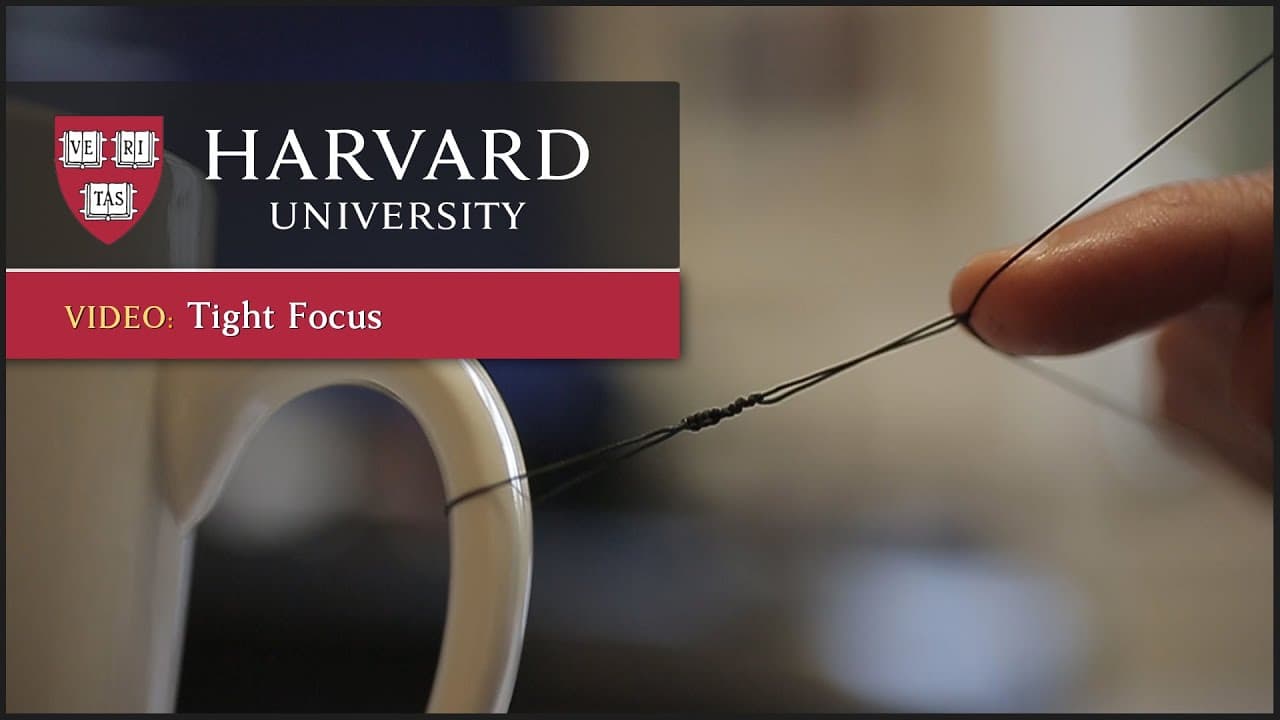
Tying knots for surgery
Transcript
Read and summarize the transcript of this video on Glasp Reader (beta).
Install to Summarize YouTube Videos and Get Transcripts
Explore YouTube Video Summarizer or Get YouTube Transcript Extractor
Summary
This video discusses the importance of knot tying in surgical procedures and highlights the different types of knots used. The speaker emphasizes the necessity for surgeons to have a deep understanding of sutures and the number of knots required for optimal holding ability. The training in knot tying starts early, even during medical school, to develop the muscle memory needed for proficient knot tying. The video also mentions the square knot as one of the most durable knots used in surgery. The speaker stresses the continuous need for practice, as achieving perfection in knot tying is challenging but essential, especially when dealing with delicate tissues and operating on babies.
Questions & Answers
Q: What is the significance of knot tying in surgical procedures?
Knot tying is crucial in surgical procedures as it ensures the proper closure and secure fastening of tissues or structures. It helps maintain the integrity of the surgical site and promotes optimal healing. Different types of knots are used depending on the purpose, and knowing the appropriate knot to use is essential for a successful surgical outcome.
Q: How many knots are typically used in a suture?
The number of knots used in a suture can vary depending on the type and complexity of the procedure. Generally, sutures have anywhere between three to four up to six or seven knots. The number of knots is determined by the strength and holding ability required in a particular situation.
Q: Do surgeons need to have specific training in knot tying?
Yes, surgeons undergo extensive training in knot tying as part of their surgical education. They learn the different types of sutures and the corresponding knots required for each. This training helps surgeons develop the necessary skill and dexterity to perform knot tying quickly, efficiently, and with precision.
Q: When does the training in knot tying typically begin for medical students?
Medical students typically start learning knot tying during their surgical rotations or operating room experiences, which commonly occur during their clinical years of medical school. The training begins early to allow sufficient time for skill development and muscle memory formation.
Q: What is the purpose of practicing knot tying?
The purpose of practicing knot tying is to develop muscle memory and automaticity in performing various types of knots. Through repeated practice, surgeons can condition their hands and brain to work in sync, allowing them to tie knots effortlessly and without the need for conscious thought. Practicing knot tying also helps surgeons refine their technique and achieve consistently secure and reliable knots.
Q: What is a square knot?
A square knot is a type of knot commonly used in surgery. It is formed by crossing two ends of a suture and tying them in a manner that creates a perfect circle. The square knot is known for its durability and ability to hold tension without slipping or loosening. It provides a reliable and secure closure for tissues in surgical procedures.
Q: Can a square knot be adjusted or untied easily?
Yes, a square knot can be adjusted or untied relatively easily if needed. By pulling on the ends of the knot in a specific manner, the square knot can be converted into a configuration that allows for easy slipping or untying. This versatility is advantageous in certain situations where adjustments or removal of the suture may be necessary.
Q: How does practicing knot tying improve surgical skills?
Practicing knot tying allows surgeons to develop proficiency in performing various knots with precision and speed. This skill enhancement directly translates to better surgical outcomes and reduced operating time. Additionally, practicing knot tying helps surgeons gain confidence in their abilities, leading to improved overall surgical skills.
Q: Why is achieving "perfection" in knot tying challenging?
Achieving perfection in knot tying is challenging due to the intricacies of surgical procedures and individual anatomical variations. Each surgery presents unique complexities, and tying a knot perfectly every time is not always feasible. However, surgeons strive for excellence by continuously practicing and refining their technique, aiming to achieve consistently secure and reliable knots.
Q: Why is practicing knot tying particularly crucial when operating on delicate tissues and babies?
Operating on delicate tissues and babies requires a higher degree of precision and delicacy. Knot tying in such cases calls for an even greater level of skill and control. By practicing knot tying, surgeons can ensure that they possess the necessary dexterity and finesse to handle fragile tissues gently, minimizing the risk of complications or damage.
Takeaways
The video emphasizes the importance of knot tying in surgical procedures and the need for surgeons to have comprehensive training in this skill. Knot tying ensures the proper closure and secure fastening of tissues, contributing to successful surgical outcomes. Surgeons start learning knot tying early, during medical school, to develop muscle memory and automaticity. The square knot is highlighted as a durable and versatile knot commonly used in surgery. Achieving perfection in knot tying is challenging but essential for surgeons, who continuously practice to refine their technique. Practicing knot tying is particularly crucial when operating on delicate tissues and babies, where precision and finesse are paramount.
Read in Other Languages (beta)
Share This Summary 📚
Summarize YouTube Videos and Get Video Transcripts with 1-Click
Try YouTube Summary with ChatGPT & Claude or YouTube Transcript Generator
Explore More Summaries from Harvard University 📚





Summarize YouTube Videos and Get Video Transcripts with 1-Click
Try YouTube Summary with ChatGPT & Claude or YouTube Transcript Generator