Why Paying College Athletes Isn't Solving Issues
TL;DR
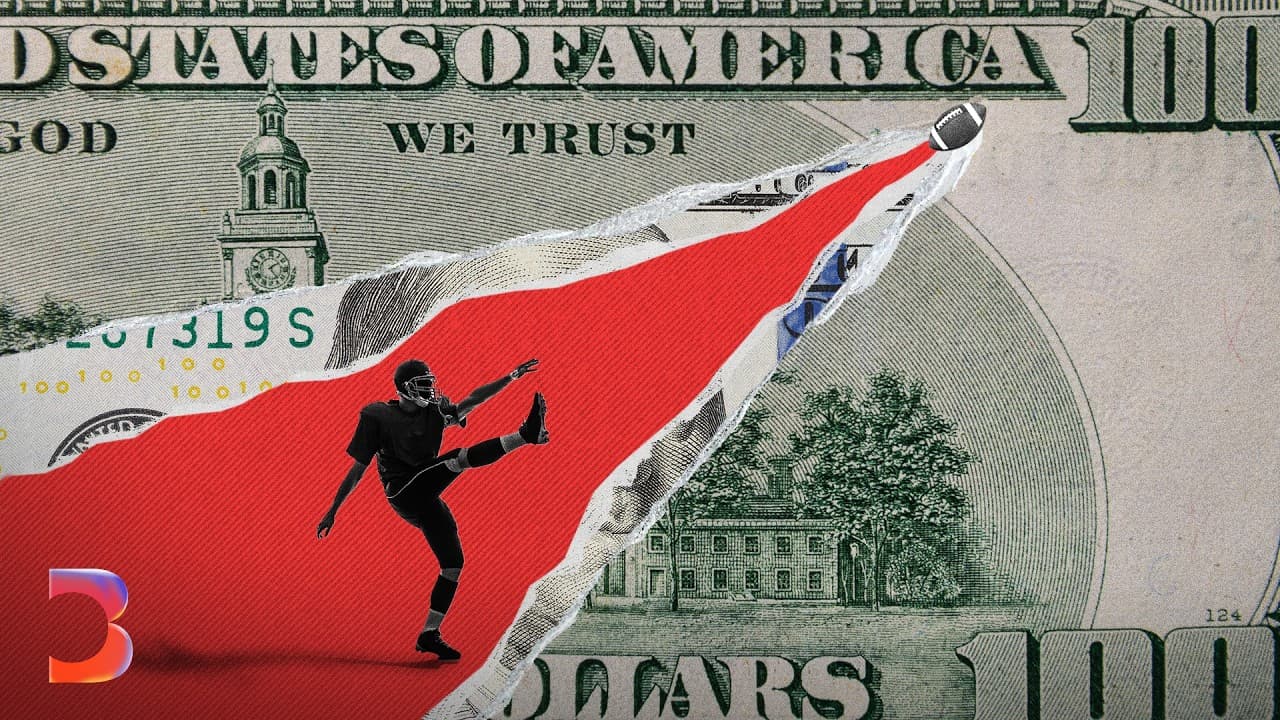
Paying college athletes hasn't resolved the financial and ethical issues in college sports. While some athletes earn significant sums, many still face economic exploitation and lack proper representation. The system remains largely unregulated, with booster collectives wielding significant influence over player compensation.
Transcript
We're supposed to be getting away from the days of boosters slipping money under players' pillows, but we've only embraced it. All of a sudden these collectives started popping up out of nowhere. You were starting to hear about them coming up with these deals. They were like, there's no way they're paying that kid that kind of money. Without these ... Read More
Key Insights
- College athletes are now receiving payments, but the system remains flawed and unregulated.
- Boosters and collectives have significant control over player compensation, often through private deals.
- The majority of player payments come from booster collectives rather than traditional endorsements.
- Players face a lack of protection and representation, leading to potential exploitation.
- Many college athletes still experience financial hardship despite the new payment system.
- Injuries and inadequate medical care remain critical issues for college athletes.
- The NCAA is facing legal challenges regarding player compensation and employee status.
- The shift towards professionalization and collective bargaining in college sports is ongoing but slow.
Install to Summarize YouTube Videos and Get Transcripts
Explore YouTube Video Summarizer or Get YouTube Transcript Extractor
Questions & Answers
Q: How are college athletes being paid in the current system?
College athletes are primarily paid through private agreements with booster collectives rather than traditional endorsements. These agreements are often unregulated and can be terminated at any time. While some athletes earn significant sums, the majority face financial instability due to the lack of standardized contracts and protections.
Q: What role do booster collectives play in college sports?
Booster collectives play a crucial role in college sports by providing the majority of financial compensation to athletes. These groups, often composed of wealthy donors and alumni, pool resources to offer payments to players, significantly influencing the financial landscape of college athletics. However, their involvement raises concerns about regulation and fairness.
Q: Why is responsible representation important for college athletes?
Responsible representation is vital for college athletes to navigate the complex and unregulated landscape of player compensation. Proper representation ensures athletes understand their rights, secure fair deals, and protect themselves from exploitation. As the system evolves, finding knowledgeable agents becomes increasingly important to safeguard their interests.
Q: What challenges do injured college athletes face?
Injured college athletes often struggle with inadequate medical care and financial support from universities. Many institutions do not cover medical bills, leaving athletes burdened with expenses. Additionally, pressure to return to play prematurely can exacerbate injuries, impacting long-term health and career prospects. This highlights the need for better healthcare policies in college sports.
Q: How is the NCAA responding to legal challenges regarding player compensation?
The NCAA is facing multiple legal challenges related to player compensation and the recognition of athletes as employees. In response, the NCAA has settled some antitrust cases and is lobbying for legislative exemptions. However, the organization remains resistant to fully acknowledging athletes as employees, fearing the implications for benefits and labor rights.
Q: What is the current state of collective bargaining in college sports?
Collective bargaining in college sports is in its early stages, with some labor organizers advocating for athlete rights and compensation. While progress is slow, the movement is gaining traction as more athletes and advocates push for a professionalized system. The goal is to secure better financial and legal protections for players, similar to those in professional sports.
Q: How does the new payment system affect college athletes' financial stability?
The new payment system, dominated by booster collectives, provides financial opportunities for some athletes but leaves many others in precarious situations. Without standardized contracts or protections, athletes face uncertainty and potential exploitation. The lack of regulation and oversight means that financial stability is not guaranteed, and disparities between athletes persist.
Q: What are the implications of recognizing college athletes as employees?
Recognizing college athletes as employees would fundamentally change the landscape of college sports. It would require universities to provide benefits similar to those of other employees, including healthcare and labor rights. This shift could lead to more equitable compensation and protections for athletes, but it also poses challenges for the traditional model of amateurism in college athletics.
Summary & Key Takeaways
-
Despite the introduction of payments, college athletes continue to face financial and ethical challenges. The system is largely unregulated, with booster collectives dominating player compensation through private deals. Many athletes remain financially vulnerable, and injuries are often inadequately managed by universities.
-
The NCAA is under pressure from legal challenges to recognize athletes as employees and provide them with appropriate benefits. The current landscape is a mix of traditional amateurism and emerging professionalization, with collective bargaining slowly gaining traction among athletes.
-
While some athletes earn substantial amounts, the majority still struggle with economic exploitation and lack of representation. The NCAA's efforts to settle antitrust cases and maintain the status quo face significant hurdles, as the push for player rights and compensation continues to grow.
Read in Other Languages (beta)
Share This Summary 📚
Summarize YouTube Videos and Get Video Transcripts with 1-Click
Try YouTube Summary with ChatGPT & Claude or YouTube Transcript Generator
Explore More Summaries from Bloomberg Originals 📚




Summarize YouTube Videos and Get Video Transcripts with 1-Click
Try YouTube Summary with ChatGPT & Claude or YouTube Transcript Generator