Germany's Shadow War After WW1 (Documentary)
TL;DR
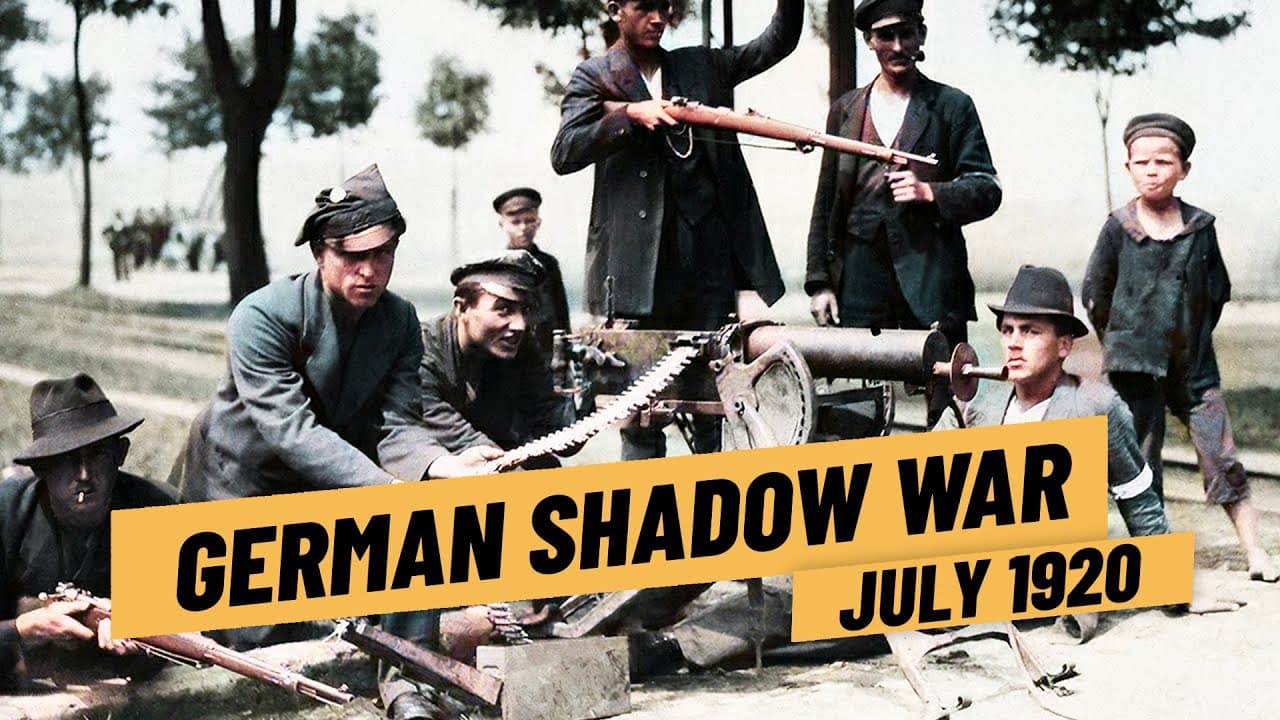
Germany faced political instability and conflict post-WW1.
Transcript
hi I'm Jesse Alexander and welcome to the Great War where we are still filming in our emergency pandemic lockdown Studio here in my living room with admittedly imperfect sound conditions now by the late spring of 1920 the Treaty of Vera had come into force and Germany was still in the grip of political instability and paramilitary violence the righ... Read More
Key Insights
- The Treaty of Versailles significantly impacted Germany, causing political instability and uprisings, as seen in the Ruhr Red Army's actions.
- The Kapp Putsch's failure incited a leftist uprising, highlighting deep political divisions and the rise of paramilitary groups in Germany.
- The German government faced challenges negotiating war reparations with the Allies, complicating internal and external political dynamics.
- French and Belgian troops occupied Frankfurt in response to German violations of the neutral zone, escalating international tensions.
- Ethnic tensions in Upper Silesia led to a proxy war between Poland and Germany, with both sides using paramilitary forces.
- The Spa Conference attempted to resolve issues related to the Treaty of Versailles, but key questions about reparations remained unanswered.
- The plebiscite in East Prussia resulted in a majority vote to remain with Germany, despite ethnic diversity and linguistic complexities.
- French colonial troops' involvement in Germany sparked propaganda campaigns and international scandals, affecting Franco-German relations.
Install to Summarize YouTube Videos and Get Transcripts
Explore YouTube Video Summarizer or Get YouTube Transcript Extractor
Questions & Answers
Q: What was the impact of the Treaty of Versailles on Germany in 1920?
The Treaty of Versailles had a profound impact on Germany in 1920, leading to political instability and economic challenges. It imposed harsh reparations and territorial losses on Germany, contributing to internal strife and uprisings, such as the Ruhr Red Army's actions. Additionally, it strained Germany's relations with the Allies, who monitored treaty compliance closely.
Q: How did the Kapp Putsch influence political dynamics in Germany?
The Kapp Putsch's failure in March 1920 led to significant political repercussions in Germany. It catalyzed leftist uprisings, notably in the Ruhr region, where the Ruhr Red Army clashed with right-wing paramilitary forces. This highlighted the deep political divisions within Germany and the rise of paramilitary groups, further destabilizing the Weimar Republic.
Q: What role did the French and Belgian troops play in the post-WW1 German context?
French and Belgian troops played a critical role in post-WW1 Germany by occupying Frankfurt and other cities in response to Germany's violation of the neutral zone. This action was a direct consequence of Germany's military movements in the Ruhr region, escalating international tensions and demonstrating the Allies' commitment to enforcing the Treaty of Versailles.
Q: What were the outcomes of the Spa Conference regarding reparations?
The Spa Conference in July 1920 aimed to address reparations and other treaty-related issues. It resulted in the Spa Agreement, which outlined the proportions of reparations each Allied country would receive but failed to determine the total amount. It also set deadlines for German disarmament and detailed coal shipments, yet left key financial questions unresolved.
Q: How did ethnic tensions in Upper Silesia manifest during this period?
Ethnic tensions in Upper Silesia manifested as a proxy war between Polish and German paramilitary forces. The region, with its mixed population, became a battleground for nationalist claims, exacerbated by economic interests in its mineral resources. Both sides engaged in violent tactics to influence the outcome of the plebiscite, reflecting deep-seated ethnic divisions.
Q: What was the significance of the plebiscite in East Prussia?
The plebiscite in East Prussia, held in July 1920, was significant as it determined whether the region would remain part of Germany or join Poland. Despite its ethnically mixed population, over 90% of voters chose to stay with Germany. This outcome highlighted the complex interplay of ethnic identity and political allegiance in post-war territorial decisions.
Q: How did French colonial troops' involvement in Germany affect international relations?
The involvement of French colonial troops in Germany, particularly in Frankfurt, sparked a propaganda campaign against France, accusing these troops of violence and misconduct. Although investigations found no evidence, the incident damaged France's international reputation, strained Franco-German relations, and influenced British perceptions, creating a diplomatic scandal.
Q: What challenges did the Weimar Republic face internally and externally in 1920?
In 1920, the Weimar Republic faced internal challenges from political instability, leftist uprisings, and right-wing paramilitaries. Externally, it struggled with enforcing the Treaty of Versailles, negotiating reparations, and managing tensions with Allies like France and Belgium. These issues undermined the Republic's authority and complicated its recovery efforts post-WW1.
Summary & Key Takeaways
-
Post-WW1 Germany was marked by significant political instability, with leftist uprisings and right-wing paramilitary actions following the Kapp Putsch's failure.
-
The Treaty of Versailles' enforcement led to international tensions, particularly with France and Belgium, due to Germany's actions in the neutral zone.
-
Ethnic and nationalist conflicts in Upper Silesia further complicated Germany's internal situation, as proxy wars with Poland intensified.
Read in Other Languages (beta)
Share This Summary 📚
Summarize YouTube Videos and Get Video Transcripts with 1-Click
Try YouTube Summary with ChatGPT & Claude or YouTube Transcript Generator
Explore More Summaries from The Great War 📚
Summarize YouTube Videos and Get Video Transcripts with 1-Click
Try YouTube Summary with ChatGPT & Claude or YouTube Transcript Generator