What's the Difference Between Paint and Coatings?
TL;DR
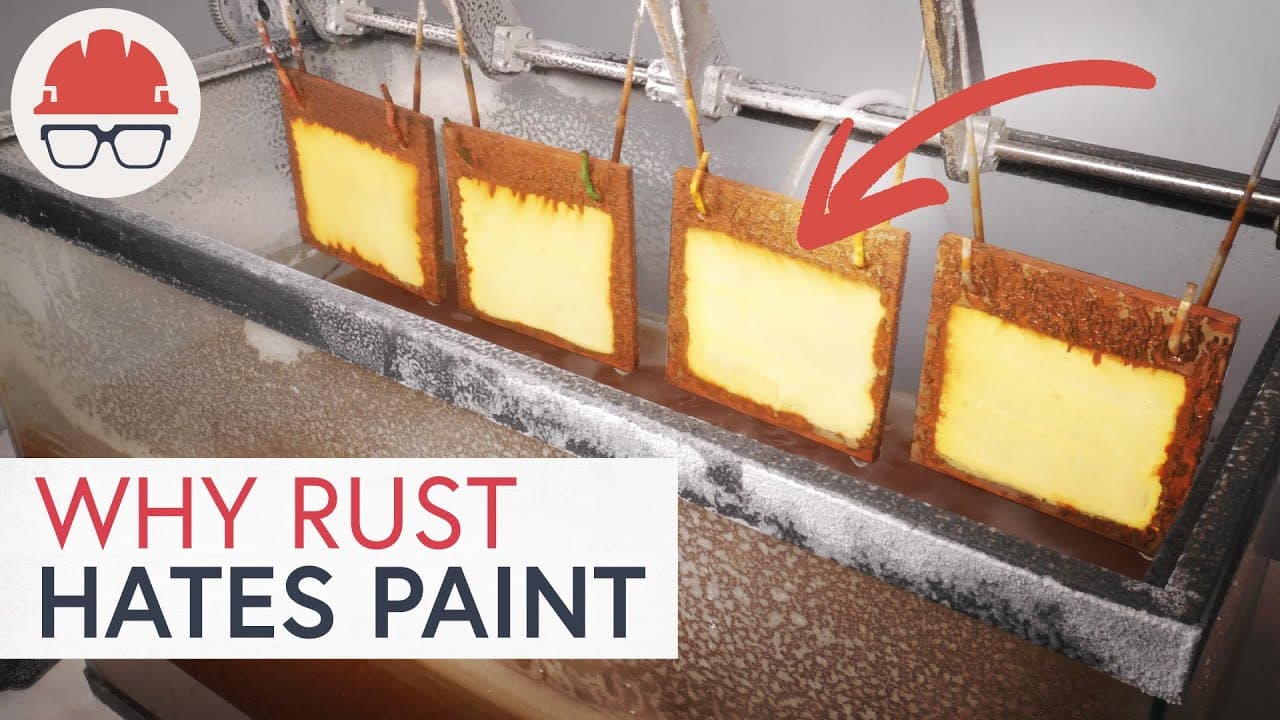
Coatings protect steel from rust, unlike decorative paint.
Transcript
There’s a popular myth that I’ve heard about several bridges (including the Golden Gate Bridge in San Francisco and the Forth Bridge in eastern Scotland) that they paint the structure continuously from end to end. Once they finish at one end, they just start back up on the other. It’s not exactly true (at least for any structures I’m familiar w... Read More
Key Insights
- Steel is strong but prone to rust, especially in salty environments, necessitating continuous protective measures like coatings.
- Paint is primarily decorative, whereas coatings serve as protective barriers against environmental elements that cause corrosion.
- Properly applied and maintained coatings can significantly extend the lifespan of steel structures, sometimes indefinitely.
- Surface preparation, such as abrasive blasting, is crucial for coating adhesion and constitutes a major portion of coating system costs.
- High-performance coatings often consist of multiple layers, including primers, midcoats, and topcoats, each serving specific protective functions.
- Coating failures often result from inadequate surface preparation, highlighting the importance of meticulous pre-application processes.
- Inspection and quality control are vital, utilizing various tools to measure thickness and detect defects in coatings.
- Coatings are a complex field within corrosion engineering, involving collaboration among multiple disciplines to ensure infrastructure longevity.
Install to Summarize YouTube Videos and Get Transcripts
Explore YouTube Video Summarizer or Get YouTube Transcript Extractor
Questions & Answers
Q: Why is surface preparation important in coating applications?
Surface preparation is crucial because it ensures that the coating adheres properly to the steel surface. Inadequate preparation can lead to coating failures, as contaminants or smooth surfaces can prevent proper adhesion. Techniques like abrasive blasting clean and roughen the surface, enhancing the coating's performance and longevity.
Q: What is the primary difference between paint and coatings?
The primary difference between paint and coatings lies in their purpose. Paint is mainly used for decoration, improving the appearance of surfaces. In contrast, coatings are designed to protect surfaces, particularly steel, from environmental elements that cause corrosion, thereby extending the lifespan of the structure.
Q: How do high-performance coatings protect steel structures?
High-performance coatings protect steel structures by forming a barrier that prevents moisture and oxygen from reaching the metal surface, which are primary contributors to rust. These coatings often consist of multiple layers, including primers, midcoats, and topcoats, each providing specific protective functions to enhance durability.
Q: What role does inspection play in the application of coatings?
Inspection plays a critical role in ensuring that coatings are applied correctly and meet specified standards. Inspectors use various tools to measure the thickness of coatings and detect any defects, such as pinholes or air bubbles, which could compromise the coating's protective capabilities. This quality control is vital for the coating's effectiveness.
Q: Why is coating failure a significant concern for infrastructure?
Coating failure is a significant concern because it can lead to the corrosion of steel structures, potentially causing structural failures. This not only incurs financial costs for repairs but also poses risks to public safety and the environment. Thus, ensuring coating integrity is crucial for infrastructure longevity and safety.
Q: What are the components of a typical high-performance coating system?
A typical high-performance coating system includes a primer, a midcoat, and a topcoat. The primer adheres to the steel and provides initial protection, sometimes incorporating zinc for additional corrosion resistance. The midcoat acts as a primary barrier against moisture, while the topcoat protects the underlying layers from UV damage.
Q: How does abrasive blasting contribute to the coating process?
Abrasive blasting is a surface preparation technique that cleans and roughens the steel surface. By removing rust, old coatings, and contaminants, it ensures better adhesion of the new coating. The roughened surface increases the surface area for the coating to adhere to, enhancing the coating's effectiveness and durability.
Q: What challenges are associated with reapplying coatings on steel structures?
Reapplying coatings on steel structures is challenging due to accessibility issues and the potential disruption caused by shutting down infrastructure. Additionally, the coating process itself requires meticulous surface preparation and adherence to environmental conditions, making it a complex and costly endeavor that is ideally done infrequently.
Summary & Key Takeaways
-
The video discusses the distinction between paint and coatings, emphasizing that coatings are crucial for protecting steel structures from rust. While paint is decorative, coatings provide a barrier against environmental elements, significantly prolonging the lifespan of infrastructure.
-
A major focus is on the importance of surface preparation, which is essential for effective coating adhesion. Techniques like abrasive blasting are used to clean and roughen surfaces, ensuring coatings adhere properly and perform effectively.
-
The video also highlights the complexity of coating systems, which often include multiple layers for comprehensive protection. Inspection and quality control are critical to ensure coatings meet specifications and provide the intended protection.
Read in Other Languages (beta)
Share This Summary 📚
Summarize YouTube Videos and Get Video Transcripts with 1-Click
Try YouTube Summary with ChatGPT & Claude or YouTube Transcript Generator
Explore More Summaries from Practical Engineering 📚

Summarize YouTube Videos and Get Video Transcripts with 1-Click
Try YouTube Summary with ChatGPT & Claude or YouTube Transcript Generator