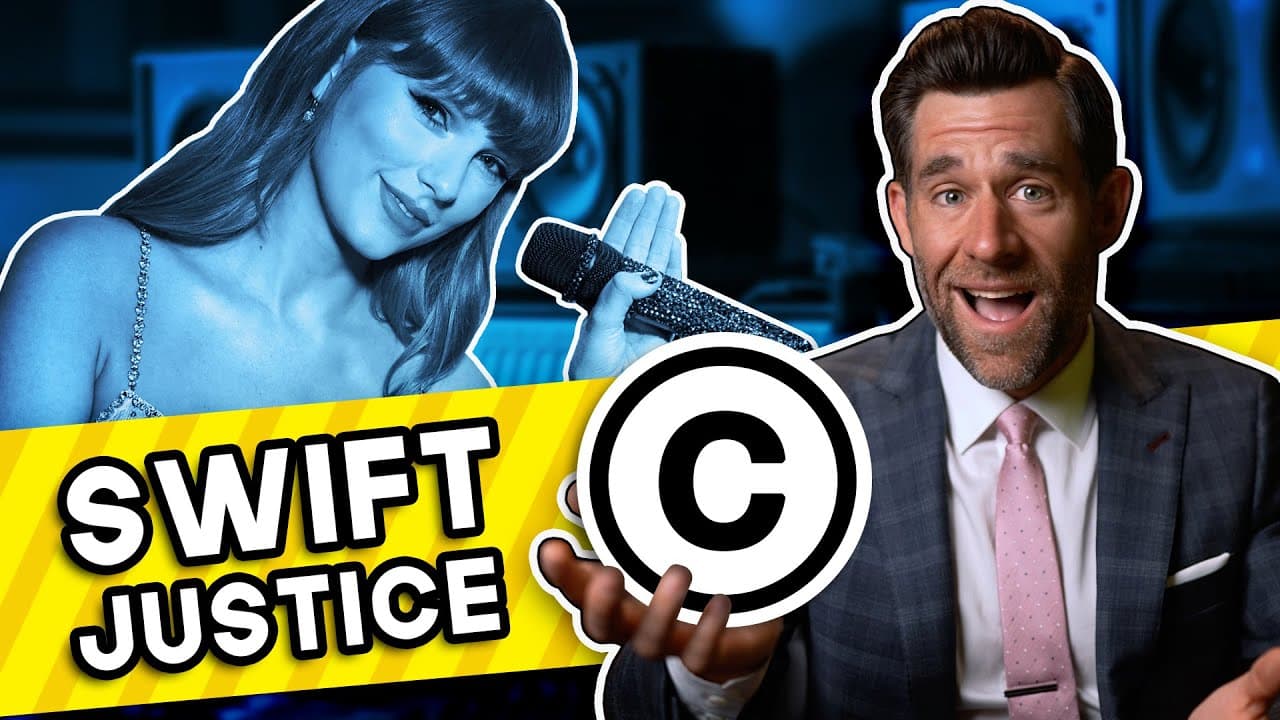
How Taylor Swift (Legally) Changed Music Forever ft. Rick Beato
TL;DR
Taylor Swift's bold rerecording of her albums challenges music industry norms and empowers artists.
Transcript
- What if I told you that Taylor Swift changed music forever? And no, I don't mean by pioneering her own brand of folksy, yet accessible pop rock. I mean that she actually changed the way that music gets made and the way that artists are able to monetize the art that they create. It's actually true. When people look back on this age of music, they'... Read More
Key Insights
- ✊ Taylor Swift's rerecording of her albums challenges the traditional power dynamics between artists and record labels.
- 🎼 The history of the music industry reveals a pattern of artists losing control of their music due to exploitative contracts with recording companies.
- 😫 Swift's proactive approach sets a precedent for artists to take ownership of their music and earnings.
- 🙃 Re-recording her albums serves as a strategic move to dilute the value of the original masters owned by private equity firms.
- ©️ The impact of copyright law and music industry traditions underscores the importance of artists understanding and asserting their rights.
- 🗯️ Swift's bold actions to reclaim her music rights showcase the need for artists to advocate for themselves in an industry prone to exploitation.
- 😀 The complex relationship between music publishers, royalties, and record labels highlights the challenges artists face in earning fair compensation for their work.
Install to Summarize YouTube Videos and Get Transcripts
Explore YouTube Video Summarizer or Get YouTube Transcript Extractor
Questions & Answers
Q: How did Taylor Swift's loss of music copyrights lead to her decision to re-record her albums?
Taylor Swift lost control of her music copyrights to a private equity firm, prompting her to re-record her albums and reclaim ownership of her music.
Q: What impact did bad contracts with recording companies have on legendary artists like Rick James and Paul McCartney?
Bad contracts with recording companies left artists like Rick James broke while companies profited, leading Paul McCartney to fight for years to regain control of his original Beatles recordings.
Q: How does Taylor Swift's proactive approach to reclaiming her music rights influence the future of the music industry?
Taylor Swift's decision to take control of her music rights by re-recording her albums serves as a model for artists to assert ownership and empower themselves against record labels.
Q: What legal implications and challenges did Taylor Swift face in her quest to regain control of her music?
Taylor Swift faced legal challenges and disputes with private equity firms over her music rights, highlighting the complexities and pitfalls artists encounter in the music industry.
Summary & Key Takeaways
-
Taylor Swift's decision to re-record her albums stems from losing control of her music copyrights to a private equity firm.
-
The music industry's history reveals numerous cases of artists losing control of their music due to bad contracts with recording companies.
-
Swift's proactive approach to reclaiming her music rights sets a precedent for artists to take control of their art and earnings.
Read in Other Languages (beta)
Share This Summary 📚
Summarize YouTube Videos and Get Video Transcripts with 1-Click
Try YouTube Summary with ChatGPT & Claude or YouTube Transcript Generator
Explore More Summaries from LegalEagle 📚




Summarize YouTube Videos and Get Video Transcripts with 1-Click
Try YouTube Summary with ChatGPT & Claude or YouTube Transcript Generator