How Did Allied Occupation Shape Post-WWI Germany?
TL;DR
The Allied occupation of the Rhineland after WWI was a complex political and military endeavor aimed at ensuring security and reparations from Germany. French, British, American, and Belgian troops occupied the region to enforce the Treaty of Versailles, with varying national interests and tensions influencing the occupation's dynamics. The occupation was marked by cultural exchanges, political maneuvering, and racial tensions, ultimately impacting German national sentiment and international relations.
Transcript
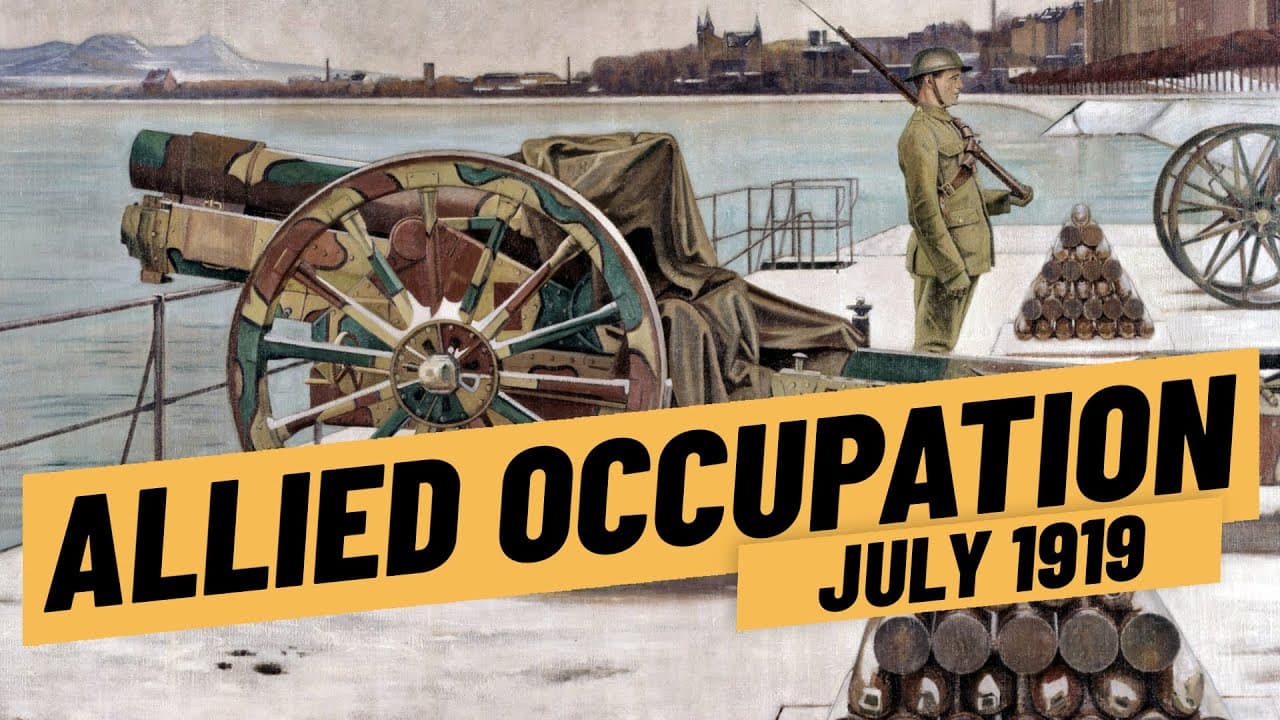
It’s July 1919, and the Peace Treaty between Germany and the Allies has been signed. The US Third Army stationed in the Rhineland is officially disbanded in the expectation of German disarmament. But, Allied troops are not going anywhere. In fact, they are preparing for long and difficult years in hostile territory – it's the Occupation of the Rhin... Read More
Key Insights
- The Allied occupation of the Rhineland was a result of the Treaty of Versailles, aimed at enforcing German compliance and ensuring security.
- The French viewed the occupation as a means to establish a military buffer and extract economic reparations from Germany.
- The British and Americans were concerned about maintaining a balance of power and preventing French dominance in Europe.
- The Rhineland occupation was marked by cultural exchanges, with efforts to promote French influence and language in the region.
- Racial tensions arose from the presence of French colonial troops, which were used to demonstrate French power and maintain order.
- The occupation faced challenges from local German resistance and nationalist sentiment, which opposed separation from Germany.
- Economic hardships in post-war Germany led to increased prostitution, with Allied troops engaging in relationships with local women.
- The occupation's legacy included political propaganda and racial politics, influencing future German nationalism and international relations.
Install to Summarize YouTube Videos and Get Transcripts
Explore YouTube Video Summarizer or Get YouTube Transcript Extractor
Questions & Answers
Q: What was the purpose of the Allied occupation of the Rhineland after WWI?
The Allied occupation of the Rhineland aimed to enforce the Treaty of Versailles by ensuring German compliance with disarmament and reparations. It served as a security measure, particularly for France, which sought to establish a buffer zone against potential future German aggression. The occupation also allowed the Allies to exert political and economic influence over Germany during the post-war period.
Q: How did the French view the occupation of the Rhineland?
The French viewed the occupation of the Rhineland as an opportunity to establish a military buffer against Germany and to extract economic reparations to rebuild their war-torn economy. France aimed to use the Rhineland as leverage to ensure German compliance with the Treaty of Versailles and to prevent any future German aggression. The French also promoted cultural influence in the region to solidify their presence.
Q: What were the British and American concerns regarding the Rhineland occupation?
The British and Americans were concerned about maintaining a balance of power in Europe and preventing France from becoming too dominant. They feared that a strong French presence in the Rhineland could destabilize the region and provoke German hostility. Both nations participated in the occupation to moderate French ambitions and ensure that the terms of the Treaty of Versailles were enforced without exacerbating tensions.
Q: What role did French colonial troops play in the Rhineland occupation?
French colonial troops were deployed in the Rhineland to maintain order and demonstrate French military strength. Their presence was intended to support the occupation by allowing more European French troops to be demobilized. However, the use of colonial troops led to racial tensions and propaganda, as German populations harbored fears and stereotypes about non-European soldiers, which were exacerbated by wartime propaganda.
Q: How did the local German population react to the occupation?
The local German population had mixed reactions to the occupation. While some appreciated the order and stability provided by Allied troops, many resented the foreign presence and opposed any separation from Germany. Nationalist sentiment and cultural pride fueled resistance, and economic hardships led to increased social tensions. The occupation was seen as a national humiliation, contributing to future nationalist rhetoric.
Q: What were the economic and social impacts of the occupation on the Rhineland?
The occupation led to significant economic and social impacts on the Rhineland. The presence of foreign troops and economic collapse in post-war Germany resulted in increased prostitution and social tensions. Efforts to promote French cultural influence and economic extraction faced resistance from the local population, who largely remained loyal to Germany. The occupation also strained resources and disrupted local economies.
Q: What was the 'Black Shame' crisis during the Rhineland occupation?
The 'Black Shame' crisis referred to the racial tensions and propaganda surrounding the presence of French colonial troops in the Rhineland. German media and nationalist groups spread rumors of violence and sexual misconduct by African soldiers, playing on racial stereotypes and wartime propaganda. Although investigations debunked these claims, the crisis fueled anti-French sentiment and racial politics, complicating the occupation's legacy.
Q: How did the occupation influence future German nationalism and international relations?
The occupation of the Rhineland contributed to a sense of national humiliation and resentment in Germany, fueling nationalist rhetoric and propaganda. The presence of foreign troops and the perceived injustices of the Treaty of Versailles became rallying points for nationalist movements. Internationally, the occupation strained relations among the Allies and highlighted tensions in post-war Europe, influencing future diplomatic and geopolitical dynamics.
Summary & Key Takeaways
-
The Allied occupation of the Rhineland after WWI was established to enforce the Treaty of Versailles and ensure security and reparations from Germany. The French sought to use the occupation to establish a military buffer and gain economic advantages, while the British and Americans aimed to maintain a balance of power in Europe. The occupation involved cultural exchanges, political maneuvering, and racial tensions, ultimately impacting German national sentiment and international relations.
-
French, British, American, and Belgian troops occupied the Rhineland, with each nation having its own interests and strategies. The French promoted cultural influence and economic extraction, while the British and Americans were cautious of French dominance. The presence of French colonial troops led to racial tensions and propaganda, affecting local perceptions and international relations.
-
The occupation faced resistance from local Germans, who opposed separation from Germany and resented foreign presence. Economic hardships and cultural exchanges marked the occupation, with prostitution becoming prevalent due to economic collapse. The legacy of the occupation included political propaganda and racial politics, influencing future German nationalism and the geopolitical landscape.
Read in Other Languages (beta)
Share This Summary 📚
Summarize YouTube Videos and Get Video Transcripts with 1-Click
Try YouTube Summary with ChatGPT & Claude or YouTube Transcript Generator
Explore More Summaries from The Great War 📚



Summarize YouTube Videos and Get Video Transcripts with 1-Click
Try YouTube Summary with ChatGPT & Claude or YouTube Transcript Generator