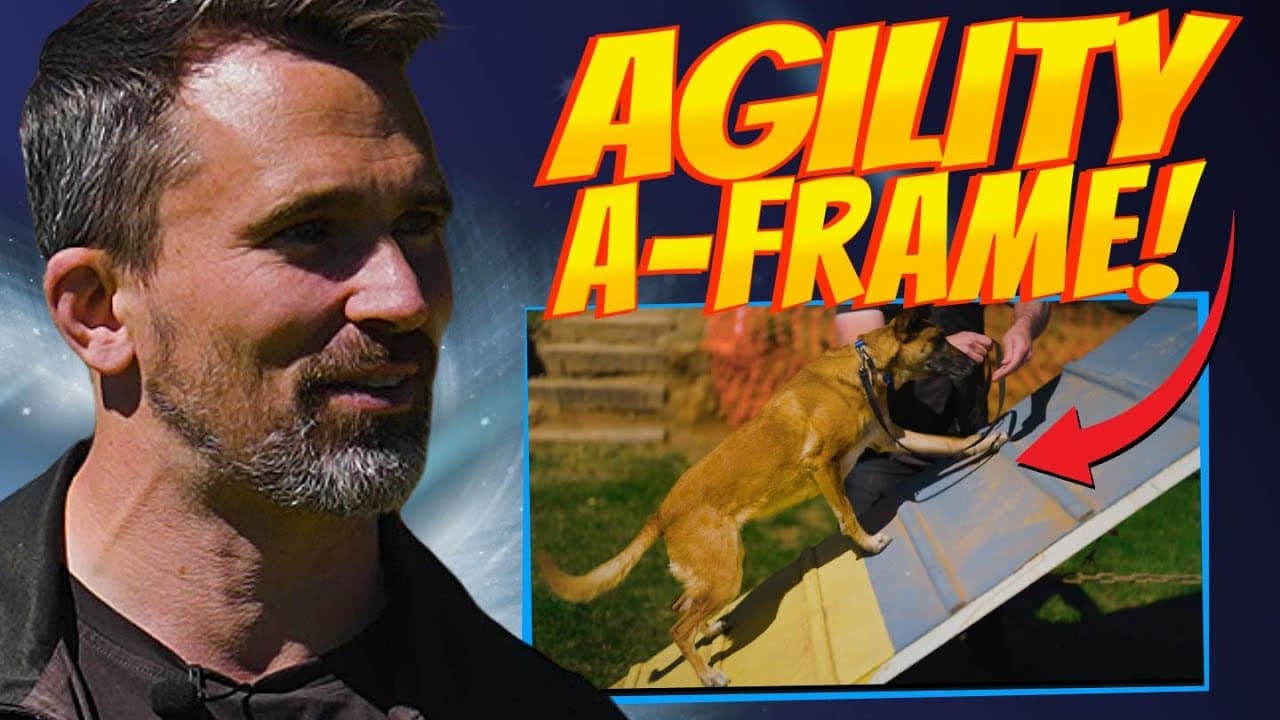
EASY A-Frame Agility Training for Dogs!
TL;DR
Train dogs to confidently navigate A-Frame with positive reinforcement.
Transcript
okay so today we're going to be introducing our dogs to the A-frame this is a very simple exercise now the dogs have to touch the contact point on the way down if you were to compete unless AKC has changed the rules they don't have to touch it in the front again check the rules before you compete in any sport but I always like to teach the dogs tha... Read More
Key Insights
- The A-frame is a common obstacle in dog agility training, and dogs are required to touch the contact points on their way down.
- Teaching dogs to touch both contact points is beneficial in case of rule changes in competitions.
- Using lures and leashes can help guide dogs over the A-frame, ensuring they hit the contact points.
- Positive reinforcement, such as placing treats on the A-frame, encourages dogs to move slowly and carefully.
- For timid dogs, baby steps and gradual exposure to the A-frame can build confidence.
- Dogs enjoy agility training, but precision and correct form should be prioritized over speed initially.
- Reinforcing the habit of touching contact points is crucial to prevent issues later in training.
- Agility training is both fun and challenging, requiring patience and consistency to achieve proficiency.
Install to Summarize YouTube Videos and Get Transcripts
Explore YouTube Video Summarizer or Get YouTube Transcript Extractor
Questions & Answers
Q: What is the primary focus of A-frame training?
The primary focus of A-frame training is to teach dogs to confidently and accurately navigate the obstacle, ensuring they touch the contact points on their way down. This is crucial for agility competitions, where touching these points is often a requirement. Positive reinforcement techniques are used to encourage correct behavior.
Q: How can timid dogs be encouraged to use the A-frame?
Timid dogs can be encouraged to use the A-frame by introducing them to the obstacle gradually. Trainers can reward them for small successes, such as placing a paw on the A-frame. Luring with treats and providing gentle guidance can help build the dog's confidence and make the experience positive.
Q: Why is it important for dogs to touch both contact points on the A-frame?
Touching both contact points on the A-frame is important because it prepares dogs for potential rule changes in agility competitions. By training dogs to consistently touch these points, handlers ensure their dogs are ready for any competition requirements, thus avoiding penalties and ensuring successful runs.
Q: What role does positive reinforcement play in A-frame training?
Positive reinforcement plays a crucial role in A-frame training by encouraging desired behaviors. By rewarding dogs with treats or praise when they navigate the obstacle correctly, trainers can build a strong association between the A-frame and positive outcomes, leading to improved performance and confidence.
Q: How can trainers prevent dogs from jumping off the A-frame prematurely?
Trainers can prevent dogs from jumping off the A-frame prematurely by using lures and leashes to guide them, ensuring they touch the contact points. Placing treats on the contact points can also motivate dogs to slow down and complete the obstacle correctly, reinforcing the desired behavior.
Q: What is the significance of spacing out rewards in A-frame training?
Spacing out rewards in A-frame training is significant because it helps dogs learn to perform the task reliably without expecting immediate reinforcement every time. Once dogs understand the task, rewards can be given less frequently, encouraging them to focus on completing the obstacle correctly rather than just seeking treats.
Q: Why should dogs always approach the A-frame from the same direction during training?
Dogs should always approach the A-frame from the same direction during training to establish a consistent routine and prevent confusion. Consistent direction helps dogs build muscle memory and understand the sequence of actions required, leading to more reliable performance during competitions.
Q: How does agility training benefit dogs?
Agility training benefits dogs by providing physical exercise, mental stimulation, and an opportunity to strengthen the bond with their handlers. It enhances a dog's confidence, coordination, and problem-solving skills, making it an enjoyable and rewarding activity for both dogs and their owners.
Summary & Key Takeaways
-
The video demonstrates how to train dogs to navigate the A-frame obstacle in agility courses. Emphasis is on ensuring dogs touch the contact points using positive reinforcement techniques like treats and lures.
-
Training methods include using food as a lure and gradually increasing the complexity of tasks to build the dog's confidence and precision in navigating the A-frame.
-
The importance of maintaining a strong positive association with the obstacle is highlighted, as is the need to adapt training techniques to individual dogs' needs and temperaments.
Read in Other Languages (beta)
Share This Summary 📚
Summarize YouTube Videos and Get Video Transcripts with 1-Click
Try YouTube Summary with ChatGPT & Claude or YouTube Transcript Generator
Explore More Summaries from Nate Schoemer 📚




Summarize YouTube Videos and Get Video Transcripts with 1-Click
Try YouTube Summary with ChatGPT & Claude or YouTube Transcript Generator