How to Craft a $2,000 Damascus Knife
TL;DR
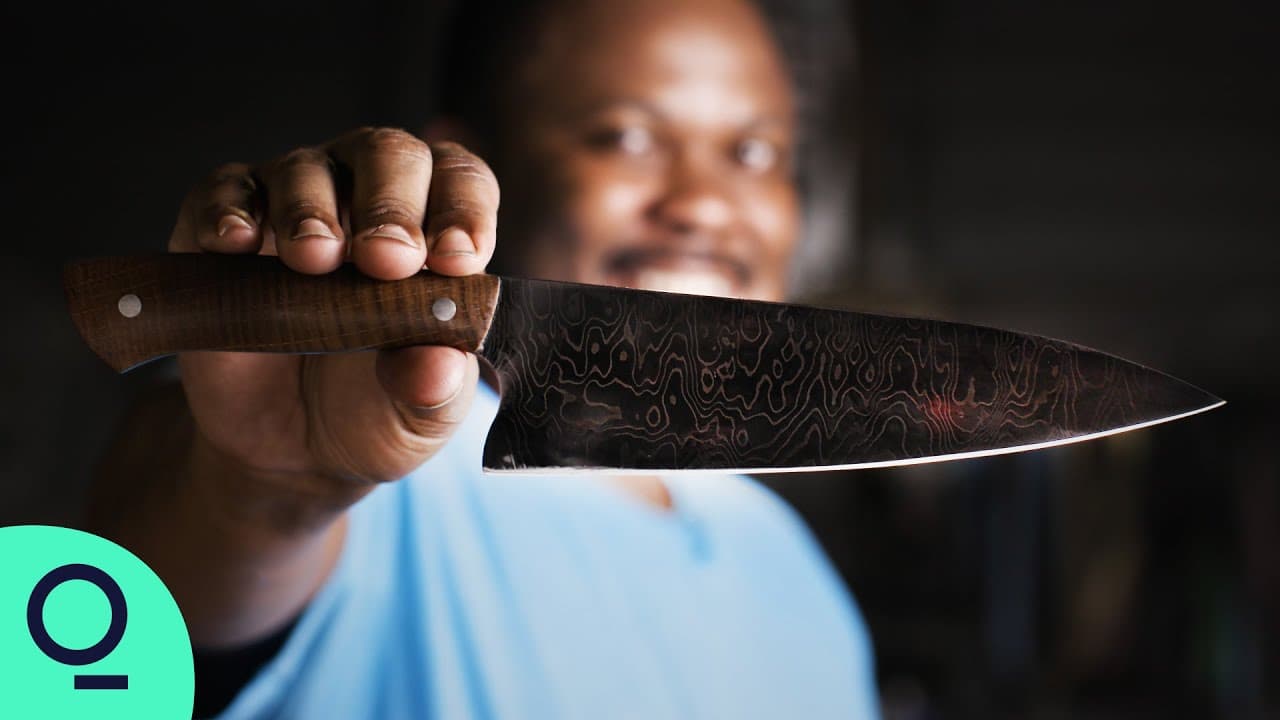
Crafting a $2,000 knife involves intricate blacksmithing techniques, including layering and forging Damascus steel to create a durable and beautiful blade. The process is both an art and a tribute to the rich history of African-American blacksmiths. Quintin Middleton's craftsmanship blends passion, tradition, and innovation to produce knives that are both functional and aesthetically pleasing.
Transcript
Knife-making is almost meditative for me. There's a lot of passion behind it. There's a lot of hard work behind it. And it's not just something that you kind of just brush off, like, oh, this is just a knife. People hands touched this knife. People pour their passion and their soul inside of these products. The art of blacksmithing has a very long ... Read More
Key Insights
- Knife-making is a meditative process that involves passion and hard work.
- Damascus steel is created by layering iron to form a complex, durable structure.
- The forging process requires heating steel to a bright yellowish-orange color.
- Hydraulic pressing compresses the steel, similar to kneading dough.
- Normalizing and quenching stabilize the knife's structure and hardness.
- African-American blacksmiths played a significant role in history and industry.
- Quintin Middleton uses historical materials to honor his ancestry.
- Craftsmanship includes shaping, sharpening, and engraving the knife.
Install to Summarize YouTube Videos and Get Transcripts
Explore YouTube Video Summarizer or Get YouTube Transcript Extractor
Questions & Answers
Q: How is Damascus steel made?
Damascus steel is made by layering iron multiple times, creating a complex and durable structure. This process involves heating the steel to a specific color and compressing it with a hydraulic press. The result is a visually striking pattern that is both strong and resilient, ideal for high-quality knives.
Q: What role did African-American blacksmiths play in history?
African-American blacksmiths were crucial during the transatlantic slave trade, bringing their knowledge of ironworking and forging. They played significant roles on plantations, crafting tools and weapons, and were instrumental in resistance movements like the Haitian Revolution. Despite facing discrimination, their expertise contributed greatly to various industries.
Q: Why is normalizing and quenching important in knife-making?
Normalizing and quenching are critical for stabilizing the knife's structure. Normalizing involves heating the steel to relieve internal stresses, while quenching rapidly cools it to realign the grain structure. This process hardens the blade, allowing it to maintain a sharp edge while preventing brittleness.
Q: How does Quintin Middleton honor his ancestry through knife-making?
Quintin Middleton honors his ancestry by using materials with historical significance, such as oak from a plantation linked to his family history. By incorporating this wood into his knife handles, he pays tribute to the resilience and contributions of African-Americans in blacksmithing, transforming a painful past into a source of pride.
Q: What inspired Quintin Middleton to start making knives?
Quintin Middleton's inspiration for knife-making stemmed from his childhood love of fantasy movies and a fascination with weapons. His journey was further shaped by mentorship from experienced knife-makers and a spiritual calling to focus on crafting chef's knives, blending personal passion with professional growth.
Q: What makes a $2,000 knife special?
A $2,000 knife stands out due to its meticulous craftsmanship, use of high-quality materials like Damascus steel, and the intricate forging process. Each knife is a unique piece of art, reflecting the maker's skill and dedication. The historical and emotional significance embedded in its creation further elevates its value.
Q: How does the forging process affect the knife's quality?
The forging process enhances a knife's quality by shaping and strengthening the steel. Heating and compressing the metal aligns its structure, improving durability and sharpness. Properly executed, forging results in a knife that maintains its edge longer and withstands rigorous use, making it both functional and aesthetically pleasing.
Q: What are the key steps in crafting a high-end knife?
Crafting a high-end knife involves several key steps: selecting quality materials, layering and forging steel, normalizing and quenching for structural integrity, grinding to shape, and adding a handle. Each step requires precision and expertise to ensure the knife is both durable and visually appealing, reflecting the maker's craftsmanship.
Summary & Key Takeaways
-
Quintin Middleton crafts high-end knives using traditional blacksmithing techniques, particularly focusing on Damascus steel. The process involves layering, forging, and treating steel to ensure durability and aesthetic appeal. His work not only showcases skill but also pays homage to African-American history in blacksmithing.
-
Middleton's journey into knife-making was inspired by a love for fantasy and was guided by mentorship and faith. His craftsmanship reflects a blend of personal passion and historical significance, using materials like plantation oak to create handles that tell a deeper story.
-
The crafting process includes precise steps such as forging, pressing, grinding, and quenching, each contributing to the knife's quality and uniqueness. Middleton's dedication to his craft is evident in the meticulous attention to detail and the emotional connection to his heritage.
Read in Other Languages (beta)
Share This Summary 📚
Summarize YouTube Videos and Get Video Transcripts with 1-Click
Try YouTube Summary with ChatGPT & Claude or YouTube Transcript Generator
Explore More Summaries from Bloomberg Originals 📚





Summarize YouTube Videos and Get Video Transcripts with 1-Click
Try YouTube Summary with ChatGPT & Claude or YouTube Transcript Generator