Are We Running Out of Space Above Earth?
TL;DR
Space debris poses a growing threat to orbital operations.
Transcript
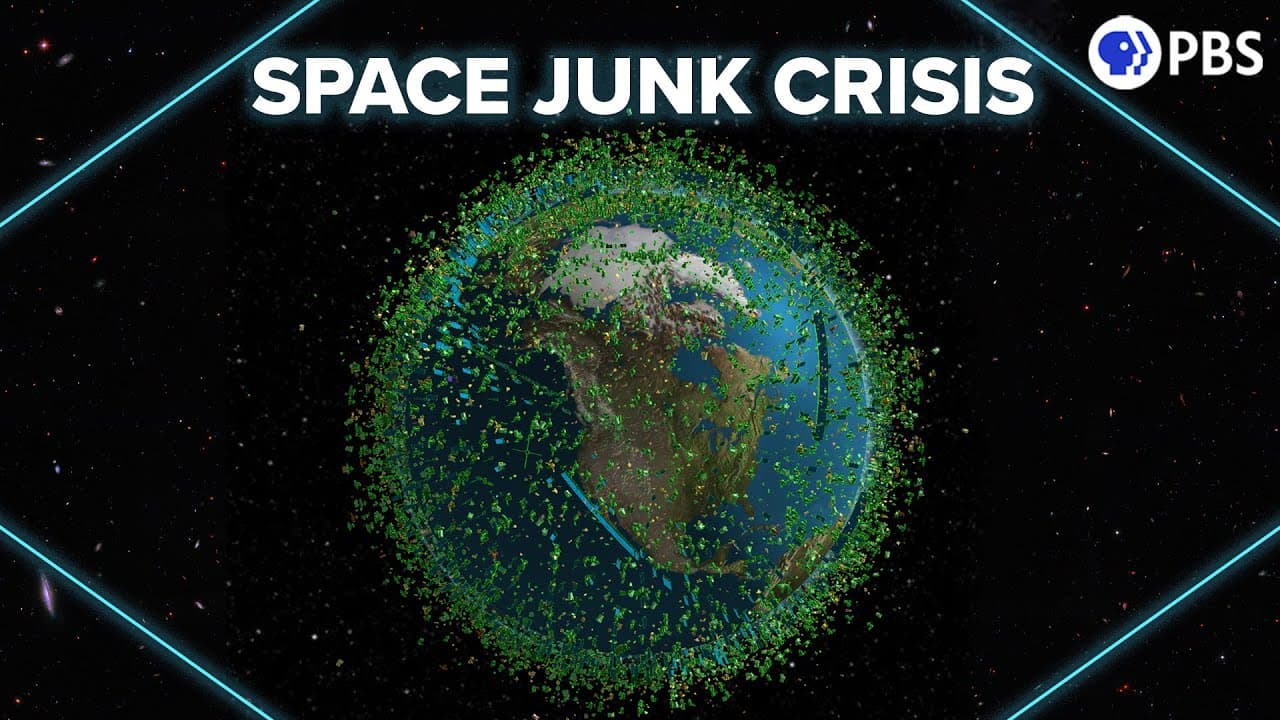
News of the Chinese Long March 5 rocket burning up on re-entry has made waves through the world- in some cases, quite literally, as the debris from the rocket burned up over Saudi Arabia and splashed down in the Indian Ocean near the Maldives. And while it made a lot of people very nervous to know a 22 ton rocket was going to fall out the sky, this... Read More
Key Insights
- The re-entry of large objects like the Chinese Long March 5 rocket is common, but space debris poses a significant risk to operations in space.
- The Kessler Syndrome describes a chain reaction of collisions in space, potentially leading to exponential growth of space debris.
- There are over 3,300 operational satellites and 10,000 trackable pieces of space debris, with millions of smaller untrackable fragments.
- Space junk travels at high speeds, making even small debris dangerous, with some pieces carrying energy equivalent to a cannonball.
- Mitigation efforts include tracking large debris and steering satellites to avoid collisions, but small debris remains a significant challenge.
- Orbital decay, accelerated by atmospheric drag, is a natural process that helps clean up space debris, especially in low Earth orbit.
- Significant events, such as the 2009 Iridium-Kosmos collision, have contributed to the current space debris problem.
- Future satellite launches, like SpaceX's StarLink, could exacerbate the issue if not managed carefully, increasing the risk of Kessler Syndrome.
Install to Summarize YouTube Videos and Get Transcripts
Explore YouTube Video Summarizer or Get YouTube Transcript Extractor
Questions & Answers
Q: What is the Kessler Syndrome?
The Kessler Syndrome is a theoretical scenario where the density of objects in low Earth orbit is high enough to cause a cascade of collisions. Each collision generates more debris, increasing the likelihood of further collisions, leading to an exponential growth of space debris. This could eventually render certain orbits unusable.
Q: How does space debris pose a threat to satellites?
Space debris travels at extremely high speeds, making even small fragments potentially lethal. A collision with a piece of debris can obliterate a satellite, creating more debris. The risk is compounded by the sheer volume of debris, which includes millions of untrackable fragments that can cause significant damage.
Q: What mitigation strategies are used to manage space debris?
Mitigation strategies include tracking large debris using radar and optical methods, predicting possible collisions, and steering satellites into safer orbits. Orbital decay, accelerated by atmospheric drag, helps remove debris from low Earth orbit. However, effective management requires cooperation between international space agencies and companies.
Q: Why is orbital decay important in managing space debris?
Orbital decay is a natural process where atmospheric drag slows down objects in low Earth orbit, causing them to spiral down and eventually burn up upon re-entry. This process helps clean up space debris, especially for smaller fragments that cannot be tracked or managed through other means. It is a critical component in mitigating the Kessler Syndrome.
Q: What impact did the 2009 Iridium-Kosmos collision have on space debris?
The 2009 collision between the Iridium 33 communication satellite and the deactivated Kosmos 2251 satellite was catastrophic, creating hundreds of fragments large enough to destroy other satellites. It significantly contributed to the current space debris problem, demonstrating the potential for collisions to produce large amounts of hazardous debris.
Q: How might future satellite launches affect space debris levels?
Future satellite launches, such as SpaceX's StarLink project, which plans to deploy over 40,000 satellites, could significantly increase the number of objects in orbit. While SpaceX claims to have mitigation strategies, the sheer volume of new satellites raises concerns about increased collision risks and exacerbation of the Kessler Syndrome.
Q: What are some of the challenges in tracking space debris?
Tracking space debris is challenging due to the vast number of objects and their high speeds. Large pieces can be tracked using radar and optical methods, but millions of smaller fragments remain untrackable. These small pieces can still cause significant damage, making them a major concern for satellite operations and space safety.
Q: What role does international cooperation play in managing space debris?
International cooperation is crucial in managing space debris, as space is a shared resource. Effective debris management requires coordinated efforts between countries and companies to track and mitigate debris, develop new technologies for removal, and establish guidelines for responsible satellite launches and end-of-life disposal to prevent further exacerbation of the problem.
Summary & Key Takeaways
-
Space debris, including defunct satellites and rocket parts, poses a significant threat to human space operations. The Kessler Syndrome, a chain reaction of collisions, could lead to exponential increases in debris. Mitigation involves tracking large debris and relying on orbital decay, but challenges remain with smaller, untrackable fragments.
-
The accumulation of space junk is a growing concern, with over 3,300 operational satellites and millions of smaller debris pieces in orbit. High-speed collisions can create dangerous shards, and events like the 2009 Iridium-Kosmos collision have worsened the situation. Future satellite launches could further increase risks.
-
Efforts to mitigate space debris include predicting collisions and steering satellites to safety, but small debris remains hard to track. Orbital decay helps clean up low Earth orbit, but new launches and collisions continue to add debris. Cooperation between nations and companies is crucial to maintaining safe orbital space.
Read in Other Languages (beta)
Share This Summary 📚
Summarize YouTube Videos and Get Video Transcripts with 1-Click
Try YouTube Summary with ChatGPT & Claude or YouTube Transcript Generator
Explore More Summaries from PBS Space Time 📚



Summarize YouTube Videos and Get Video Transcripts with 1-Click
Try YouTube Summary with ChatGPT & Claude or YouTube Transcript Generator