The Backbone of Total War - Trains in WW1 I THE GREAT WAR Special
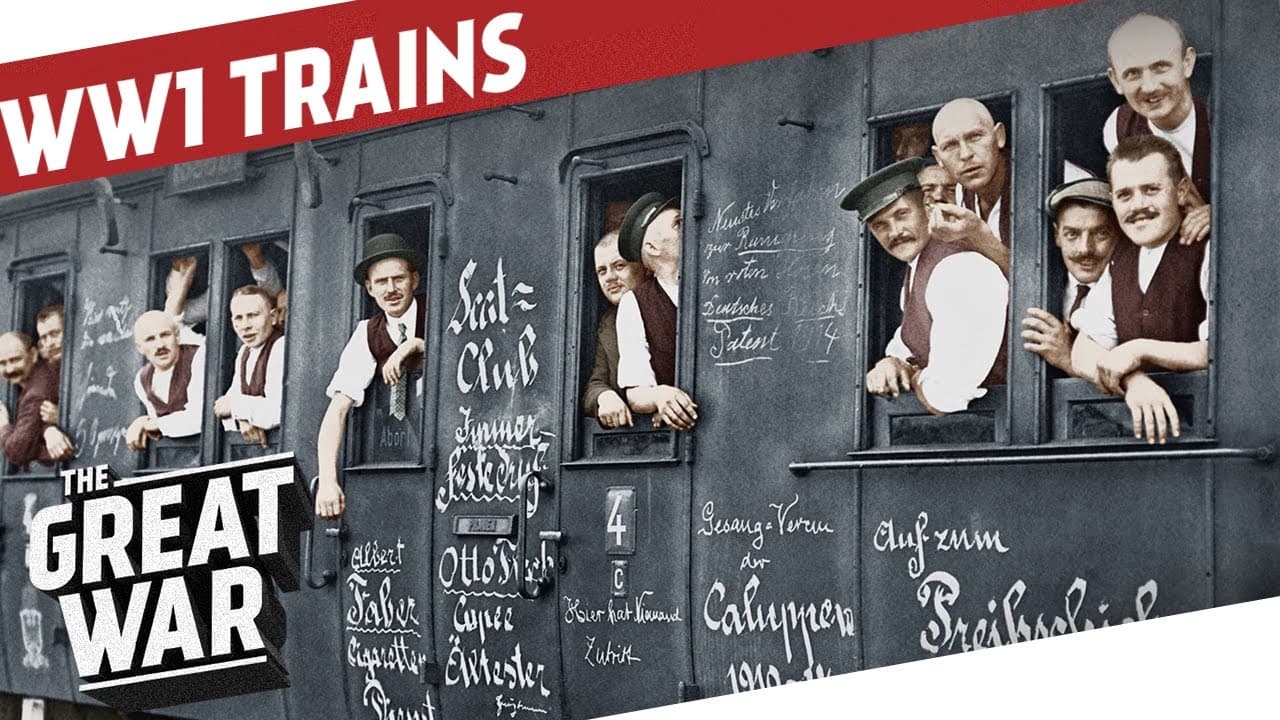
TL;DR
Trains were crucial for troop and resource mobilization in WW1.
Transcript
This war required the quick transport of men on a scale never before seen. Millions of men had to be moved from their homes to the battlefronts, and in 1914 the quickest and most effective way to do that was by train. I’m Indy Neidell; welcome to a Great War special episode about trains during the First World War. Time has been “a” or even “the” ke... Read More
Key Insights
- Trains were essential for rapid troop deployment, with Germany moving millions of soldiers and horses efficiently using their rail system.
- The German army had dedicated railway battalions trained to operate, assemble, and repair trains, showcasing their strategic foresight.
- Various locomotive models like the Zwilling and Brigadelok were developed for military use, with specific designs for front-line deployment.
- Railway systems faced challenges in conquered territories due to different track gauges, outdated locomotives, and destroyed infrastructure.
- Austria-Hungary's complex railway system required trains to move at the speed of the slowest train for coordination, highlighting logistical challenges.
- Steam-powered locomotives were common, but gasoline-powered models were advantageous near the front to avoid detection by enemy artillery.
- Railways were crucial for transporting wounded soldiers, fresh troops, and supplies, especially during the transition to trench warfare.
- International railway projects like the Berlin-Constantinople link and the Hejaz Railway were significant but faced disruptions due to the war.
Install to Summarize YouTube Videos and Get Transcripts
Explore YouTube Video Summarizer or Get YouTube Transcript Extractor
Questions & Answers
Q: How did trains impact troop mobilization during WW1?
Trains were vital for rapid troop mobilization during WW1, allowing millions of soldiers to be transported quickly to battlefronts. Germany's efficient railway system enabled the swift movement of troops and resources, giving them a strategic advantage. This capability was crucial in the early stages of the war and in responding to changing battle conditions.
Q: What challenges did railway systems face in conquered territories?
In conquered territories, railway systems faced challenges such as differing track gauges, outdated locomotives, and destroyed infrastructure like bridges and tunnels. These obstacles often required the Germans to adapt by using captured trains, modifying existing ones, or rebuilding tracks, which hindered their ability to maintain momentum in their advances.
Q: What role did railway battalions play in the German army?
Railway battalions in the German army were specialized units trained to operate, assemble, and repair trains. They were crucial in ensuring the smooth operation of the railway system, which was essential for troop and resource mobilization. The battalions also handled logistical tasks such as laying tracks and building makeshift stations, demonstrating their importance in military strategy.
Q: How did Austria-Hungary's railway system affect their war efforts?
Austria-Hungary's railway system was complex due to its multi-national empire, with different track gauges and internal borders complicating logistics. To coordinate effectively, trains were required to move at the speed of the slowest train. This inefficiency limited their ability to mobilize quickly and contributed to their slower response times in the war.
Q: Why were gasoline-powered locomotives advantageous near the front?
Gasoline-powered locomotives were advantageous near the front because they did not produce the visible steam clouds that steam-powered engines did, making them less detectable by enemy artillery. This stealth capability was crucial for maintaining the element of surprise and reducing the risk of attacks on supply lines and troop movements.
Q: What was the significance of the Heeresfeldbahn during the war?
The Heeresfeldbahn was a narrow gauge railway system used by the German military for transporting troops and supplies to the front lines. Its lightweight design allowed it to traverse difficult terrains, such as muddy fields, which larger trains could not. This adaptability made it a vital component in maintaining supply lines and troop movements during the war.
Q: How did the war impact international railway projects?
The war disrupted several international railway projects, such as the Berlin-Constantinople link and the Hejaz Railway. These projects were significant for strategic and economic reasons, aiming to facilitate transportation and supply routes. However, the outbreak of war and subsequent military actions halted their progress, highlighting the broader impact of the conflict on infrastructure development.
Q: What logistical challenges did the Eastern Front present for railways?
The Eastern Front presented significant logistical challenges for railways due to the differing track gauges between regions. This required re-gauging trains and rebuilding infrastructure like bridges and tunnels, which were often destroyed by retreating forces. The constant need for reconstruction and adaptation made maintaining supply lines and troop movements more difficult in this theater of war.
Summary & Key Takeaways
-
Trains were a pivotal component in World War 1, enabling the rapid mobilization of troops and resources. Germany's strategic foresight in developing a robust railway system gave them a significant advantage. However, logistical challenges in occupied territories often hindered further expansion and victory.
-
The German army's railway battalions were highly trained in operating and repairing trains, ensuring efficient troop movements. Different locomotive models were developed for specific military needs, including the Zwilling and Brigadelok, which played crucial roles near the front lines.
-
Railway systems faced numerous challenges, such as differing track gauges and destroyed infrastructure in conquered territories. Despite these obstacles, trains remained essential for transporting soldiers, supplies, and the wounded, underscoring their importance in the industrialized warfare of the 20th century.
Read in Other Languages (beta)
Share This Summary 📚
Summarize YouTube Videos and Get Video Transcripts with 1-Click
Try YouTube Summary with ChatGPT & Claude or YouTube Transcript Generator
Explore More Summaries from The Great War 📚

Summarize YouTube Videos and Get Video Transcripts with 1-Click
Try YouTube Summary with ChatGPT & Claude or YouTube Transcript Generator