Why Europe Is Struggling to Keep Pace
TL;DR
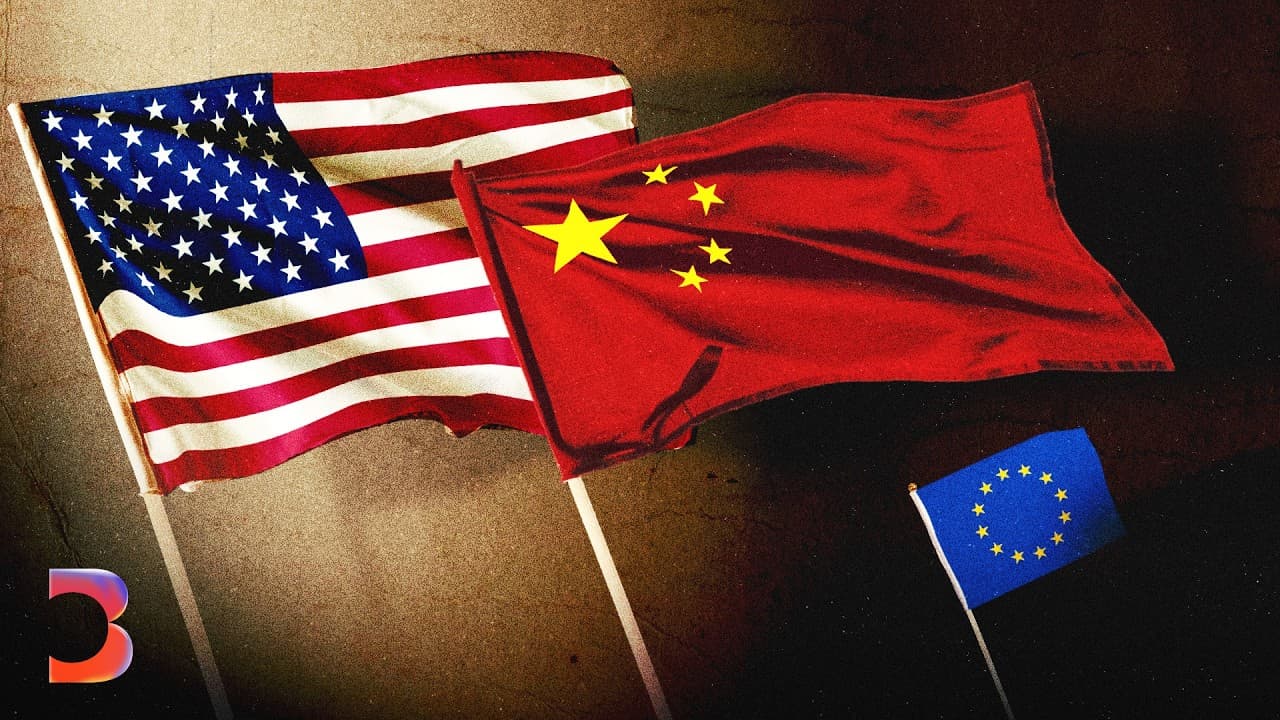
Europe faces economic challenges amid global competition and internal crises.
Transcript
the news for Europe just keeps getting worse the French government collapses plunging eu's second largest economy into turmoil France's political upheaval in December offered another Glimpse at fractious European Affairs Germany is under pressure and Volkswagen workers are are striking hard in my view we are already in a crisis mood our former mode... Read More
Key Insights
- Europe's economic growth has lagged behind the US and China, costing trillions in potential income. This shortfall highlights the need for significant investment in technology and innovation to remain competitive.
- The EU's reliance on traditional industries and low productivity has hindered its economic growth. There is an urgent need to embrace digital technologies and modernize industries to boost productivity.
- Political instability in France and economic struggles in Germany pose significant risks to the EU's overall stability and economic prospects, as these two nations are crucial to the Union's success.
- Mario Draghi's report emphasizes the necessity of investing hundreds of billions of euros annually to enhance competitiveness, warning that failure to do so could result in a diminished global economic role for Europe by 2050.
- The EU's regulatory environment, while considered a blueprint by some, is seen as a barrier to growth. A balance must be struck between regulation and fostering innovation to encourage economic expansion.
- Venture capital markets in Europe are underdeveloped compared to the US and China, limiting the growth of transformative tech companies. Strengthening these markets could drive innovation and economic growth.
- Germany's automotive industry faces challenges in transitioning to electric vehicles, highlighting the broader struggle of adapting to the digital era. This transition is crucial for maintaining industrial competitiveness.
- The Euro's performance against the dollar serves as an indicator of Europe's economic health. A decline could embolden populist movements and threaten EU unity, necessitating urgent economic reforms.
Install to Summarize YouTube Videos and Get Transcripts
Explore YouTube Video Summarizer or Get YouTube Transcript Extractor
Questions & Answers
Q: What are the main economic challenges facing Europe?
Europe's main economic challenges include lagging productivity, reliance on traditional industries, and a failure to invest in technology and innovation. These issues have resulted in significant economic shortfalls compared to global competitors like the US and China. Political instability in key countries like France and Germany further exacerbates these challenges.
Q: How does Mario Draghi propose Europe regain its competitiveness?
Mario Draghi suggests that Europe must invest hundreds of billions of euros annually to regain competitiveness. This involves embracing digital technologies, modernizing industries, and enhancing productivity. Draghi emphasizes the urgency of these reforms to prevent Europe from diminishing in global economic influence by 2050.
Q: What role do France and Germany play in the EU's economic future?
France and Germany are crucial to the EU's economic future due to their significant economic and political influence within the Union. Political stability and economic growth in these countries are essential for the overall success of the EU. Their struggles pose risks to the Union's stability and economic prospects.
Q: Why is the EU's regulatory environment seen as a barrier to growth?
The EU's regulatory environment, while intended as a blueprint for others, is perceived as a barrier to growth due to its restrictive nature. This environment can stifle innovation and make it difficult for new businesses to thrive. Balancing regulation with fostering innovation is crucial for encouraging economic expansion.
Q: What challenges does Germany's automotive industry face?
Germany's automotive industry faces challenges in transitioning to electric vehicles, a shift necessary for adapting to the digital era. This transition is crucial for maintaining industrial competitiveness, as electric cars are fundamentally digital products. The industry's struggle reflects broader difficulties in adapting to technological changes.
Q: How does the Euro's performance reflect Europe's economic health?
The Euro's performance against the dollar serves as a diagnostic for Europe's economic health. A decline could indicate economic struggles and embolden populist movements, threatening EU unity. It underscores the need for urgent economic reforms to maintain geopolitical influence and economic stability.
Q: What impact does Europe's underdeveloped venture capital market have?
Europe's underdeveloped venture capital market limits the growth of transformative tech companies, hindering innovation and economic expansion. Strengthening these markets is essential for driving technological advancements and boosting economic growth, allowing Europe to compete more effectively on the global stage.
Q: What are the potential consequences of Europe's economic struggles?
Europe's economic struggles could lead to a diminished role in the global economy, reduced geopolitical influence, and increased vulnerability to external threats. Internally, it could result in political instability, economic disparity among member states, and challenges in maintaining unity within the EU. Urgent reforms are needed to mitigate these risks.
Summary & Key Takeaways
-
Europe's economic challenges are compounded by internal political instability and a failure to keep up with global competitors like the US and China. To regain competitiveness, significant investment in technology and innovation is needed.
-
Mario Draghi's report warns that without substantial economic reforms and investments, Europe risks losing its influence on the global stage. The EU's reliance on traditional industries and regulatory environment are key areas needing change.
-
Germany's automotive industry's struggles and France's political crisis highlight broader issues in the EU, emphasizing the need for coordinated efforts to enhance productivity and embrace digital transformation for future prosperity.
Read in Other Languages (beta)
Share This Summary 📚
Summarize YouTube Videos and Get Video Transcripts with 1-Click
Try YouTube Summary with ChatGPT & Claude or YouTube Transcript Generator
Explore More Summaries from Bloomberg Originals 📚


Summarize YouTube Videos and Get Video Transcripts with 1-Click
Try YouTube Summary with ChatGPT & Claude or YouTube Transcript Generator