Prelude to Verdun And The Road To the Somme I THE GREAT WAR - Week 76
TL;DR
1916 sees strategic plans for major offensives by both sides.
Transcript
For a month a British army has been under siege on the Tigris River at Kut Al-Amara awaiting relief, and this week that relief expedition encounters the enemy. I’m Indy Neidell; welcome to the Great War. 1915 had ended with the beginning of a Russian offensive in East Galicia and Bessarabia, though it was plagued by supply problems and saw troops n... Read More
Key Insights
- The British army was under siege at Kut Al-Amara, awaiting relief from the ongoing Ottoman siege on the Tigris River.
- 1915 ended with a Russian offensive in East Galicia and Bessarabia, facing severe supply issues and harsh winter conditions.
- Austria-Hungary called up nearly a million middle-aged men, struggling with morale on the Italian front.
- The Western Front was relatively quiet, with the Germans strengthening defenses and the Allies planning major offensives.
- The British expanded their army to over a million men, while the French remained the dominant ally with 96 divisions.
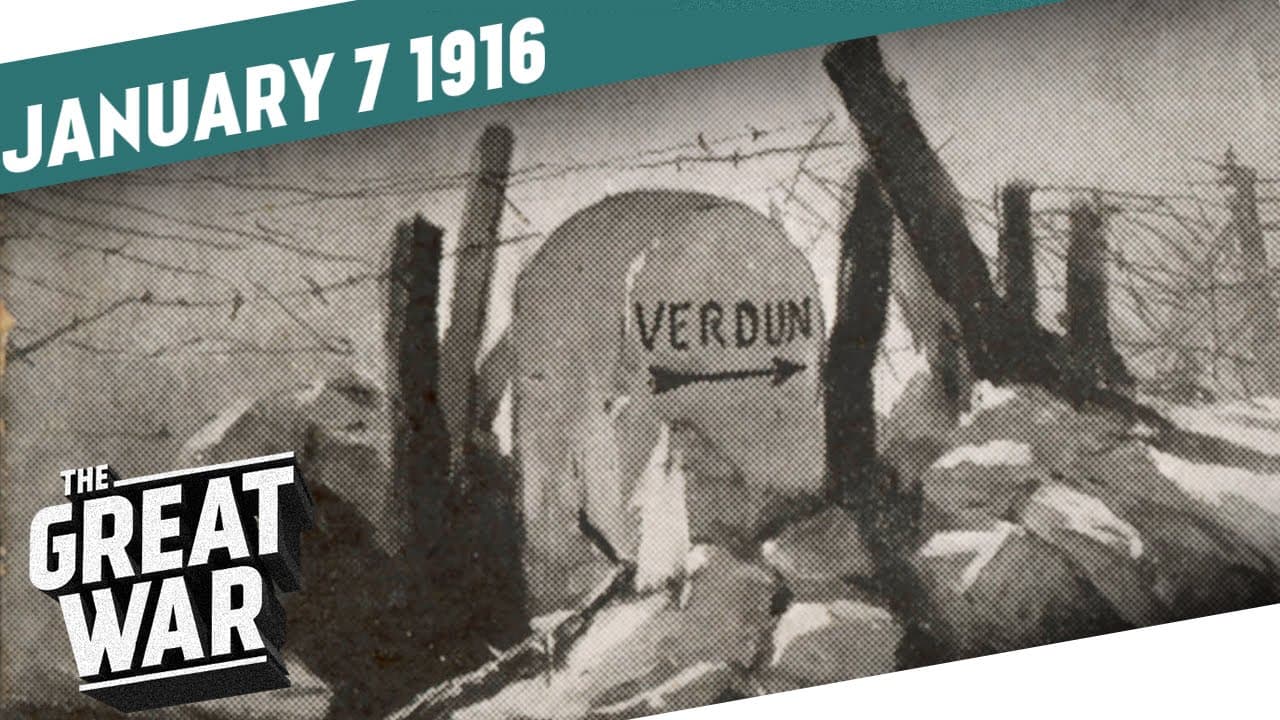
- German Chief of Staff Erich von Falkenhayn planned to bleed the French army at Verdun using superior artillery.
- The French defenses at Verdun were weakened, making them vulnerable to the planned German offensive.
- The Battle of Sheikh-Sa’ad on the Tigris River was a costly British victory, with significant casualties and logistical challenges.
Install to Summarize YouTube Videos and Get Transcripts
Explore YouTube Video Summarizer or Get YouTube Transcript Extractor
Questions & Answers
Q: What were the conditions like for the Russian offensive in East Galicia and Bessarabia?
The Russian offensive in East Galicia and Bessarabia faced severe supply problems, with troops nearly starving in the harsh winter conditions. Despite these challenges, the offensive continued into the new year, with scattered attacks and significant casualties on both sides, but without substantial territorial gains.
Q: How did Austria-Hungary respond to the ongoing conflict?
Austria-Hungary was facing challenges on multiple fronts, including against Russia and Italy. In response, they called up close to a million middle-aged men to bolster their forces. Morale was particularly low on the Italian front, adding to the difficulties faced by the Austro-Hungarian military.
Q: What strategic plans did the Allies have for 1916?
The Allies planned a major combined offensive on the Western Front, with the British and French coordinating attacks near the River Somme. This was to be complemented by simultaneous offensives by the Italians and Russians in the south and east. The aim was to turn the tide against the Central Powers in 1916.
Q: What was the German strategy for Verdun?
German Chief of Staff Erich von Falkenhayn planned to bleed the French army dry at Verdun using superior artillery. He believed that by attacking this historic and strategic location, the French would be compelled to defend it, allowing the Germans to inflict maximum casualties and weaken the French forces significantly.
Q: What challenges did the British face in Mesopotamia?
In Mesopotamia, the British faced significant challenges as their forces were under siege at Kut Al-Amara by Ottoman forces. The relief expedition encountered difficult conditions, including winter rains and mud, and despite a victory at the Battle of Sheikh-Sa’ad, they suffered heavy casualties and logistical issues as they advanced.
Q: How did the British and French forces compare in early 1916?
By early 1916, the British had expanded their army to over one million men with 38 infantry divisions, while the French remained the dominant ally on land with 96 divisions under General Joseph Joffre. The French had borne the brunt of the war on the Western Front, while the British were increasing their involvement.
Q: What was the significance of Verdun in French history and strategy?
Verdun held significant historical and strategic importance for France, being a fortress commanding the heights of the Meuse River and a symbol of French resilience. German plans to attack Verdun aimed to exploit its weakened defenses, knowing that the French would be compelled to defend this key location at great cost.
Q: What were the views of other German military leaders regarding the war strategy?
Other German military leaders had differing views on war strategy. Admiral Henning von Holtzendorff believed U-boats could knock Britain out of the war, while Admiral Reinhard Scheer thought he could defeat the British fleet in the North Sea. These views contrasted with Falkenhayn's focus on bleeding the French at Verdun.
Summary & Key Takeaways
-
In early 1916, the British and French prepared for major offensives, while the Germans planned a massive artillery attack at Verdun. The British army faced challenges in Mesopotamia, under siege by the Ottomans at Kut Al-Amara. The Western Front remained relatively quiet as both sides prepared for future battles.
-
German Chief of Staff Erich von Falkenhayn aimed to deplete the French forces at Verdun, exploiting their weakened defenses and relying on superior artillery. Meanwhile, the British and French strengthened their forces, with the British expanding their army significantly and the French maintaining dominance on the Western Front.
-
The Battle of Sheikh-Sa’ad on the Tigris River marked a costly victory for the British as they attempted to relieve their besieged forces at Kut Al-Amara. Despite significant casualties, the British and Indian forces managed to push the Ottomans back, but logistical challenges remained as they advanced towards Baghdad.
Read in Other Languages (beta)
Share This Summary 📚
Summarize YouTube Videos and Get Video Transcripts with 1-Click
Try YouTube Summary with ChatGPT & Claude or YouTube Transcript Generator
Explore More Summaries from The Great War 📚


Summarize YouTube Videos and Get Video Transcripts with 1-Click
Try YouTube Summary with ChatGPT & Claude or YouTube Transcript Generator