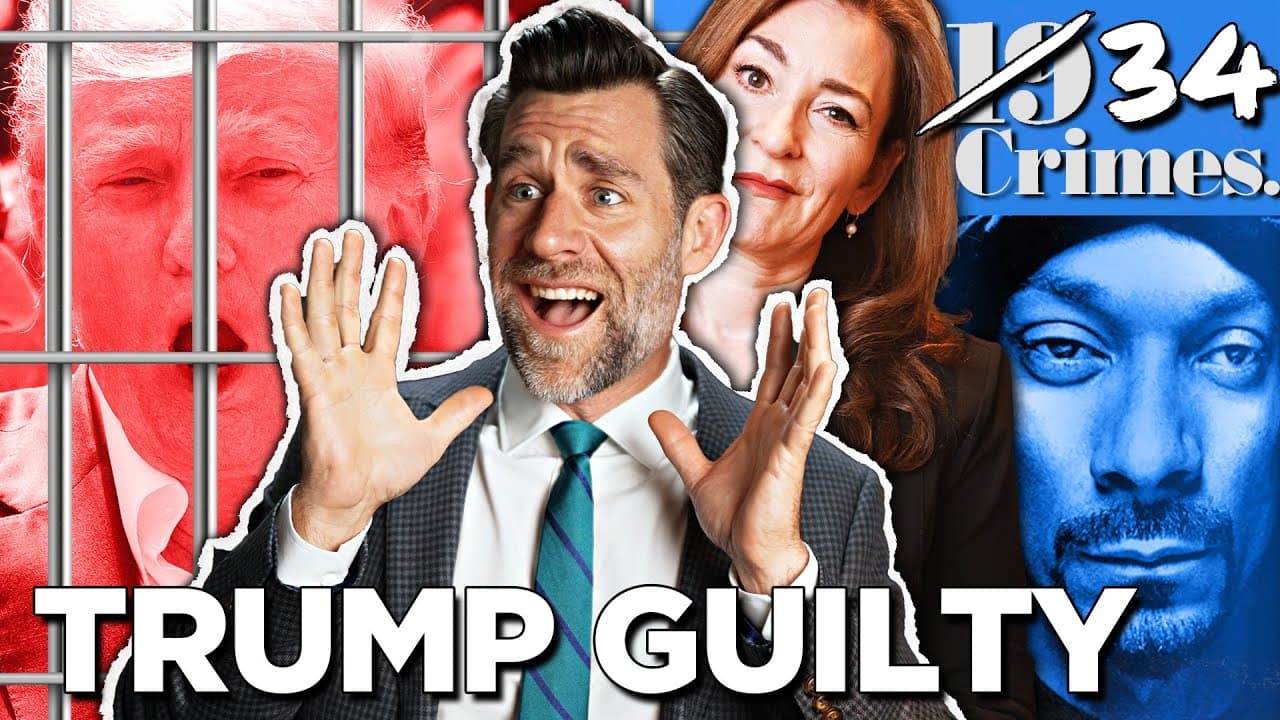
Why Was Trump Found Guilty of 34 Felony Counts?
TL;DR
Trump was found guilty of 34 felony counts for falsifying business records to conceal hush money payments made to Stormy Daniels during the 2016 election. The jury determined that Trump’s actions were intended to influence the election, elevating the charges from misdemeanors to felonies. Trump's defense claimed the payments were personal, but evidence indicated otherwise.
Transcript
- [Devin] Yes, Trump finally won a popular vote. 12 citizens of New York unanimously found former President Donald Trump guilty of all 34 felony counts. He reacted about as you would expect. - This was a rigged trial by a conflicted judge who was corrupt. - Huh, it's really unfortunate that Trump has been a victim of a rigged election, rigged impea... Read More
Key Insights
- Trump was found guilty of 34 felony counts for falsifying business records related to hush money payments.
- The case involved payments to Stormy Daniels to silence her about an affair during the 2016 election.
- Michael Cohen played a key role in orchestrating payments, later reimbursed by Trump through false legal fees.
- The prosecution used three potential crimes to elevate charges from misdemeanors to felonies.
- The jury did not need to unanimously agree on which crime elevated the charges, a point of contention.
- Trump's defense argued the payments were personal, not political, but evidence suggested otherwise.
- The case highlighted the complexities of campaign finance law and the use of NDAs in political campaigns.
- Trump's conviction may impact his ability to run for office, but appeals are expected to prolong the legal process.
Install to Summarize YouTube Videos and Get Transcripts
Explore YouTube Video Summarizer or Get YouTube Transcript Extractor
Questions & Answers
Q: What were the charges against Donald Trump?
Donald Trump was charged with 34 felony counts of falsifying business records in the first degree. These charges stemmed from efforts to conceal payments made to Stormy Daniels to silence her about an alleged affair, thereby influencing the 2016 presidential election.
Q: How did the prosecution elevate the charges to felonies?
The prosecution elevated the charges from misdemeanors to felonies by linking them to other crimes, including tax fraud, violations of the Federal Election Campaign Act, and New York election law. The jury did not need to unanimously agree on which specific crime elevated the charges.
Q: What role did Michael Cohen play in the case?
Michael Cohen, Trump's former lawyer, played a central role by arranging the $130,000 payment to Stormy Daniels. He later testified that he was reimbursed through false legal fees, implicating Trump in the scheme to influence the election by concealing damaging information.
Q: What was the defense's main argument?
The defense argued that the payments to Stormy Daniels were personal, not political, aiming to protect Trump's family from embarrassment. They claimed Michael Cohen acted independently, but evidence and testimony suggested Trump's direct involvement and intent to influence the election.
Q: What evidence supported the prosecution's case?
The prosecution presented evidence including testimony from David Pecker and Hope Hicks, financial records showing false legal fees, and Trump's own tweets and public statements. These collectively demonstrated Trump's intent to conceal the payments as part of a campaign finance violation.
Q: How did the jury reach a guilty verdict?
The jury of seven men and five women deliberated for less than a day and a half before reaching a guilty verdict. They were convinced by the prosecution's evidence of Trump's intent to commit another crime, despite the defense's attempts to discredit key witnesses like Michael Cohen.
Q: What are the potential consequences for Trump following the conviction?
Trump's conviction could impact his ability to run for office and may affect pending legal cases in other jurisdictions. However, he plans to appeal the decision, which could delay any immediate consequences. The conviction does not bar him from voting or running for president.
Q: How has the media covered Trump's conviction?
Media coverage of Trump's conviction has been extensive, with differing narratives based on political leanings. Left-leaning outlets focus on the legal implications and intent to influence the election, while right-leaning outlets emphasize claims of political persecution and trial irregularities.
Summary & Key Takeaways
-
Donald Trump was convicted on 34 felony counts related to falsifying business records to cover up payments made to silence Stormy Daniels during the 2016 election. The case highlighted the use of NDAs and campaign finance violations to influence election outcomes.
-
The prosecution presented evidence showing Trump's direct involvement in orchestrating payments through Michael Cohen, who was reimbursed via false legal fees. The jury did not need to unanimously agree on which crime elevated the charges to felonies.
-
Trump's defense argued that the payments were personal, not political, but testimony and evidence suggested a clear intent to influence the election. The conviction may have implications for Trump's future political ambitions, though appeals are expected.
Read in Other Languages (beta)
Share This Summary 📚
Summarize YouTube Videos and Get Video Transcripts with 1-Click
Try YouTube Summary with ChatGPT & Claude or YouTube Transcript Generator
Explore More Summaries from LegalEagle 📚




Summarize YouTube Videos and Get Video Transcripts with 1-Click
Try YouTube Summary with ChatGPT & Claude or YouTube Transcript Generator