Polish-Soviet War - First Phase 1919 - May 1920 (Documentary)
TL;DR
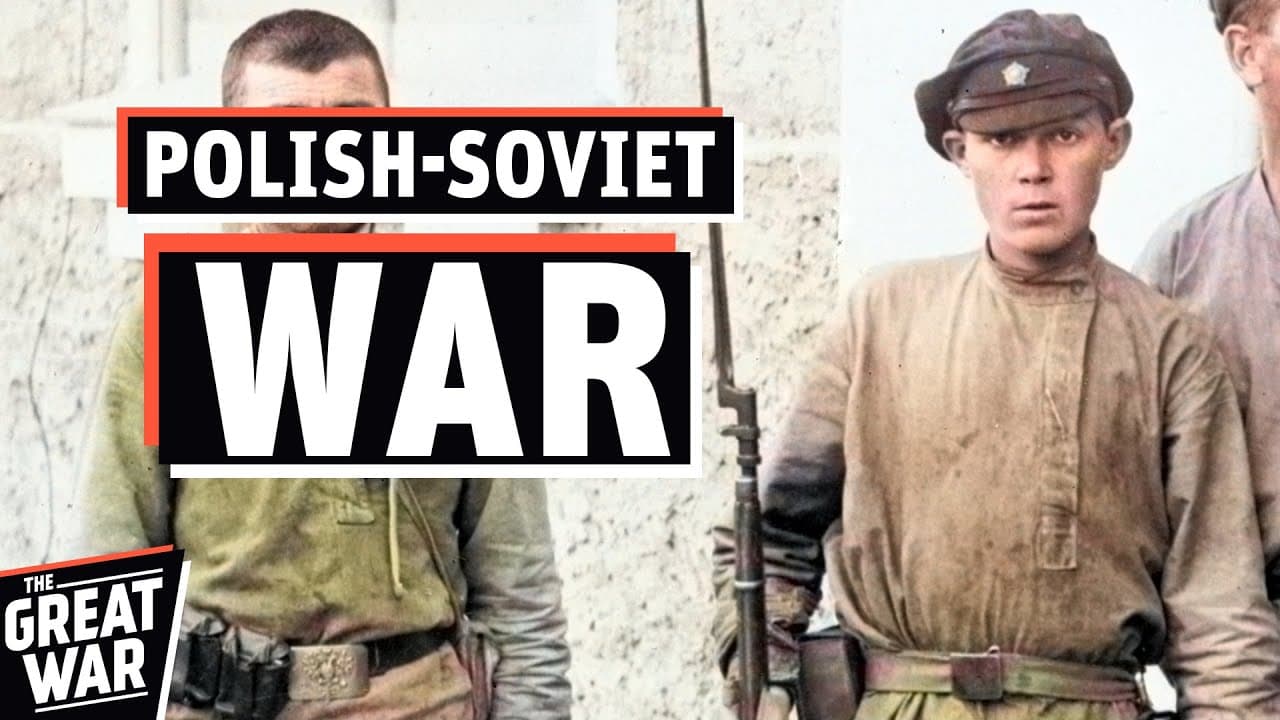
The Polish-Soviet War's first phase saw Poland's offensive against Bolshevik Russia.
Transcript
hi I'm Jesse Alexander and welcome to the Great War where we're once again filming in our pandemic lockdown Studio here in my living room now by the spring of 1920 Central and Eastern Europe was starting to calm down from the chaos that had existed since the November 1918 Armistice but one exception to this was the region between Poland and Russia ... Read More
Key Insights
- In 1920, Central and Eastern Europe began stabilizing post-World War I, but conflict persisted between Poland and Bolshevik Russia.
- Poland launched the Kiev operation in April 1920 against Bolshevik Russia, aiming to establish dominance in Eastern Europe.
- There were two main political camps in Poland: Pilsudski's Federation vision and Romanovski's nation-state approach.
- The Bolsheviks and Poles both engaged in territorial expansion, with mixed local populations complicating administration.
- Polish troops faced challenges, including local resistance and violent pogroms against Jewish communities.
- Despite initial Polish successes, the Bolsheviks' counterattacks, led by Budyonny's cavalry, reversed Polish gains.
- The Polish alliance with Ukraine aimed to weaken Russia, but the Ukrainian People's Republic failed to gain traction.
- International reactions to the conflict were mixed, with some criticism from Western powers despite their anti-Bolshevik stance.
Install to Summarize YouTube Videos and Get Transcripts
Explore YouTube Video Summarizer or Get YouTube Transcript Extractor
Questions & Answers
Q: What was the primary goal of Poland's Kiev operation in 1920?
Poland's Kiev operation in 1920 aimed to establish dominance over Eastern Europe by launching a major offensive against Bolshevik Russia. The operation was part of Poland's broader strategy to expand its eastern borders and create a federation of states under Polish leadership, thereby weakening Russia's influence in the region.
Q: How did the Polish political landscape influence the conflict?
The Polish political landscape was divided between Pilsudski's vision of a Polish-led federation and Romanovski's nation-state approach. This division influenced Poland's strategy in the conflict, as Pilsudski's faction pursued territorial expansion to recreate a Polish Commonwealth, while the National Democrats sought a more ethnically homogeneous Polish state. These differing visions affected Poland's military and diplomatic strategies.
Q: What challenges did Poland face in administering newly acquired territories?
Poland faced significant challenges in administering newly acquired territories due to the mixed local populations with diverse languages, religions, and identities. The complexities of regional loyalties, alongside resistance from local groups and violent pogroms against Jewish communities, complicated Poland's efforts to establish effective governance and integrate these areas into the Polish state.
Q: How did international reactions shape the conflict?
International reactions to the Polish-Soviet conflict were mixed. While some Western powers, like Britain and France, supported a strong Poland as a buffer against Bolshevik Russia, they also criticized Poland's aggressive expansion. The League of Nations condemned Polish aggression, reflecting the complexities of post-World War I geopolitics and the tension between supporting Poland and opposing Bolshevik expansion.
Q: What role did the alliance with Ukraine play in Poland's strategy?
Poland's alliance with the Ukrainian People's Republic, led by Simon Petlura, was strategic, aiming to weaken Russia by supporting an independent Ukraine. This alliance was intended to create a buffer state between Poland and Russia, but it ultimately failed due to insufficient support for the Ukrainian government and military, leading to the collapse of the Ukrainian People's Republic and complicating Poland's strategic objectives.
Q: What were the main reasons for the Bolshevik counterattack's success?
The Bolshevik counterattack succeeded due to several factors: the strategic use of Budyonny's experienced cavalry, the tactical decision to draw Polish forces deeper into Russian territory before striking, and the logistical and communication challenges faced by the Polish forces. Additionally, the Bolsheviks capitalized on local support against Polish landowners, rallying diverse groups to their cause and effectively reversing Polish gains.
Q: How did the Polish-Soviet War affect the broader geopolitical landscape?
The Polish-Soviet War affected the broader geopolitical landscape by highlighting the instability of post-World War I Europe and the ideological battle between communism and nationalism. The conflict underscored the challenges of defining national borders and the influence of international powers in regional disputes. It also set the stage for future tensions between Poland and the Soviet Union, influencing European politics for decades.
Q: What were the long-term implications of the Polish-Soviet War's first phase?
The long-term implications of the Polish-Soviet War's first phase included the establishment of contested borders that would continue to be a source of tension between Poland and the Soviet Union. The conflict also reinforced the ideological divide in Europe, with Poland emerging as a key anti-Bolshevik state. The war influenced future military strategies and shaped the political landscape of Eastern Europe leading up to World War II.
Summary & Key Takeaways
-
In 1920, Poland launched an offensive against Bolshevik Russia, aiming to establish dominance in Eastern Europe. The conflict was marked by territorial disputes and complex political dynamics within Poland itself. Despite initial successes, Poland's gains were reversed by Bolshevik counterattacks.
-
The Polish-Soviet War's first phase involved strategic military maneuvers, political alliances, and international reactions. Poland sought to expand eastward, facing resistance from Bolshevik forces and mixed local populations. The conflict highlighted the challenges of post-World War I territorial reorganization.
-
Internationally, reactions to the Polish-Soviet conflict varied, with some Western powers criticizing Poland's aggression despite their anti-Bolshevik stance. The war underscored the complexities of early 20th-century geopolitics, with shifting alliances and ideological battles shaping the region's future.
Read in Other Languages (beta)
Share This Summary 📚
Summarize YouTube Videos and Get Video Transcripts with 1-Click
Try YouTube Summary with ChatGPT & Claude or YouTube Transcript Generator
Explore More Summaries from The Great War 📚
Summarize YouTube Videos and Get Video Transcripts with 1-Click
Try YouTube Summary with ChatGPT & Claude or YouTube Transcript Generator