How to Use Tank Tactics in WWI Battles
TL;DR
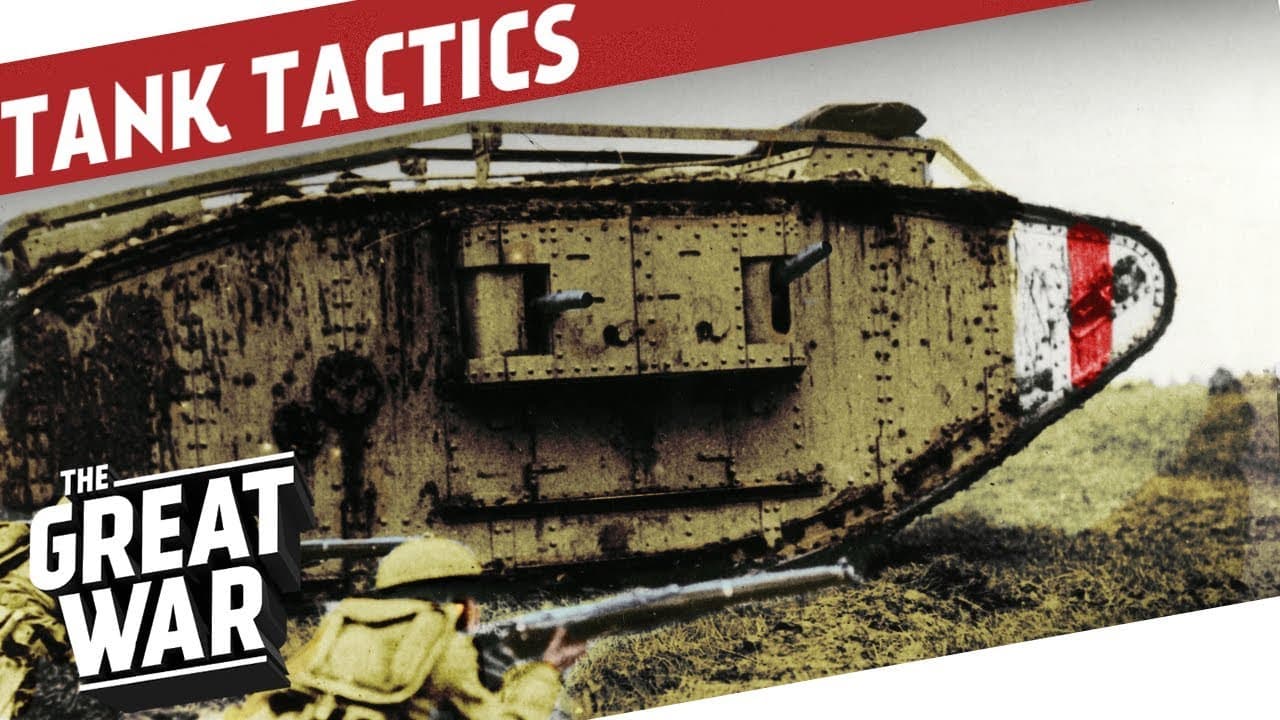
Allied tank tactics evolved significantly during the later stages of WWI, particularly in the Battle of Amiens. The Mark V tank, with its improved engine and design, played a crucial role in these strategies. Tanks were used to break through enemy lines, followed by medium tanks and infantry to exploit these breaches, demonstrating the importance of coordination and adaptability in warfare.
Transcript
i'm indy neidell and once again this is the great war on the road and I am again in England at the Tank Museum Bovington and I am with David Willy the curator of the museum David could you say hello to people hello again people now you can probably see from my surroundings that I am in one of the tanks in the museum I'm in British mark-5 tank now w... Read More
Key Insights
- The Mark V tank featured a more powerful engine designed by Harry Ricardo, which was crucial for its performance.
- The Ricciardo engine was a mass-produced engine used not only in tanks but also for generators on the Western Front.
- Tank crews faced harsh conditions, with limited ventilation leading to short operational durations before needing rest.
- Amiens marked a significant use of tanks, with over 400 tanks involved in the initial assault, showcasing their tactical importance.
- The British High Command learned to avoid overextending offensives, instead opting for strategic redeployment.
- The Mark V tank was part of a broader strategy to integrate tanks with artillery and infantry for effective offensives.
- Plans for 1919 included new tank designs, such as the Mark IX, intended to carry infantry across battlefields.
- The cooperation between Britain, France, and the U.S. aimed to produce a new international tank model for future battles.
Install to Summarize YouTube Videos and Get Transcripts
Explore YouTube Video Summarizer or Get YouTube Transcript Extractor
Questions & Answers
Q: How did the Mark V tank improve upon previous models?
The Mark V tank featured a new engine designed by Harry Ricardo, which was more powerful than previous models. This engine allowed the tank to be driven by a single person, reducing the crew required for operation. The tank also had thicker armor and improved maneuverability, making it a more effective tool in warfare.
Q: What role did tanks play in the Battle of Amiens?
Tanks were crucial in the Battle of Amiens, serving as the spearhead for the Allied advance. Over 400 tanks were used to break through German lines, creating gaps for infantry and medium tanks to exploit. This coordinated use of tanks marked a significant shift in tactics, contributing to the success of the offensive.
Q: What challenges did tank crews face during WWI?
Tank crews faced numerous challenges, including poor ventilation and extreme heat inside the tanks, which limited their operational time. The motion of the tanks and exposure to fumes also required crews to rest extensively after missions. These conditions highlighted the harsh realities of early tank warfare.
Q: How did the Allies plan to use tanks in 1919?
For 1919, the Allies planned to introduce new tank models, such as the Mark IX, designed to carry infantry across battlefields. There was also a collaborative effort to produce the International tank, combining resources from Britain, France, and the U.S. These plans aimed to enhance mobility and coordination in future offensives.
Q: What innovations were introduced in the Mark V tank?
The Mark V tank introduced several innovations, including the Ricciardo engine, which was more powerful and efficient. It also featured an epicyclic gearbox, allowing for easier operation by a single driver. These advancements made the Mark V a significant improvement over earlier models, enhancing its effectiveness in combat.
Q: How did the British adapt their tactics with tanks in 1918?
In 1918, the British adapted their tactics by using tanks strategically to create breakthroughs, followed by infantry and artillery support. They avoided overextending offensives, opting instead for strategic redeployments to maintain momentum. This approach allowed for more effective use of resources and contributed to the success of Allied campaigns.
Q: What was the significance of the Battle of Amiens in WWI?
The Battle of Amiens was significant as it marked a turning point in WWI, demonstrating the effectiveness of coordinated tank and infantry tactics. The successful use of tanks to break through German lines led to substantial Allied gains and contributed to the eventual collapse of German resistance. It highlighted the potential of mechanized warfare.
Q: How did the Allies plan to improve tank warfare after WWI?
After WWI, the Allies planned to improve tank warfare by developing new models like the Mark IX for infantry transport and the International tank through collaboration. These efforts aimed to enhance mobility, coordination, and effectiveness in future conflicts, reflecting lessons learned from the war and the evolving nature of mechanized combat.
Summary & Key Takeaways
-
The Mark V tank, with its innovative Ricciardo engine, represented a leap forward in tank design and was pivotal in the evolving tactics of WWI. These tanks were used to break through enemy lines, with medium tanks and infantry following to exploit openings. This strategy, particularly evident at Amiens, highlighted the importance of coordination in warfare.
-
Tank crews operated under challenging conditions, with poor ventilation limiting their time in action. Despite this, tanks proved crucial in the latter stages of WWI, as seen in the Battle of Amiens, where their use marked a turning point in Allied tactics. The British adapted by using tanks strategically and redeploying resources effectively.
-
Plans for 1919 included developing new tank models like the Mark IX, designed to transport infantry, and the International tank, a collaborative effort between Allied nations. These innovations underscored the ongoing evolution of tank warfare and the Allies' commitment to leveraging this technology for future conflicts.
Read in Other Languages (beta)
Share This Summary 📚
Summarize YouTube Videos and Get Video Transcripts with 1-Click
Try YouTube Summary with ChatGPT & Claude or YouTube Transcript Generator
Explore More Summaries from The Great War 📚
Summarize YouTube Videos and Get Video Transcripts with 1-Click
Try YouTube Summary with ChatGPT & Claude or YouTube Transcript Generator