What Are the Problems with the Electoral College?
TL;DR
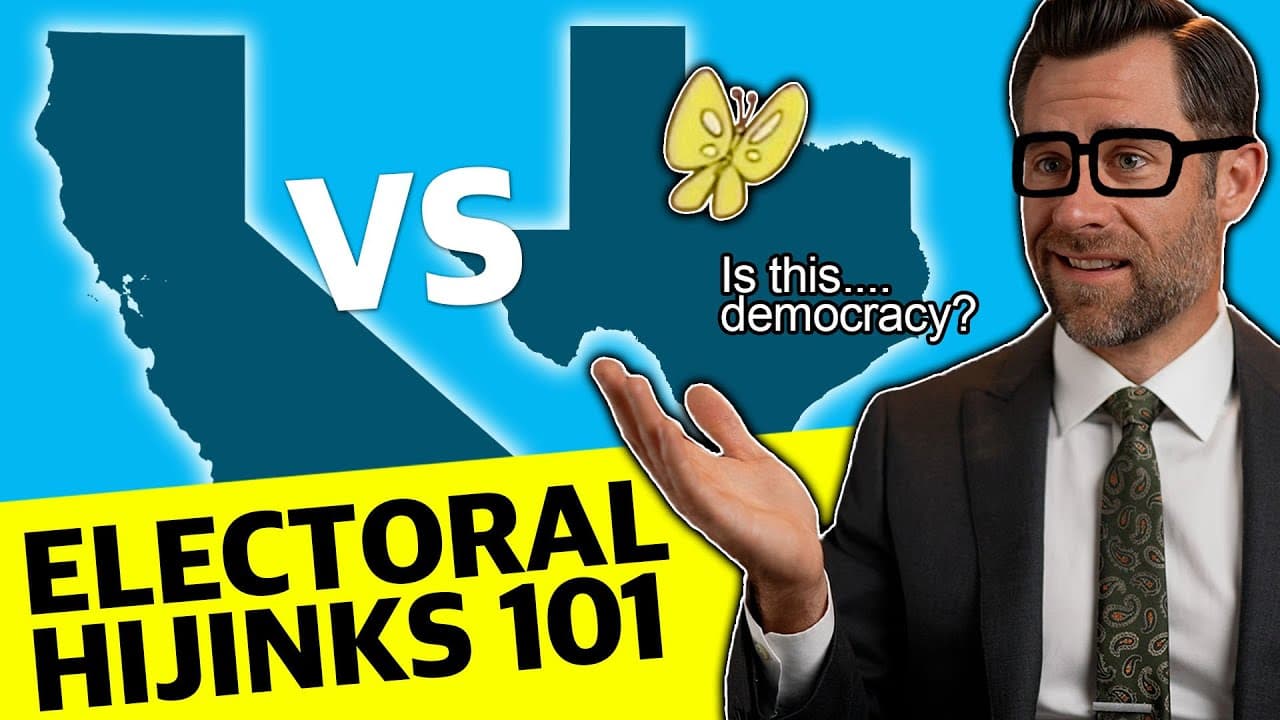
The Electoral College can lead to elections where the popular vote winner loses due to disparities in state representation. Issues include faithless electors who may not vote according to the state's popular vote, and the system disproportionately favors smaller states. Proposals, such as the National Popular Vote Compact, aim to align Electoral College outcomes with the national popular vote.
Transcript
- Well, it's Election Day, again. - Well, it's Groundhog Day, again. - And it seems like, every four years, we have the same conversations about the Electoral College because there are a lot of misconceptions about what the Electoral College is and why it exists, what the problems with the Electoral College are, and what we can possibly do about th... Read More
Key Insights
- ⚾ The Electoral College selects the president based on state results, not the popular vote.
- ❓ Faithless electors can deviate from their pledged vote, potentially causing legal and electoral issues.
- 🥺 The system can lead to outcomes where the winner may not have the majority of the popular vote.
- 🏆 There are proposals, like the National Popular Vote Compact, to align the Electoral College winner with the popular vote winner.
- 🛩️ Small states have a disproportionate influence in the Electoral College compared to their population.
- ❓ Partisan implications of the Electoral College can affect election outcomes.
- 📞 Swing states receive more attention from candidates due to their even split between Republicans and Democrats.
Install to Summarize YouTube Videos and Get Transcripts
Explore YouTube Video Summarizer or Get YouTube Transcript Extractor
Questions & Answers
Q: What is the purpose of the Electoral College?
The Electoral College serves as an intermediary body for selecting the president based on state results, preventing a direct popular vote for the president.
Q: What is a faithless elector?
A faithless elector is an elector who does not vote according to their party's pledge or the state's popular vote, potentially disrupting the election process.
Q: Why do some states use the winner-take-all system?
Most states use the winner-take-all system to maximize their influence in presidential elections and attract candidate attention by awarding all electoral votes to the statewide winner.
Q: What is the National Popular Vote Compact?
The National Popular Vote Compact is a proposal where states commit to awarding their electoral votes to the winner of the national popular vote, potentially aligning the Electoral College winner with the popular vote winner.
Summary & Key Takeaways
-
The Electoral College consists of electors who vote for the president based on state results, not the popular vote.
-
Each state has its own process for selecting electors, with winners chosen after certifying election results.
-
Faithless electors, while rare, can deviate from their pledge, leading to potential legal and electoral complications.
Read in Other Languages (beta)
Share This Summary 📚
Summarize YouTube Videos and Get Video Transcripts with 1-Click
Try YouTube Summary with ChatGPT & Claude or YouTube Transcript Generator
Explore More Summaries from LegalEagle 📚





Summarize YouTube Videos and Get Video Transcripts with 1-Click
Try YouTube Summary with ChatGPT & Claude or YouTube Transcript Generator