How Communities Make Art: Crash Course Art History #10
TL;DR
Art fosters community and connection across cultures and history.
Transcript
When she was around ten years old, Japanese artist Yayoi Kusama began experiencing intense hallucinations. She described her vivid visions as “dense fields of dots”. To deal with them, she started drawing repetitive patterns as a kind of therapy. She said that the artistic repetition helped her “obliterate” the noises in her head. Today, Kusama... Read More
Key Insights
- Yayoi Kusama uses art to transform personal struggles into communal experiences, exemplified by her installation 'Obliteration Room' where visitors collectively cover a room in polka-dot stickers.
- The Great Mosque of Djenné in Mali is a community-driven art project, with annual replastering events that unite residents in preserving this architectural masterpiece.
- The gelede festival among Yoruba people in West Africa highlights art's role in celebrating cultural history and honoring women's contributions through masks and performances.
- Totem poles, like the Chief Johnson pole in Alaska, combine visual art with oral traditions to convey cultural stories and values, emphasizing community identity.
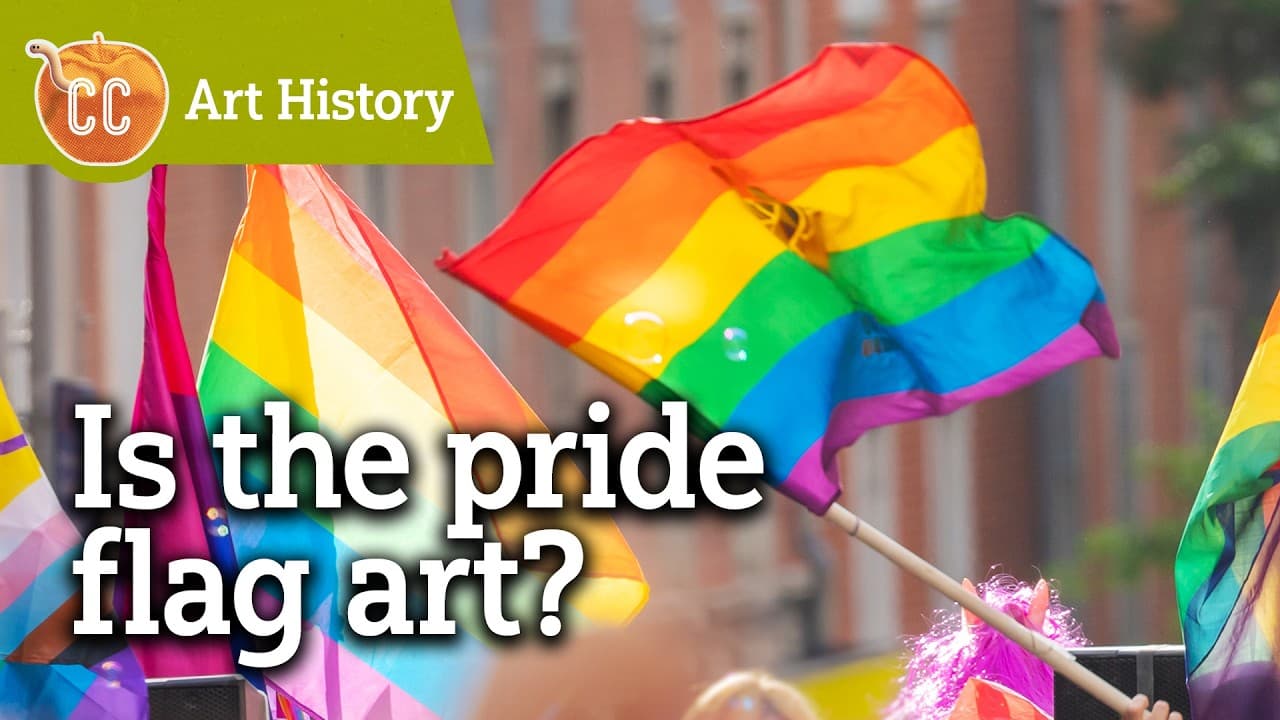
- The evolution of the Gay Pride flag, from Gilbert Baker's 1978 design to Daniel Quasar's 2018 version, illustrates art's adaptability in representing diverse identities and social progress.
- The 2014 Hong Kong 'umbrella revolution' demonstrates how everyday objects can become powerful symbols of resistance, with art playing a key role in uniting protestors globally.
- Frida Kahlo's art continues to inspire community gatherings, as seen in events where people dress as her to celebrate her legacy and find solidarity in shared struggles.
- Art not only preserves traditions but also serves as a catalyst for social change, fostering connections and promoting shared understanding across different communities.
Install to Summarize YouTube Videos and Get Transcripts
Explore YouTube Video Summarizer or Get YouTube Transcript Extractor
Questions & Answers
Q: How does Yayoi Kusama's work connect personal struggles with community?
Yayoi Kusama's work, such as the 'Obliteration Room,' transforms her personal experiences with hallucinations into communal art projects. Visitors participate by placing polka-dot stickers in a white room, collectively covering it. This process not only reflects Kusama's therapeutic use of art but also invites others to engage, creating a shared experience that connects individual struggles to a broader community.
Q: What role does the Great Mosque of Djenné play in community art?
The Great Mosque of Djenné serves as a focal point for community art through its annual replastering event, known as Crepissage de la Grand Mosquée. Residents of Djenné come together to maintain the mosque's mud exterior, an act that not only preserves the structure but also reinforces community bonds. This collaborative effort highlights the mosque's significance as both a religious and cultural symbol.
Q: How do the gelede festival and totem poles contribute to cultural identity?
The gelede festival among Yoruba people and totem poles in the Pacific Northwest both play crucial roles in preserving cultural identity. The gelede features masks and performances that celebrate Yoruba history and honor women, while totem poles combine art with oral traditions to convey cultural stories. Both art forms emphasize the importance of community and serve as symbols of collective identity.
Q: What is the significance of the evolution of the Gay Pride flag?
The evolution of the Gay Pride flag, from Gilbert Baker's original 1978 design to Daniel Quasar's 2018 version, reflects art's adaptability in representing diverse identities and social progress. The inclusion of additional colors in Quasar's design highlights intersectionality, acknowledging the interconnectedness of race, class, and gender. The flag's ongoing evolution underscores its role as a symbol of resistance and resilience within the LGBTQ community.
Q: How did the Hong Kong 'umbrella revolution' use art to unite protestors?
During the 2014 Hong Kong 'umbrella revolution,' art played a pivotal role in uniting protestors. The use of umbrellas as symbols of resistance against police brutality inspired artist Kacey Wong to call for umbrella-themed art. Social media amplified this call, spreading the symbol globally and fostering solidarity among those advocating for social and political change, demonstrating art's power in mobilizing communities.
Q: In what ways does Frida Kahlo's art continue to inspire community gatherings?
Frida Kahlo's art continues to inspire community gatherings, as seen in events where people dress as her to celebrate her legacy, such as her 110th birthday commemoration in 2017. Kahlo's work, which made her personal struggles public, resonates with audiences who find solidarity in shared experiences. These gatherings highlight art's ability to unite people across time and space through shared admiration and connection.
Q: How does art preserve traditions while promoting social change?
Art preserves traditions by maintaining cultural practices and symbols, such as the gelede festival and totem poles, while also promoting social change by evolving to reflect current issues, as seen in the Pride flag's adaptation. Art serves as a catalyst for dialogue and understanding, bridging past and present, and fostering connections that encourage progress and community resilience.
Q: What is the broader impact of art on community and identity?
Art has a profound impact on community and identity by serving as a medium for expression, connection, and preservation. It fosters a sense of belonging and shared identity, as seen in cultural festivals and communal art projects. Art also adapts to address contemporary issues, promoting social change and resilience. Through these roles, art unites individuals and communities, reinforcing collective identities and values.
Summary & Key Takeaways
-
Art has long been a communal activity, as seen in Kusama's installations and the collaborative maintenance of the Great Mosque of Djenné, highlighting art's role in community building.
-
Cultural festivals like the gelede and totem poles emphasize art's power in preserving history and identity, while evolving symbols like the Pride flag illustrate art's role in social progress.
-
Art can transform everyday objects into symbols of resistance, as demonstrated by the Hong Kong protests, and continues to unite people through shared experiences and celebrations of legacy.
Read in Other Languages (beta)
Share This Summary 📚
Summarize YouTube Videos and Get Video Transcripts with 1-Click
Try YouTube Summary with ChatGPT & Claude or YouTube Transcript Generator
Explore More Summaries from CrashCourse 📚





Summarize YouTube Videos and Get Video Transcripts with 1-Click
Try YouTube Summary with ChatGPT & Claude or YouTube Transcript Generator