Dining at The World's Largest Synthetic Meat Factory
TL;DR
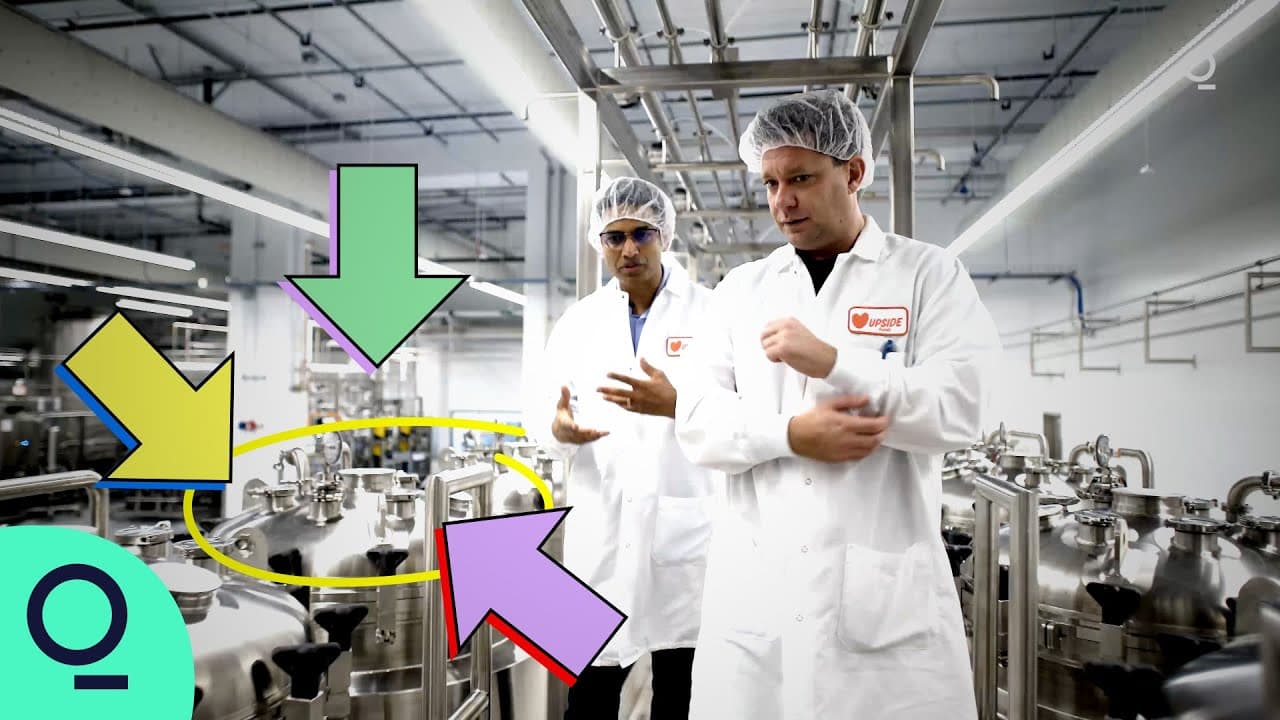
UPSIDE Foods grows real meat without slaughtering animals.
Transcript
"Go into the room," the voice said. "It may seem like a weird room, but that's all right because it is a weird room. Don't be afraid," the voice said. "Sit down in the chair. Drink some water. Wait for the hand and take what the hand gives you. This," the voice said, "is your meat. Look at it and be thankful. Be thankful because this meat did not c... Read More
Key Insights
- UPSIDE Foods is pioneering the production of real meat from animal cells without the need for slaughter, using a process similar to brewing.
- The company has raised over $200 million from notable investors like Bill Gates and Richard Branson, aiming to solve meat production challenges for a growing population.
- UPSIDE's facility uses animal cells and nutrients to grow meat in large vats, significantly reducing resource use compared to traditional meat production.
- The innovation center can produce up to 50,000 pounds of meat annually, with plans to expand to a facility capable of producing 10 to 20 million pounds.
- The synthetic meat process involves using fibroblasts and myoblasts to create textures and flavors similar to traditional meat.
- The company has reduced the cost of production from $18,000 per pound to a competitive price point, making it feasible for consumer markets.
- UPSIDE Foods started as Memphis Meats in 2015 and has progressed from R&D to near-commercial scale production.
- The company faces challenges in gaining FDA approval and consumer acceptance but aims to offer a sustainable alternative to traditional meat production.
Install to Summarize YouTube Videos and Get Transcripts
Explore YouTube Video Summarizer or Get YouTube Transcript Extractor
Questions & Answers
Q: What is the primary innovation of UPSIDE Foods?
UPSIDE Foods' primary innovation is the production of real meat from animal cells without the need for raising and slaughtering animals. This process involves cultivating meat in vats using a method that resembles brewing, which significantly reduces the environmental impact of traditional meat production.
Q: Who are the notable investors in UPSIDE Foods?
UPSIDE Foods has attracted significant investment from high-profile individuals and companies, including Bill Gates, Richard Branson, and major food industry players like Tyson and Cargill. These investors are betting on the company's potential to revolutionize meat production and meet the growing global demand sustainably.
Q: How does UPSIDE Foods' production process compare to traditional meat production?
UPSIDE Foods' production process is more sustainable than traditional meat production. It uses animal cells to grow meat in vats, significantly reducing water usage and greenhouse gas emissions. The process is also faster, as it takes only 10 to 12 days to grow meat, compared to years for conventional livestock.
Q: What are the challenges faced by UPSIDE Foods in bringing their product to market?
UPSIDE Foods faces two major challenges: obtaining FDA approval for their cell-based meat products and gaining consumer acceptance. The company must ensure that its products meet safety standards and convince consumers to embrace vat-grown meat as a viable and ethical alternative to traditionally sourced meat.
Q: What is the environmental impact of UPSIDE Foods' meat production process?
UPSIDE Foods' meat production process has a significantly lower environmental impact compared to traditional methods. It reduces water usage by tenfold and cuts greenhouse gas emissions substantially. This method also eliminates the need for large-scale animal farming, which contributes to deforestation and other environmental concerns.
Q: What is the potential production capacity of UPSIDE Foods' new facility?
UPSIDE Foods' new facility has the potential to produce up to 50,000 pounds of meat annually, with plans to expand production to 400,000 pounds. The company aims to build an even larger facility focused solely on production, targeting an output of 10 to 20 million pounds of meat per year.
Q: How does UPSIDE Foods ensure the quality and texture of their synthetic meat?
UPSIDE Foods uses a combination of different cell types, such as fibroblasts and myoblasts, to replicate the textures and flavors of traditional meat. The cells are grown in a controlled environment, and the company has developed methods to shape and form the meat to resemble conventional cuts, ensuring a familiar taste and texture for consumers.
Q: What was the initial cost of producing synthetic meat, and how has it changed?
Initially, the cost of producing synthetic meat was $18,000 per pound. However, UPSIDE Foods has significantly reduced this cost by about 1,000 times, making it competitive with premium meat pricing. The company aims to offer their products at prices similar to conventional meat as they scale up production and improve efficiency.
Summary & Key Takeaways
-
UPSIDE Foods is transforming the meat industry by producing real meat from animal cells, eliminating the need for traditional slaughter methods. This innovative approach promises to meet the growing global demand for meat sustainably.
-
Backed by significant investments, UPSIDE Foods' facility operates like a brewery, using vats to cultivate meat from animal cells. The process significantly reduces water usage and greenhouse gas emissions compared to conventional meat production.
-
The company is on the verge of scaling up production, with plans to build a facility capable of producing millions of pounds of meat. UPSIDE Foods aims to offer a sustainable and ethical alternative to traditional meat, pending regulatory approval.
Read in Other Languages (beta)
Share This Summary 📚
Summarize YouTube Videos and Get Video Transcripts with 1-Click
Try YouTube Summary with ChatGPT & Claude or YouTube Transcript Generator
Explore More Summaries from Bloomberg Originals 📚





Summarize YouTube Videos and Get Video Transcripts with 1-Click
Try YouTube Summary with ChatGPT & Claude or YouTube Transcript Generator