How Bitcoin's Halving Could Boost the AI Business
TL;DR
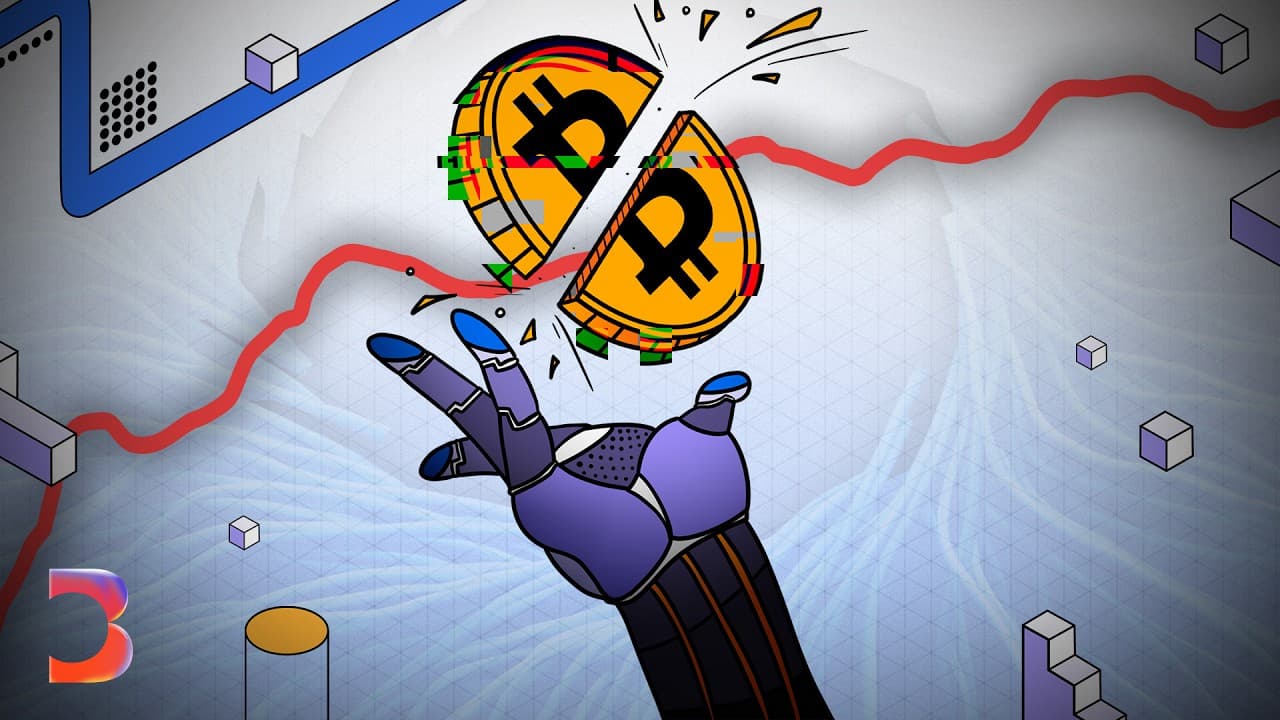
Bitcoin's halving could drive miners towards AI ventures.
Transcript
What goes down must come up. At least that's been the case so far. Bitcoin is having a moment. Turning back to Bitcoin now. Bitcoin has broadly doubled since November. Lot of eyes on the spot ETF initiatives. It's the shiny new object. It had a long winter. It took years to get back to record highs. And so to see Bitcoin really bounce back is prett... Read More
Key Insights
- Bitcoin's halving event will reduce miners' profits by 50%, pushing them to seek alternative revenue streams, including AI ventures.
- The halving is designed to create scarcity and control Bitcoin supply, similar to gold mining's evolution over time.
- Bitcoin miners face an ongoing arms race to upgrade technology and maintain profitability amidst increasing competition and costs.
- Some Bitcoin mining companies are diversifying into AI, leveraging their expertise in procuring specialized machines and data centers.
- AI's growing prominence and computational intensity make it an attractive field for Bitcoin miners seeking diversification.
- Companies are strategically relocating to regions like Iceland for optimal conditions to run both Bitcoin and AI operations.
- The transition from Bitcoin mining to AI is challenging due to the different skill sets and competition from established tech giants.
- The future of both cryptocurrency and AI industries is uncertain, but they hold potential for significant growth and innovation.
Install to Summarize YouTube Videos and Get Transcripts
Explore YouTube Video Summarizer or Get YouTube Transcript Extractor
Questions & Answers
Q: What is the significance of Bitcoin's halving event?
Bitcoin's halving event occurs every four years and is significant because it reduces the block rewards for miners by 50%. This event is designed to create scarcity in Bitcoin's supply, similar to the gold mining industry's evolution. It impacts miners' profitability, forcing them to explore alternative revenue streams or upgrade their technology to remain competitive.
Q: How are Bitcoin miners adapting to the challenges posed by the halving?
Bitcoin miners are adapting to the challenges of the halving by diversifying their business models. Some are transitioning into AI ventures, leveraging their expertise in procuring specialized machines and data centers. This shift allows them to tap into the growing AI market, which offers new opportunities for revenue generation beyond cryptocurrency mining.
Q: Why are some Bitcoin mining companies moving operations to Iceland?
Some Bitcoin mining companies are relocating to Iceland due to its naturally cold and clean environment, which is ideal for running specialized machines used in both Bitcoin and AI operations. These conditions help optimize the performance and efficiency of the equipment, reducing operational costs and enhancing profitability in both industries.
Q: What challenges do Bitcoin miners face when transitioning to AI?
Bitcoin miners face several challenges when transitioning to AI, including the need for new skills and expertise, as AI and Bitcoin mining are distinct fields. They also encounter stiff competition from established tech giants like Google and Microsoft, making it difficult to gain a foothold in the AI industry. Additionally, the technology and infrastructure required for AI differ from those used in Bitcoin mining.
Q: How does AI's computational intensity benefit Bitcoin miners?
AI's computational intensity benefits Bitcoin miners by providing an opportunity to leverage their existing expertise in managing high-performance computing environments. As AI requires significant computational power, miners can repurpose their infrastructure and skills to support AI applications, creating a new revenue stream that diversifies their business and reduces reliance on volatile cryptocurrency markets.
Q: What role does technology play in the success of Bitcoin mining?
Technology plays a crucial role in the success of Bitcoin mining, as miners must constantly upgrade their hardware to maintain competitiveness and profitability. The industry is characterized by an arms race, where miners strive to acquire the latest and most powerful machines to increase their computing power and efficiency, ensuring they can continue to mine Bitcoin profitably despite rising costs and competition.
Q: Why is diversification important for Bitcoin miners?
Diversification is important for Bitcoin miners because it reduces their reliance on the volatile cryptocurrency market and provides alternative revenue streams. By exploring opportunities in AI and other industries, miners can mitigate the financial risks associated with Bitcoin's price fluctuations and halving events, ensuring more stable and sustainable business operations in the long term.
Q: What potential does the future hold for cryptocurrency and AI industries?
The future of cryptocurrency and AI industries holds significant potential for growth and innovation. As both sectors are in their early stages, there is ample opportunity for technological advancements and new business models to emerge. The convergence of these industries could lead to novel applications and services, driving economic growth and transforming various aspects of society over the next decade.
Summary & Key Takeaways
-
Bitcoin's halving event will significantly impact miners by cutting their rewards in half, prompting a shift towards AI ventures. The event, occurring every four years, creates scarcity in Bitcoin supply, driving miners to explore other profitable avenues. This transition is challenging due to the differences between Bitcoin mining and AI industries.
-
As Bitcoin miners face increased competition and costs, some are diversifying into AI, leveraging their expertise in procuring specialized machines and data centers. This shift is driven by AI's growing prominence and computational demands, offering new opportunities for miners to generate revenue beyond cryptocurrency.
-
The transition from Bitcoin mining to AI is not straightforward, requiring new skills and facing competition from established tech giants. However, companies are strategically relocating to regions like Iceland for optimal conditions, aiming to capitalize on both Bitcoin and AI's potential for growth and innovation.
Read in Other Languages (beta)
Share This Summary 📚
Summarize YouTube Videos and Get Video Transcripts with 1-Click
Try YouTube Summary with ChatGPT & Claude or YouTube Transcript Generator
Explore More Summaries from Bloomberg Originals 📚






Summarize YouTube Videos and Get Video Transcripts with 1-Click
Try YouTube Summary with ChatGPT & Claude or YouTube Transcript Generator