What is Steam Hammer?
TL;DR
Steam hammer can cause dangerous pressure spikes in pipes.
Transcript
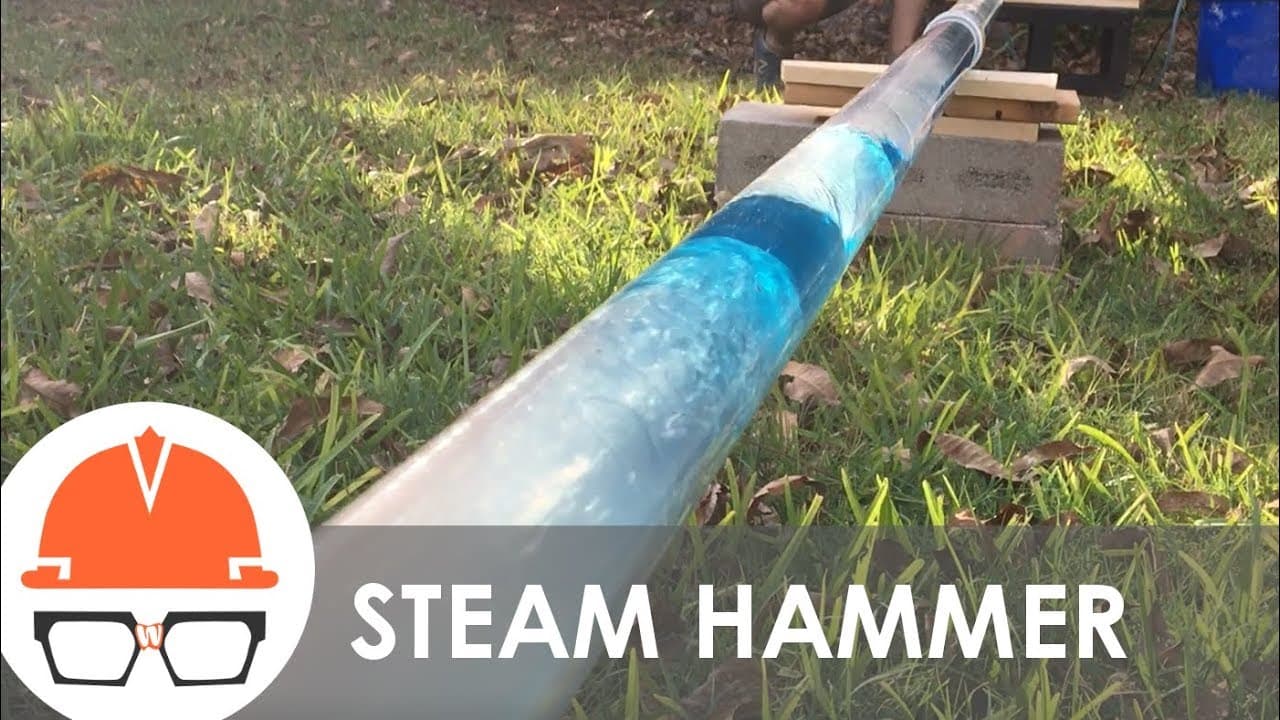
Last month we talked about the damaging effects of water hammer, but there’s another state of H2O equally if not more dangerous when put in pipes. Hey I’m Grady. Today on Practical Engineering we’re talking about steam hammer and differential shock. This video is sponsored by Skillshare. More on that later. Unless you live in an home with an older ... Read More
Key Insights
- Steam hammer occurs when steam condenses into water within pipes, creating a vacuum that can cause catastrophic damage due to pressure spikes.
- Thermal shock is a form of steam hammer that happens when steam condenses on cold surfaces, causing rapid volume reduction and potential system failure.
- Differential shock occurs when condensate pools in a pipe, creating a water slug that can accelerate and cause dangerous pressure spikes.
- Steam systems are critical for modern conveniences, including electricity generation, making their safe design essential.
- Steam traps are used to remove condensate from steam pipes, but they can malfunction, leading to potential system hazards.
- Engineers mitigate steam hammer risks by using sloped pipes and controlled start-up procedures to prevent condensate buildup.
- Biphase flow in pipes, where steam and liquid water coexist, can lead to turbulence and dangerous pressure conditions.
- Understanding and managing steam systems requires complex engineering knowledge, highlighting the importance of proper design and maintenance.
Install to Summarize YouTube Videos and Get Transcripts
Explore YouTube Video Summarizer or Get YouTube Transcript Extractor
Questions & Answers
Q: What is steam hammer and why is it dangerous?
Steam hammer is a phenomenon where steam condenses into water within pipes, creating a vacuum and causing pressure spikes. This can lead to catastrophic system failures, such as pipe ruptures and explosions, making it a significant safety concern in industrial settings.
Q: How does thermal shock occur in steam systems?
Thermal shock occurs when steam comes into contact with cold surfaces, causing it to condense rapidly. This condensation results in a significant volume reduction, creating a vacuum that can lead to a pressure spike and potential system failure, particularly in closed containers like pipes.
Q: What is differential shock in steam systems?
Differential shock occurs when condensate pools in a steam pipe, creating a water slug. This slug can be accelerated by steam pressure, causing it to slam into the end of the pipe and create a dangerous pressure spike, potentially leading to pipe ruptures and explosions.
Q: How do engineers prevent steam hammer in steam systems?
Engineers prevent steam hammer by implementing controlled start-up procedures, using sloped pipes, and installing steam traps to manage and remove condensate. These measures help prevent vacuum formation and pressure spikes, ensuring the safe operation of steam systems.
Q: What role do steam traps play in preventing steam hammer?
Steam traps are devices installed in steam systems to remove condensate from pipes. By preventing the accumulation of condensate, steam traps help avoid the formation of water slugs and pressure spikes, reducing the risk of steam hammer and ensuring system safety.
Q: Why is understanding steam systems important for modern society?
Understanding steam systems is crucial because they play a vital role in electricity generation and various industrial processes. Proper design and management of steam systems ensure safety and efficiency, preventing accidents and maintaining the reliability of essential services.
Q: What is biphase flow, and why is it a concern in steam systems?
Biphase flow occurs when steam and liquid water coexist in a pipe, leading to turbulence and potential pressure spikes. This condition can cause dangerous pressure fluctuations and is a concern in steam systems because it can lead to system failure if not properly managed.
Q: How do start-up procedures mitigate the risk of steam hammer?
Start-up procedures mitigate steam hammer risk by gradually increasing steam pressure and opening bleed valves to prevent vacuum formation. These procedures allow for controlled warming of pipes and removal of condensate, reducing the likelihood of pressure spikes and ensuring safe system operation.
Summary & Key Takeaways
-
Steam hammer is a dangerous phenomenon caused by the rapid condensation of steam into water within pipes, leading to pressure spikes and potential system failure.
-
Thermal and differential shock are two primary forms of steam hammer, both resulting from condensate buildup and improper management in steam systems.
-
Engineers use various techniques, such as sloped pipes and steam traps, to manage condensate and prevent dangerous conditions in steam systems.
Read in Other Languages (beta)
Share This Summary 📚
Summarize YouTube Videos and Get Video Transcripts with 1-Click
Try YouTube Summary with ChatGPT & Claude or YouTube Transcript Generator
Explore More Summaries from Practical Engineering 📚



Summarize YouTube Videos and Get Video Transcripts with 1-Click
Try YouTube Summary with ChatGPT & Claude or YouTube Transcript Generator