Angela Merkel's Life & Career, Explained in 3 Minutes
TL;DR
Angela Merkel rose from East Germany to lead Europe's largest economy.
Transcript
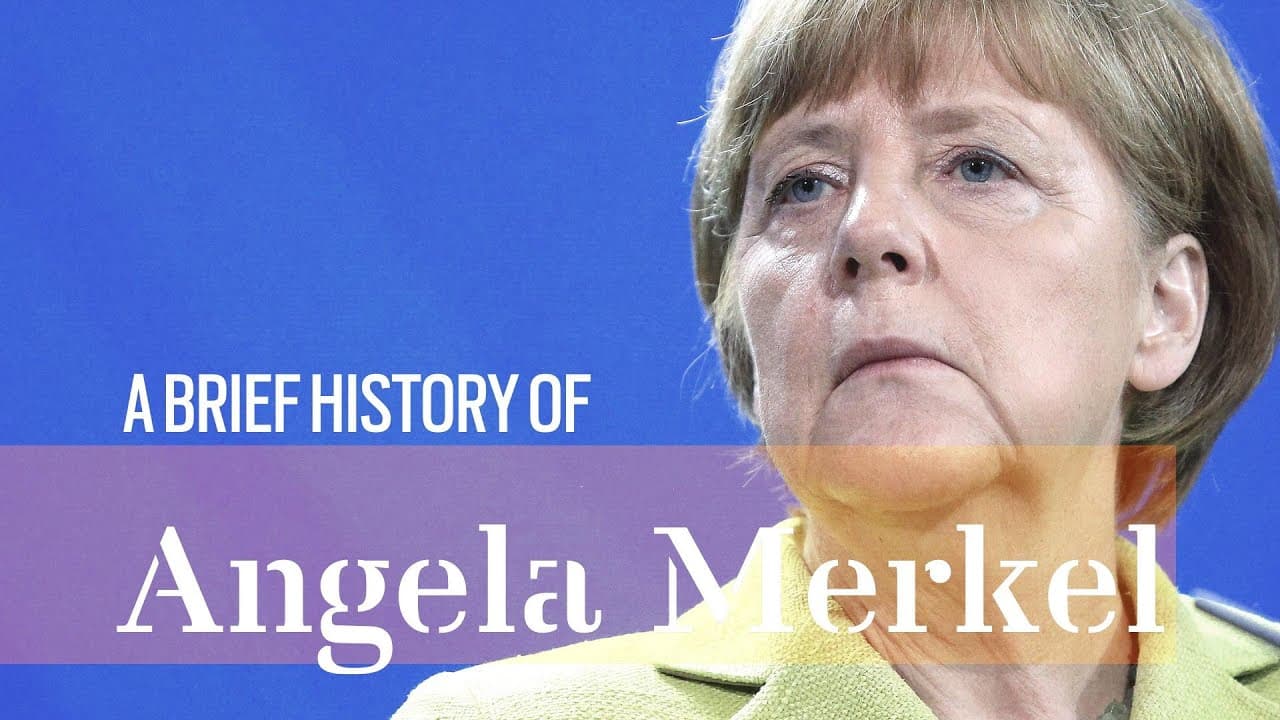
Angela Merkel is the chancellor of Germany Europe's largest economy she is an unglamorous leader and often underrated but has a sharp analytical mind she's not one to back down from a good fight and can be surprisingly decisive this is a brief history of Angela Merkel 1954 Hamburg has been devastated by World War II Angela kasner is born Germany is... Read More
Key Insights
- Angela Merkel was born in 1954 in post-war Hamburg and grew up in East Germany during the Cold War, which shaped her early experiences and worldview.
- Despite initially failing physics in high school, Merkel pursued a career in science, earning a Ph.D. in quantum chemistry, showcasing her determination and analytical mind.
- Merkel's political career began after the fall of the Berlin Wall in 1989, when she joined East Germany's pro-democracy movement and later the Christian Democratic Union.
- She became Germany's first female Chancellor in 2005, demonstrating her ability to navigate and lead within a male-dominated political landscape.
- Merkel's leadership style is characterized by modesty and plain-speaking, yet she has played a significant role in asserting Germany's influence on the global stage.
- During the 2008 financial crisis, Merkel took decisive action to stabilize Germany's economy, including bailing out banks and promoting fiscal austerity.
- Her decision to accept refugees in 2015 was controversial but highlighted her commitment to humanitarian values and solidarity within the European Union.
- Merkel's tenure saw Germany's economy recover robustly, and her strategic diplomacy was pivotal during crises such as the Eurozone bailout and Ukraine conflict.
Install to Summarize YouTube Videos and Get Transcripts
Explore YouTube Video Summarizer or Get YouTube Transcript Extractor
Questions & Answers
Q: How did Angela Merkel's early life influence her career?
Angela Merkel's early life in East Germany during the Cold War exposed her to the challenges of living under a communist regime, fostering a resilient and analytical mindset. Her family's move to a small farming village and her father's role as a pastor likely instilled values of perseverance and adaptability, which later influenced her political career.
Q: What motivated Merkel to pursue a career in politics?
Merkel's motivation to enter politics was largely driven by the fall of the Berlin Wall and the collapse of East Germany's Communist regime in 1989. Witnessing the transformative power of democratic movements, she joined the pro-democracy movement and later the Christian Democratic Union, seizing the opportunity to shape Germany's future.
Q: What were Merkel's key achievements as Chancellor?
Merkel's key achievements include stabilizing Germany's economy during the 2008 financial crisis, promoting fiscal austerity, and leading the Eurozone bailout. Her humanitarian decision to accept refugees in 2015, despite political backlash, demonstrated her commitment to European solidarity and humanitarian values, solidifying Germany's role as a leading global power.
Q: How did Merkel handle the 2008 financial crisis?
During the 2008 financial crisis, Merkel took decisive actions to stabilize Germany's economy by bailing out banks and advocating for fiscal austerity measures. Her leadership helped Germany recover faster than other European countries, reinforcing her reputation as a pragmatic and effective leader in times of economic turmoil.
Q: What was Merkel's stance on the refugee crisis?
Merkel's stance on the refugee crisis was one of openness and humanitarian concern. In 2015, she decided to accept a significant number of refugees from the Middle East, urging other EU countries to do the same. This decision, though controversial, underscored her commitment to humanitarian principles and European unity.
Q: How did Merkel's scientific background influence her leadership?
Merkel's scientific background, particularly her Ph.D. in quantum chemistry, influenced her leadership style by fostering an analytical and methodical approach to problem-solving. Her ability to assess complex situations with precision and make informed decisions is a testament to the critical thinking skills honed through her scientific training.
Q: What challenges did Merkel face as Germany's first female Chancellor?
As Germany's first female Chancellor, Merkel faced challenges such as overcoming gender biases in a predominantly male political environment. Her ability to navigate these challenges with resilience and strategic acumen allowed her to break barriers and lead Germany effectively, earning respect on both national and international stages.
Q: How did Merkel contribute to Germany's international influence?
Merkel contributed to Germany's international influence through strategic diplomacy and economic leadership. Her role in the Eurozone bailout, handling of the Ukraine crisis, and advocacy for European unity during the refugee crisis solidified Germany's position as a key player in global politics, enhancing its influence and credibility worldwide.
Summary & Key Takeaways
-
Angela Merkel, born in post-war Germany, rose from a physics student in East Germany to become the Chancellor of Europe's largest economy. Her journey is marked by resilience and a commitment to democratic values.
-
Merkel's leadership style is unassuming yet effective, characterized by analytical decision-making and a pragmatic approach to crises, including the financial turmoil of 2008 and the refugee influx in 2015.
-
As Germany's first female Chancellor, Merkel's tenure is notable for economic stability and increased international influence, demonstrating her ability to lead with both humility and assertiveness.
Read in Other Languages (beta)
Share This Summary 📚
Summarize YouTube Videos and Get Video Transcripts with 1-Click
Try YouTube Summary with ChatGPT & Claude or YouTube Transcript Generator
Explore More Summaries from Bloomberg Originals 📚


Summarize YouTube Videos and Get Video Transcripts with 1-Click
Try YouTube Summary with ChatGPT & Claude or YouTube Transcript Generator