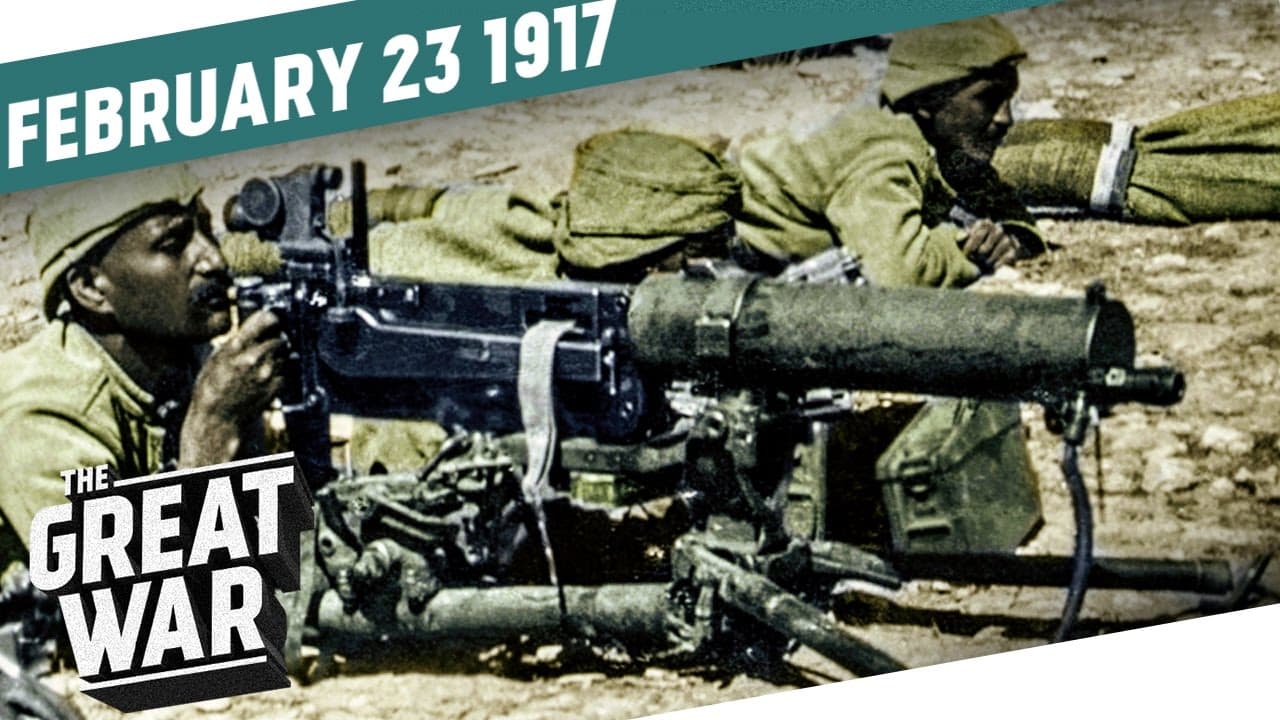
Mechanised War In Mesopotamia - Toplica Uprising I THE GREAT WAR Week 135
TL;DR
British advances in Mesopotamia; propaganda intensifies globally.
Transcript
Every nation fighting this war had a propaganda machine in place by this time, the newspapers telling the people exactly what they needed to hear to be convinced to continue fighting the war. But when that’s not enough, it’s time to get tough, to get organized. Time to establish a Department of Information. I’m Indy Neidell; welcome to the Great Wa... Read More
Key Insights
- The British advanced in Mesopotamia, overcoming Ottoman defenses near Kut with strategic planning and artillery support, highlighting the increasing mechanization of warfare.
- The Germans retreated on the Western Front, allowing the British to gain ground without significant resistance, raising suspicions about German intentions.
- The Zimmermann Telegram revealed Germany's attempt to ally with Mexico against the US, a move intercepted and leveraged by British intelligence.
- Propaganda became a crucial tool for maintaining public support for the war, with nations developing sophisticated methods to influence and control information.
- The Toplica Uprising marked a significant Serbian rebellion against Bulgarian rule, driven by nationalistic fervor and resistance to forced conscription.
- The British government established the Department of Information to manage domestic dissent and control the narrative around the war effort.
- Both the Allies and Central Powers used propaganda to demonize the enemy, creating narratives of moral superiority and justifying the war effort.
- Film emerged as a powerful propaganda medium, used to sway public opinion and bolster nationalistic sentiments during the war.
Install to Summarize YouTube Videos and Get Transcripts
Explore YouTube Video Summarizer or Get YouTube Transcript Extractor
Questions & Answers
Q: What strategic move did the British make in Mesopotamia?
The British, under General Sir Stanley Maude, avoided a direct assault on Sanniyat by crossing the Tigris upstream at the Shumran Bend. This risky maneuver involved using pontoon bridges and a diversionary attack to pin down Ottoman reserves, ultimately forcing the Ottomans to evacuate Sanniyat and Kut.
Q: How did the Germans respond to British advances on the Western Front?
The Germans retreated from their positions on the Ancre, moving to new defenses on Bapaume Ridge. This retreat covered about 5 kilometers and was part of a broader strategy, although the exact intentions were obscured by foggy weather, preventing British reconnaissance from determining their plans.
Q: What was the significance of the Zimmermann Telegram?
The Zimmermann Telegram was a secret communication from Germany to Mexico proposing an alliance against the United States. Intercepted by British intelligence, it was a propaganda bombshell that, once revealed, could sway American public opinion and justify US entry into the war against Germany.
Q: How did propaganda evolve during this period of the war?
Propaganda evolved into a sophisticated tool for controlling public opinion and maintaining support for the war. Nations like Britain and Germany established dedicated agencies to manage information, targeting pacifists and dissenters, and creating narratives that justified their war efforts and demonized the enemy.
Q: What triggered the Toplica Uprising?
The Toplica Uprising was triggered by Serbian resistance to Bulgarian occupation and conscription policies. The Bulgarians' attempts to denationalize the Serbian population, including prohibiting the Serbian language and traditions, fueled anger and led to armed conflict, with Serbian leaders declaring rebellion against Bulgarian rule.
Q: What role did film play in wartime propaganda?
Film emerged as a powerful tool for propaganda, capable of reaching mass audiences and influencing public opinion. It was used to promote nationalistic sentiments, demonize the enemy, and bolster support for the war effort, becoming an essential component of the broader propaganda strategies employed by warring nations.
Q: What measures did the British government take to control domestic dissent?
The British government established the Department of Information to manage and control the narrative around the war effort. They targeted pacifists and conscientious objectors, arresting leaders and using propaganda to persuade workers that a negotiated peace was impossible with the barbaric enemy, thus neutralizing domestic dissent.
Q: How did the Germans justify their war efforts to their population?
The Germans, under General Erich Ludendorff, initiated a program of instruction in patriotism, aiming to convince the disheartened and hungry public that they were saving civilization. Propaganda was used to maintain morale and justify the war as a defensive struggle against a coalition of nations intent on destroying Germany.
Summary & Key Takeaways
-
The British forces made significant advances in Mesopotamia, overcoming Ottoman defenses with strategic maneuvers and artillery support, marking a turning point in the campaign.
-
On the Western Front, the British gained ground as the Germans retreated, raising questions about German strategy and intentions in the region.
-
Propaganda played a pivotal role in shaping public perception, with nations investing in agencies to control information and maintain support for the war effort.
Read in Other Languages (beta)
Share This Summary 📚
Summarize YouTube Videos and Get Video Transcripts with 1-Click
Try YouTube Summary with ChatGPT & Claude or YouTube Transcript Generator
Explore More Summaries from The Great War 📚
Summarize YouTube Videos and Get Video Transcripts with 1-Click
Try YouTube Summary with ChatGPT & Claude or YouTube Transcript Generator