What Are the Key Indicators for Fed Interest Rate Decisions?
TL;DR
The key indicators for Federal Reserve interest rate decisions include unemployment rates, GDP growth between 2-2.5%, and inflation progressing toward a 2% target. Kaplan emphasizes the need for normalization of interest rates to avoid economic distortions and is cautious about the potential impact of multiple rate increases amid uncertainties in the economy.
Transcript
you're new to the FED what is your reaction function going to be what's going to determine for you when it's the appropriate time to move interest rates again well um so being new to the FED I've now been to 30 fom fomc meetings about through my 4th in January I've gotten a much better feeling of gotten to know all the other bank presidents gotten ... Read More
Key Insights
- Kaplan emphasizes the importance of monitoring unemployment, GDP, and inflation to determine interest rate changes, highlighting the need for normalization.
- He recognizes the cost of maintaining low interest rates, which can create economic imbalances and distortions in investment and hiring.
- Kaplan aims for a GDP growth forecast of 2-2.5% in 2016 and seeks a continuous drop in unemployment rates with job growth surpassing 150,000 monthly.
- The Fed's inflation target is 2%, and Kaplan expects gradual progress toward this goal over the next few years, considering transitory factors like oil and dollar fluctuations.
- Kaplan is cautious about the potential impact of four rate increases suggested by the Fed, acknowledging the economy's unpredictable nature.
- He highlights the resilience of Texas's economy despite the oil price drop, with job growth slowing but remaining positive.
- Lower oil prices have both negative impacts on capital spending and positive effects on consumer spending, influencing car sales and driving activity.
- Kaplan expresses concern over the ripple effects of the energy sector's struggles on high-yield bonds, which could widen credit spreads and affect leveraged companies.
Install to Summarize YouTube Videos and Get Transcripts
Explore YouTube Video Summarizer or Get YouTube Transcript Extractor
Questions & Answers
Q: What are the main economic indicators Kaplan focuses on?
Kaplan focuses on unemployment, GDP, and inflation as the main economic indicators to guide interest rate decisions. He believes that monitoring these factors is crucial to determine the appropriate time for interest rate changes and to achieve economic normalization.
Q: Why does Kaplan emphasize the need for normalization?
Kaplan emphasizes the need for normalization because prolonged low interest rates can create economic imbalances and distortions in investment and hiring. He believes that moving towards normalization will help avoid these issues and place the economy on a more stable footing.
Q: What is Kaplan's GDP growth forecast for 2016?
Kaplan's GDP growth forecast for 2016 is between 2-2.5%. He aims to see the unemployment rate continue to drop, with monthly job growth exceeding 150,000. This forecast reflects his expectations for moderate economic growth and progress toward the Fed's inflation target.
Q: How does Kaplan view the potential for four rate increases?
Kaplan views the potential for four rate increases with caution, acknowledging the unpredictable nature of the economy. He believes that if progress is made on key economic indicators, three or four rate increases could be reasonable, but emphasizes the need to assess conditions and adapt accordingly.
Q: How has Texas's economy been affected by the drop in oil prices?
Texas's economy has shown resilience despite the drop in oil prices. While job growth has slowed compared to previous years, it remains positive. The state's diversified economy has helped mitigate the negative impact on areas like Houston, while cities like Dallas and Austin have been more resilient.
Q: What are the positive effects of lower oil prices according to Kaplan?
According to Kaplan, lower oil prices have positive effects such as increased consumer spending, more driving activity, and better car sales. These factors contribute to a greater ability for consumers to spend on other goods and services, which can stimulate economic growth despite the negative impact on capital spending.
Q: What concerns does Kaplan have about the energy sector's struggles?
Kaplan is concerned about the ripple effects of the energy sector's struggles on high-yield bonds. As energy is a significant part of the high-yield sector, weakness in this area can lead to selling across other sectors due to fear of redemptions, potentially widening credit spreads and affecting leveraged companies.
Q: How does Kaplan plan to approach interest rate changes?
Kaplan plans to approach interest rate changes by carefully monitoring economic indicators and assessing global economic activity. He aims to adapt to changing conditions rather than predetermine actions, understanding the risks and resistance associated with increasing the Fed funds rate and its impact on various economic sectors.
Summary & Key Takeaways
-
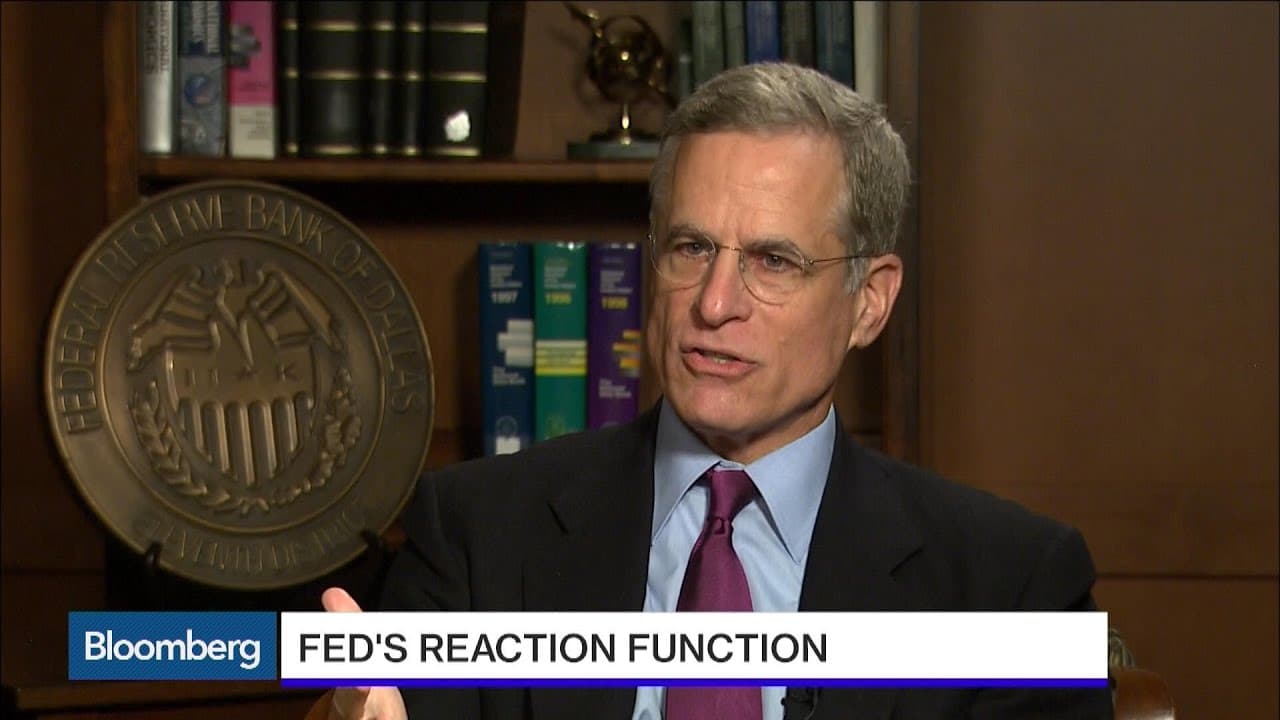
Robert Kaplan, Dallas Federal Reserve President, discusses his approach to monetary policy, focusing on key economic indicators like unemployment, GDP, and inflation to guide interest rate decisions. He emphasizes the need for normalization to avoid economic distortions caused by prolonged low interest rates.
-
Kaplan projects a GDP growth of 2-2.5% for 2016 and seeks a decrease in unemployment rates with job growth surpassing 150,000 monthly. He expects gradual progress toward the Fed's 2% inflation target, considering factors like oil and currency fluctuations.
-
Kaplan acknowledges the unpredictable nature of the economy and the potential impact of up to four rate increases. He highlights Texas's economic resilience despite oil price drops, while expressing concern over the energy sector's influence on high-yield bonds and credit spreads.
Read in Other Languages (beta)
Share This Summary 📚
Summarize YouTube Videos and Get Video Transcripts with 1-Click
Try YouTube Summary with ChatGPT & Claude or YouTube Transcript Generator
Explore More Summaries from Bloomberg Originals 📚




Summarize YouTube Videos and Get Video Transcripts with 1-Click
Try YouTube Summary with ChatGPT & Claude or YouTube Transcript Generator